



Slippery Rock University Magazine The ROCK Spring/Summer 2026


FEATURED
In this issue
-
Program Updates, Partnerships, Awards and More
-
Two ‘Firestarters’ for Mentorship and Advocacy
-
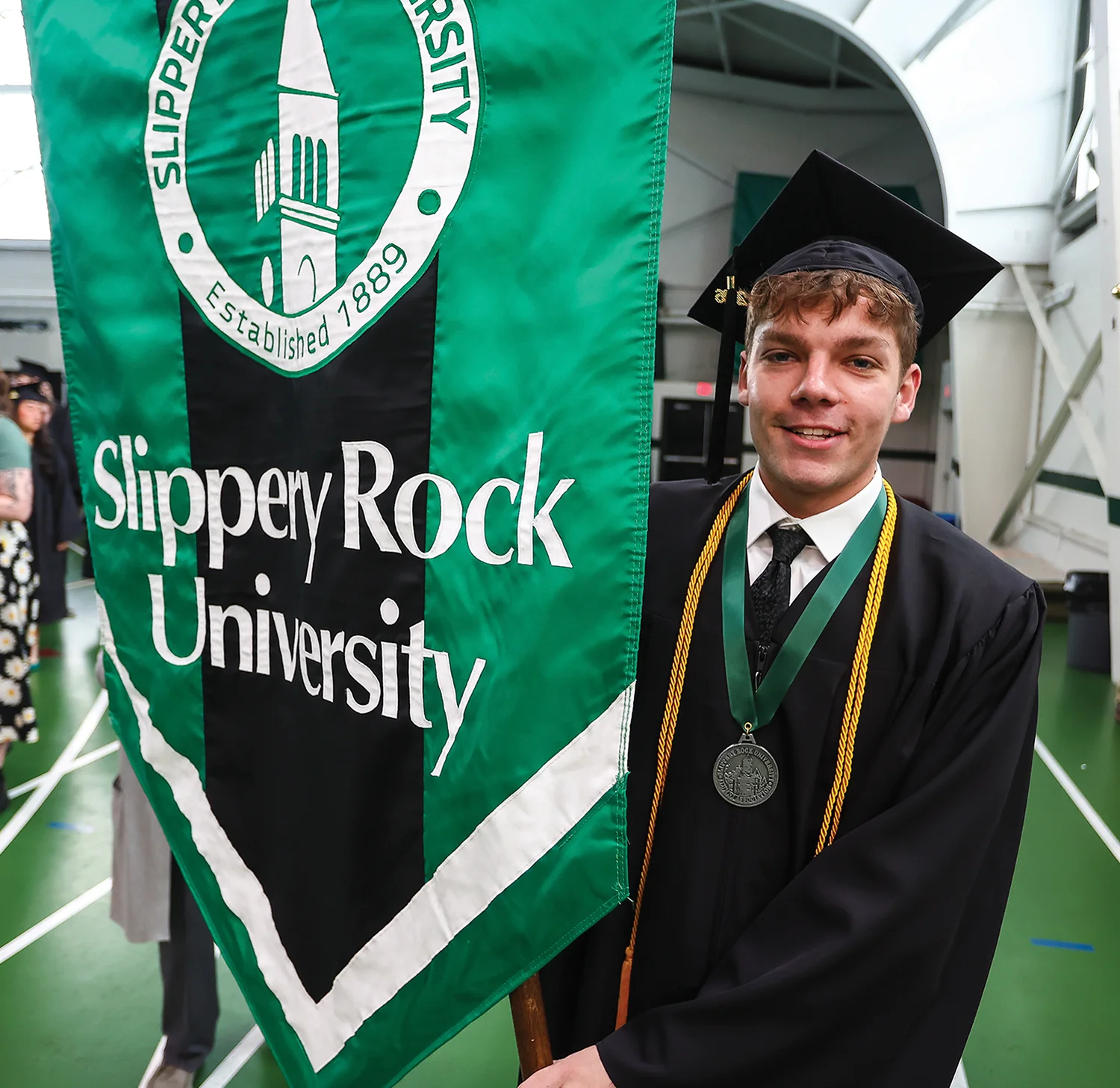
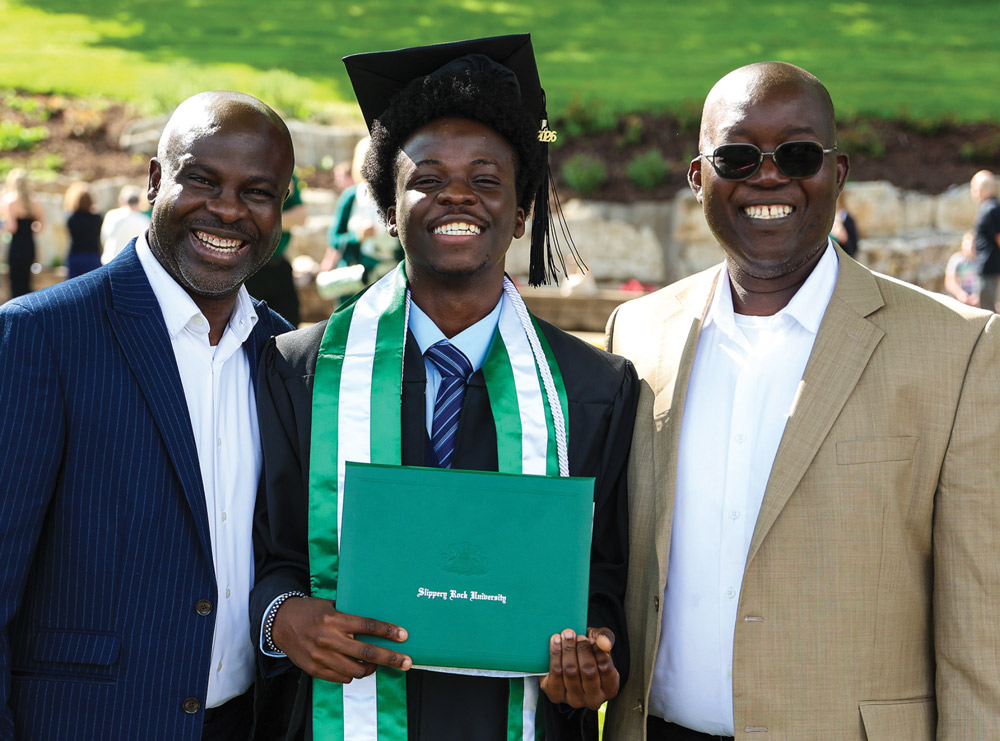
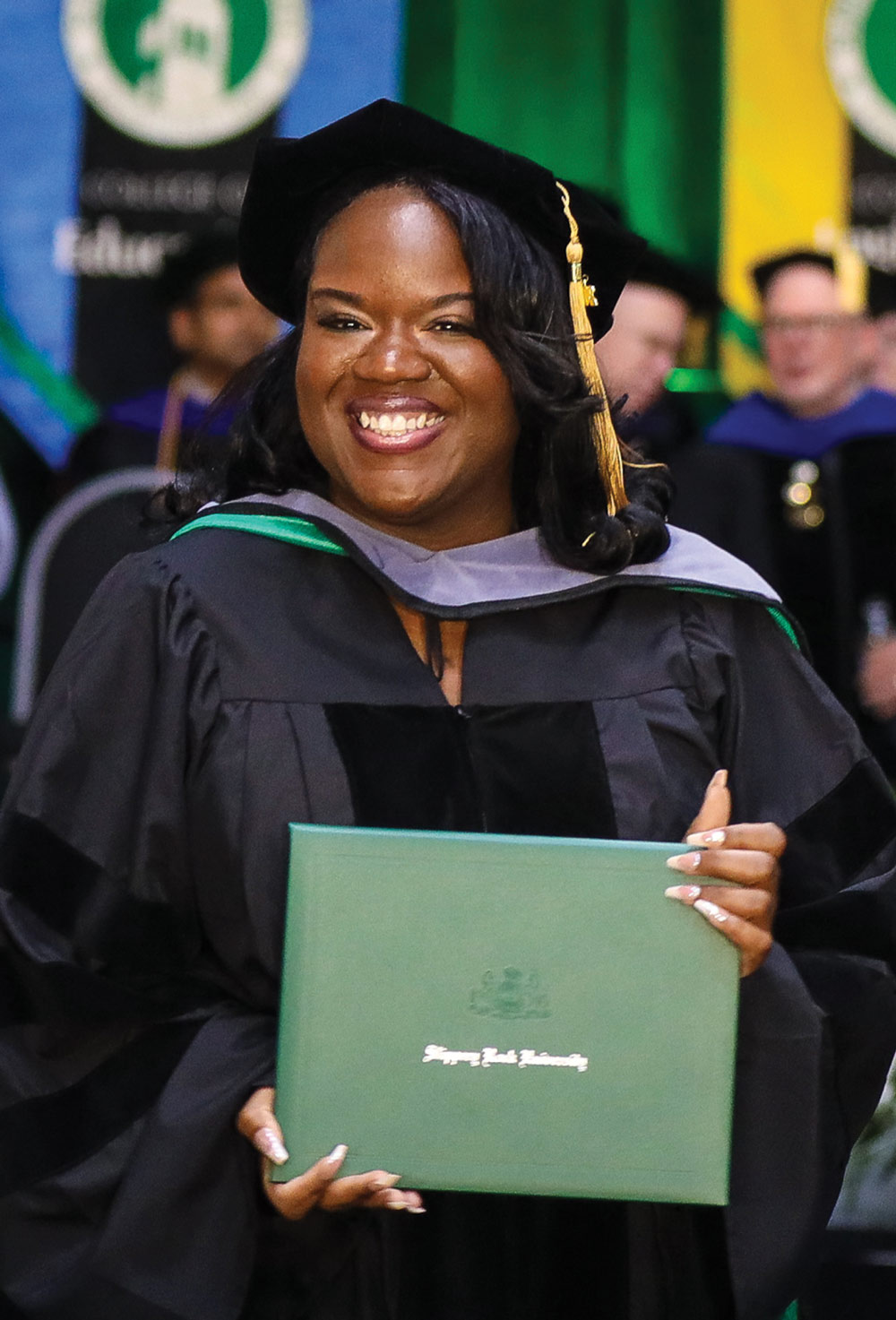
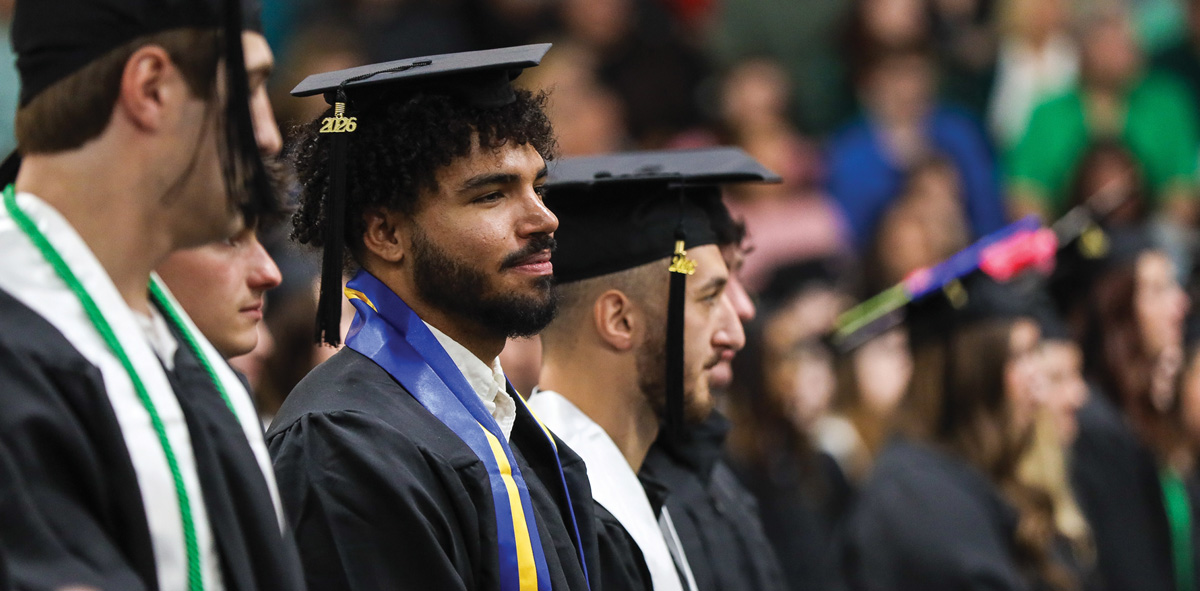
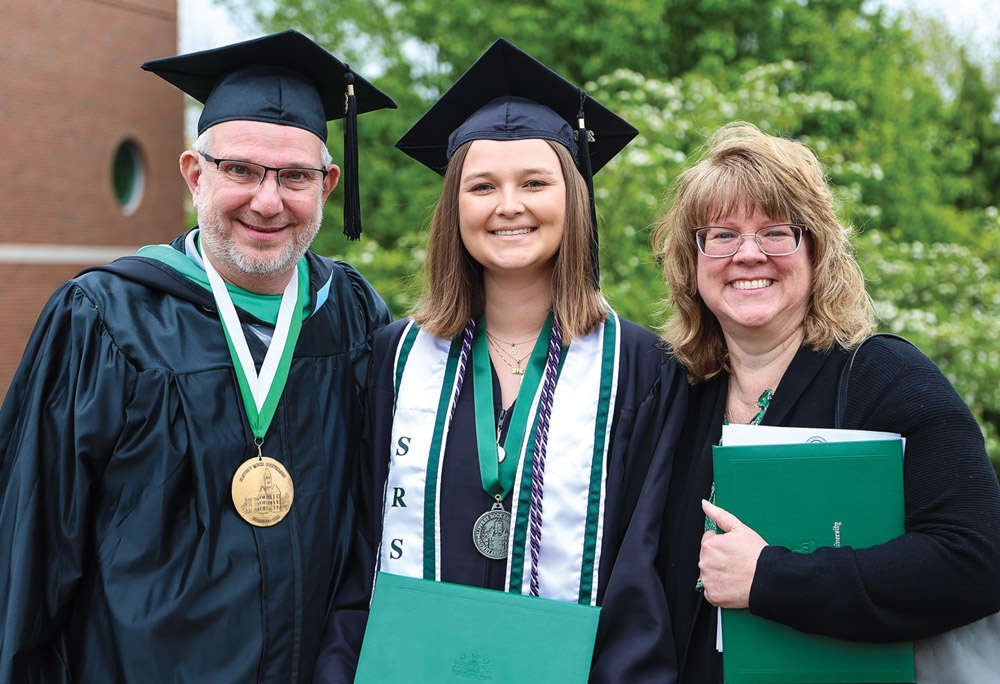
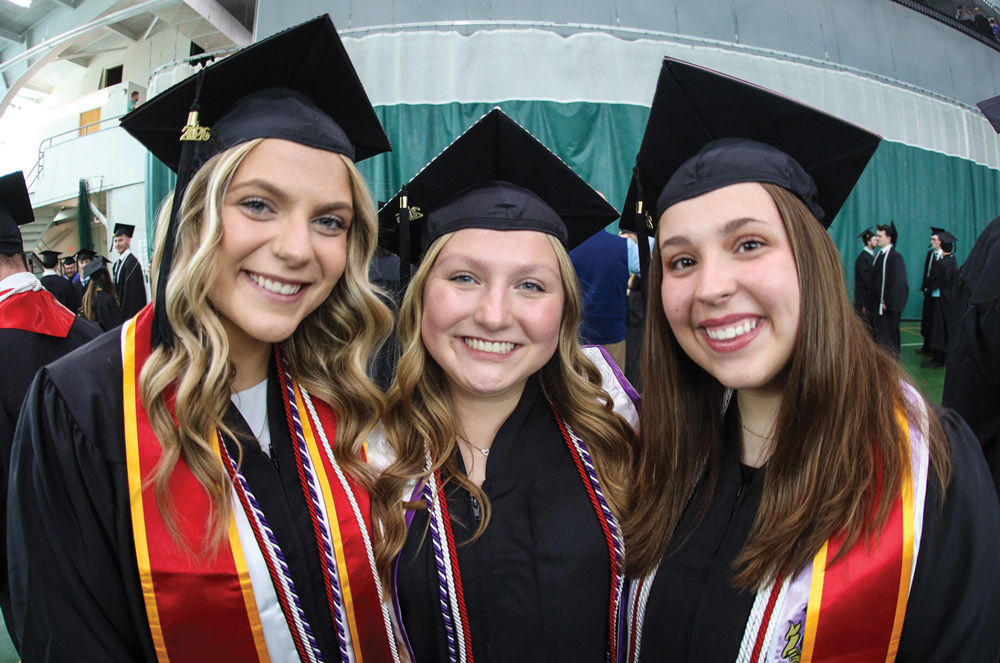
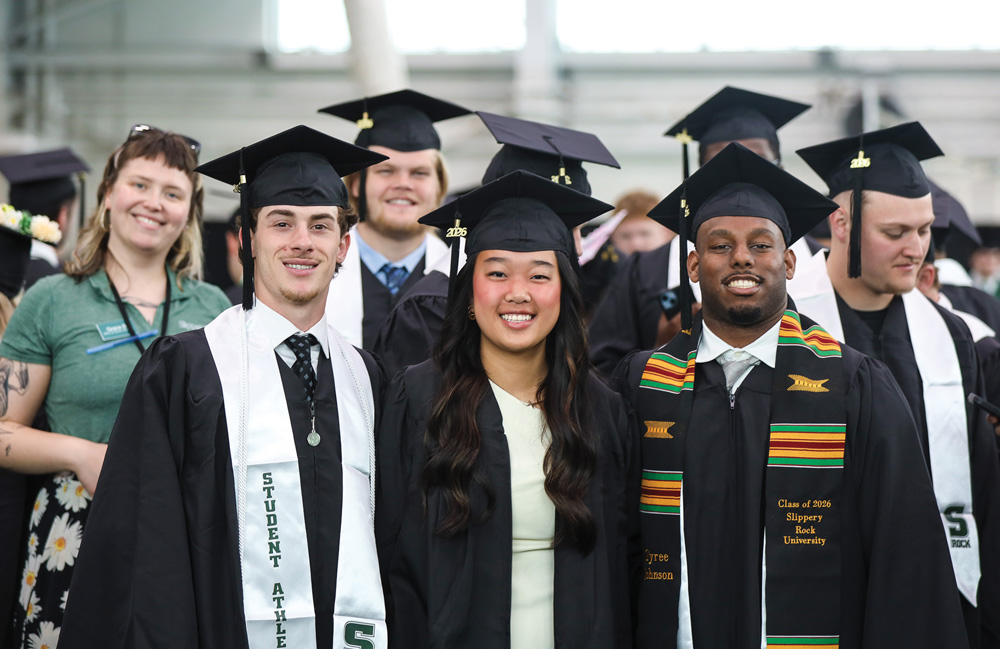
Experience the Joy and Traditions from the Spring Commencement Ceremonies
-
Haverlack College of Business and the Lasting Impact of Philanthropy
-
Professors Leading the Way in Cybersecurity and Artificial Intelligence
-
Remembering the Life and Legacy of Paul Rizza
-
Remembering the Life and Legacy of Dick Wukich
-
Dedicated Alumni Help Bring Back Wrestling to The Rock
-
How a Family from Eastern Pennsylvania Found the Right Fit
-
Messer Field Dedication, World-Class Shot Putter on Staff and PSAC Champions
-
Green Cabbage CEO Eric Cunningham, ’97, has Company Built on The Rock
-
Two Alumni Train Dogs for Local K9 Unit
-
Sharif Bey, ’98, Comes Home to Display Ceramics at Warhol Museum Art Exhibit
-
Through the Years with the Eisenberg Classroom Building
-
Celebrating SRU’s Alumni with Achievements, Promotions and Weddings
-
Women’s Lacrosse Hoists a Championship
Igniting Impact
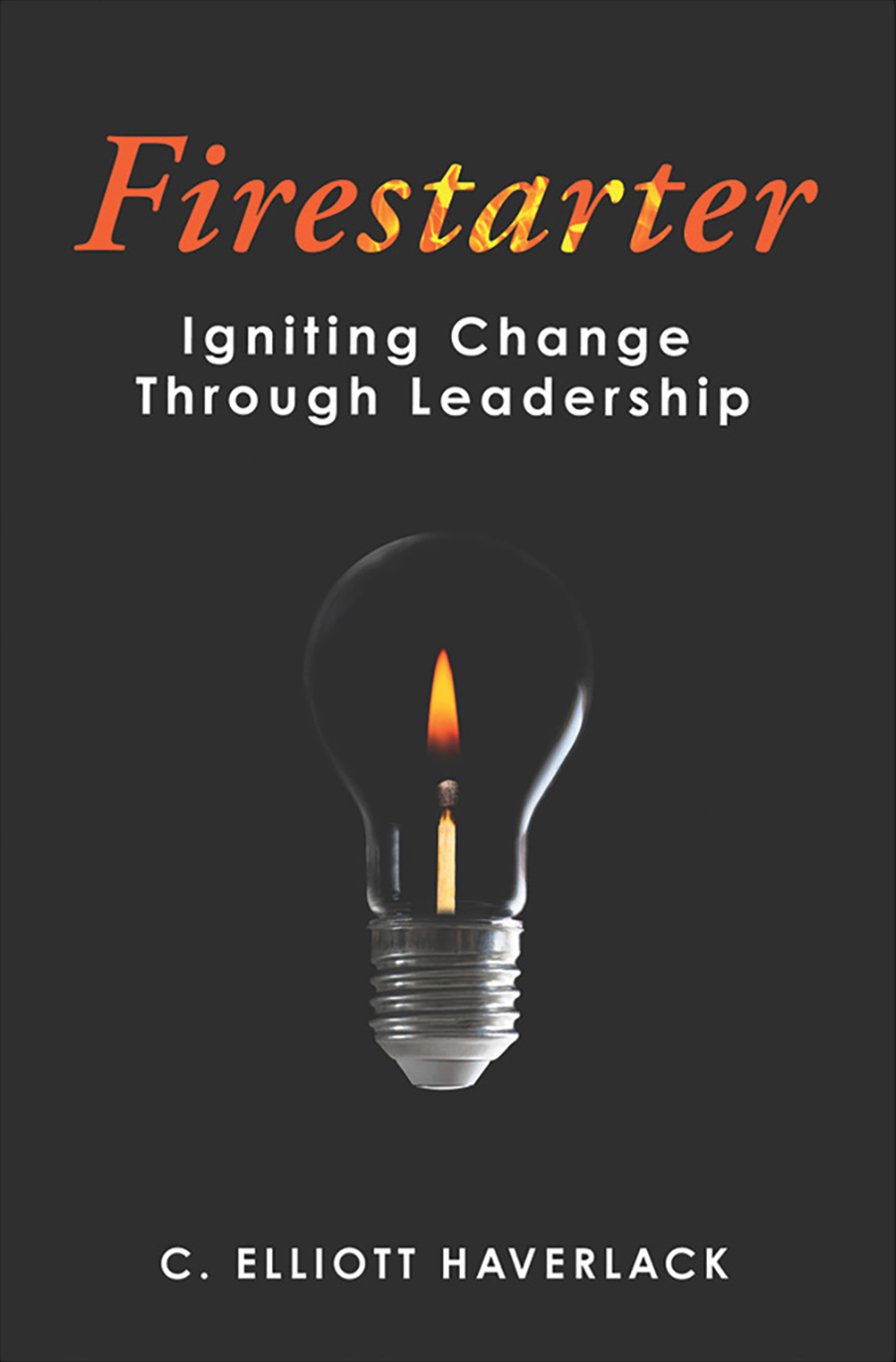
From the advice in Elliott’s business book titled “Firestarters,” to Elliott and Rhonda Haverlack’s historic investment in SRU (see Sparking Fire In Others), SRU embodies this mindset across our faculty, students and alumni communities. It lives in classrooms where faculty challenge students to think and grow, in alumni who carry The Rock’s values into their professions, and in current students preparing to lead. This issue highlights those stories — graduates who have become catalysts in their fields and a rising student poised to do the same — each exemplifying the spirit of a Firestarter.
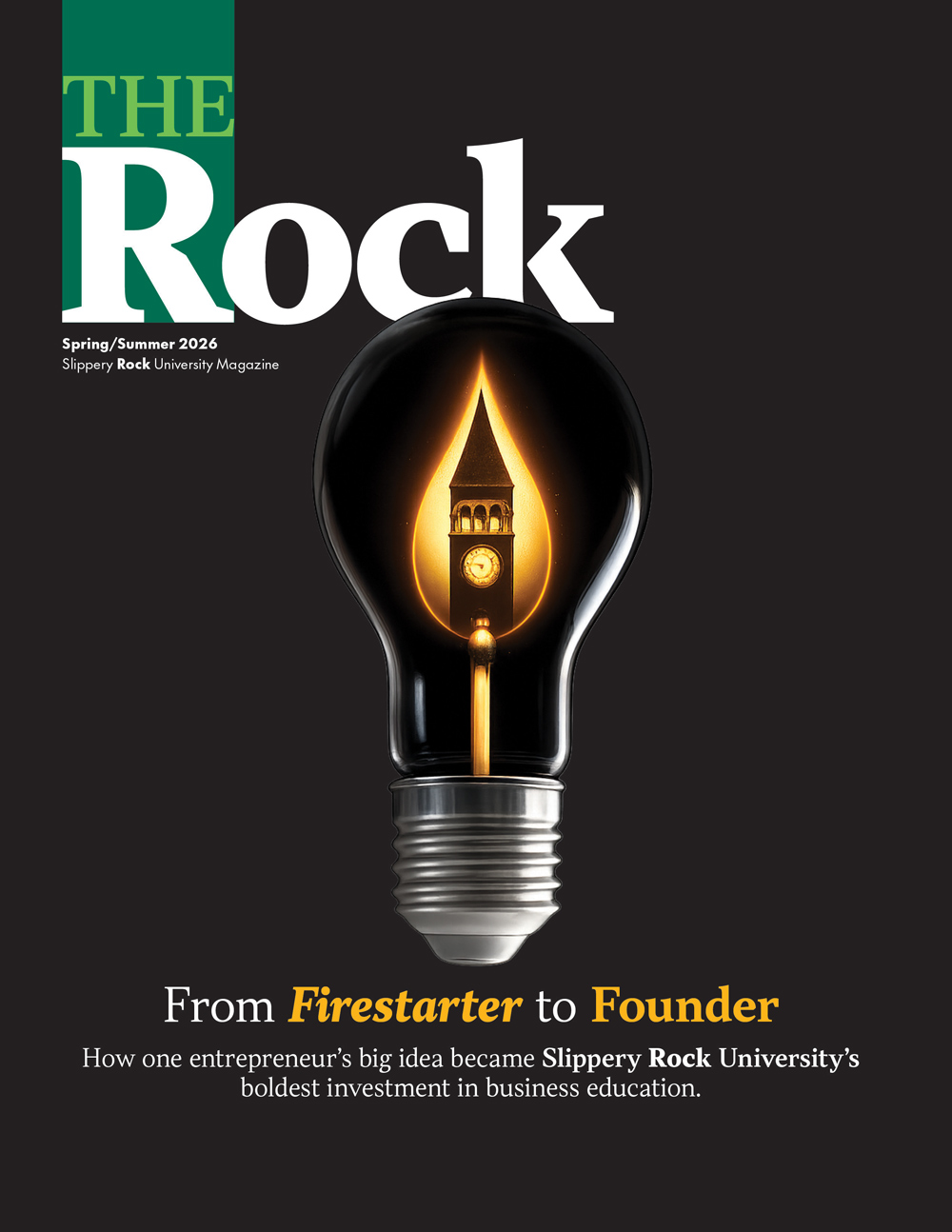
ON THE COVER
Address changes can also be submitted to:
Slippery Rock University • University Advancement Office
1 Morrow Way • Slippery Rock, PA 16057
Message from the President

When you invest in people, you create momentum that extends beyond our campus.
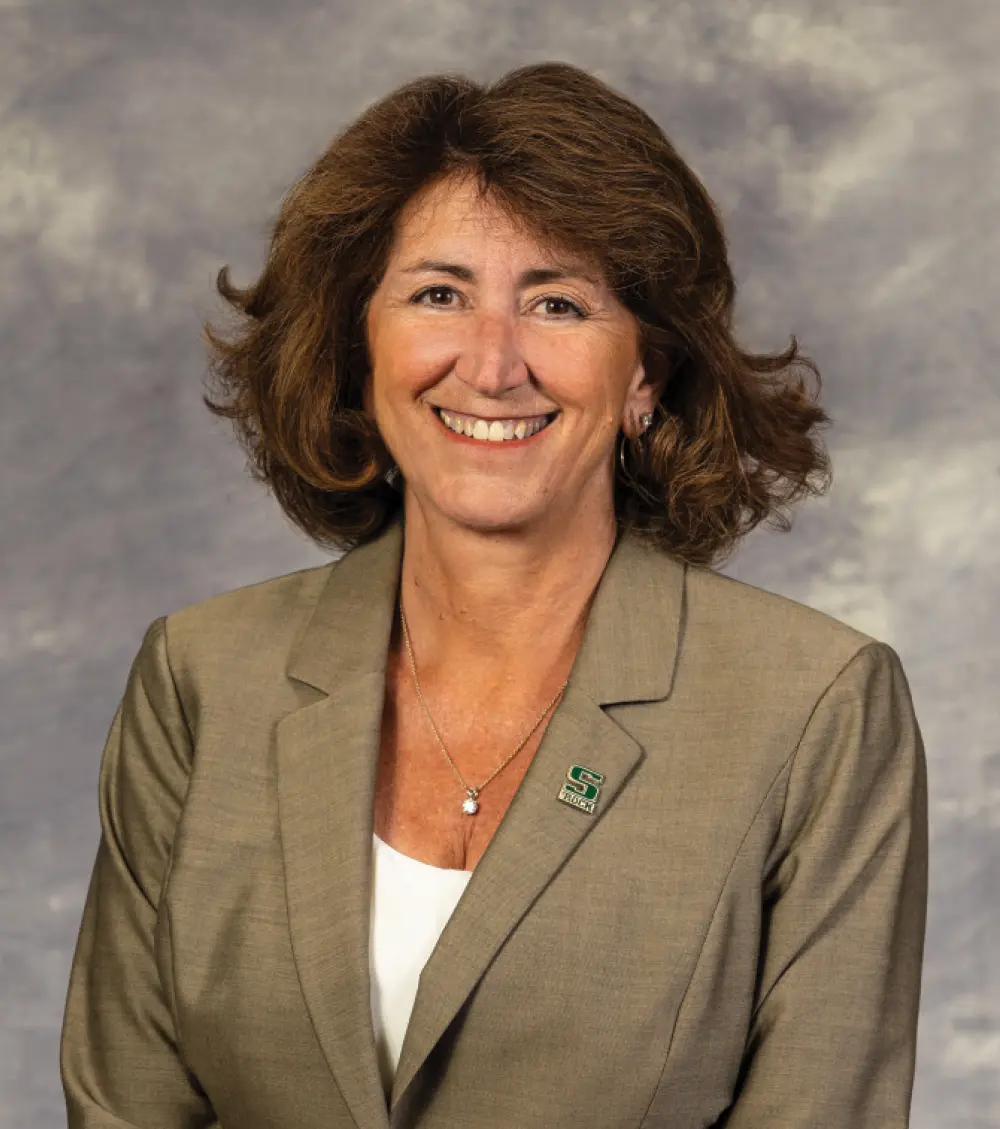
As I talk with students, alumni, employers, legislators and many others who are invested in what we do at Slippery Rock University, the story that I often tell is that The Rock is on the rise. This isn’t just a catchy phrase. It sums up the SRU community’s forward-thinking approach to student success that has produced measurable results, from our largest single-year enrollment increase in 20 years to our record-setting retention and graduate rates.
Especially during a time when the higher education landscape is often defined by uncertainty, SRU is demonstrating what is possible when we expand opportunities for our students and strengthen the communities we serve.
Sparking Change
When you invest in people, you create momentum that extends beyond our campus.
Lasting Momentum
At SRU, this approach has proven to be a model for success, through personalized support, experiential learning, faculty mentorship, and opportunities for civic engagement that consistently produce graduates who excel, lead, and contribute to society in their careers and communities. This is the essence of SRU’s mission: to prepare students not just for careers, but for meaningful lives of impact.
The spark is here. And together, it continues to blaze, lighting the path to new heights.
With pride and gratitude,

President, Slippery Rock University
Top Student in the State System
She’s now working as an actuary analyst at Erie Insurance and plans to pursue a master’s degree in actuary science through an online program at Boston University.


Case for Investment
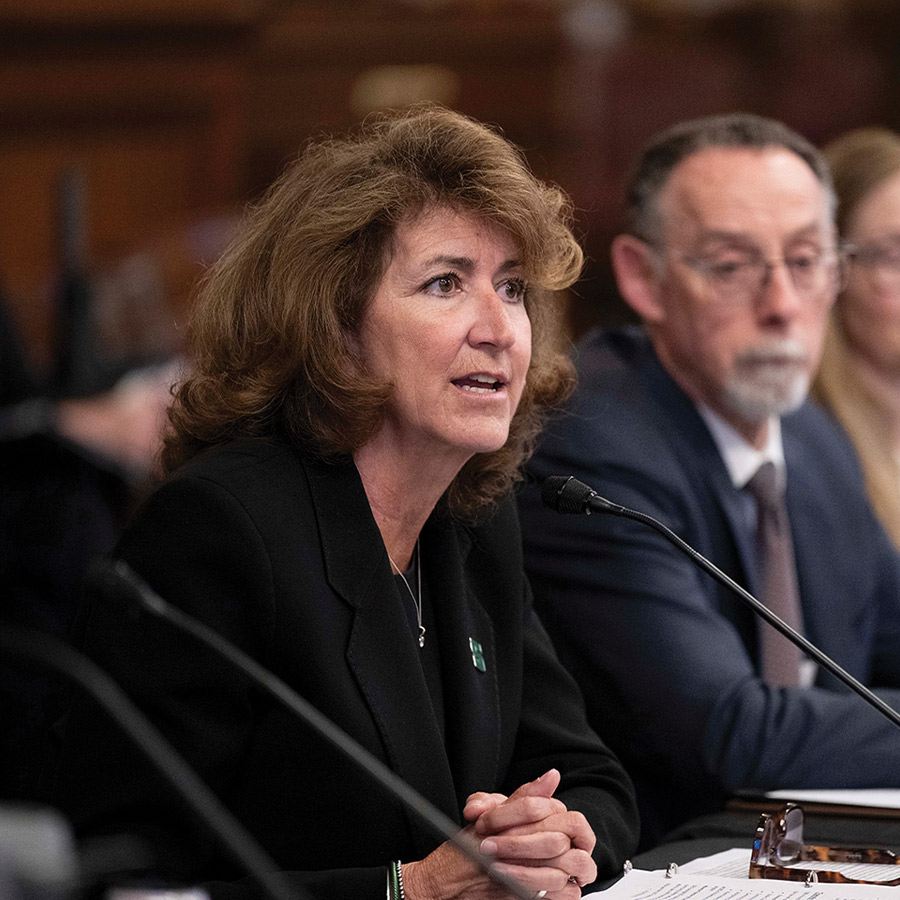
- Undergraduate enrollment is up 3.4%, the largest single-year increase in 20 years.
- The first-year class is the largest cohort at SRU since 2019.
- 86.4% of the first-year students from fall 2024 returned in 2025, which is the highest retention rate in the State System in the last decade and an SRU record.
- 58.3% of undergraduates are graduating in four years, which is the highest graduation rate in the State System in the last 20 years and an SRU record.
SRU President Karen Riley gave a testimony before the Pennsylvania House of Representatives’ Appropriations Committee on March 11 at the State Capitol in Harrisburg, highlighting SRU’s strong performance and growing momentum, while underscoring the value of continued investment in Pennsylvania’s State System of Higher Education.
Launching Aviation Careers
Students will progress toward an associate degree from CCBC and a four-year bachelor’s degree from SRU, securing a solid foundation for growth in the high-demand field of aviation.

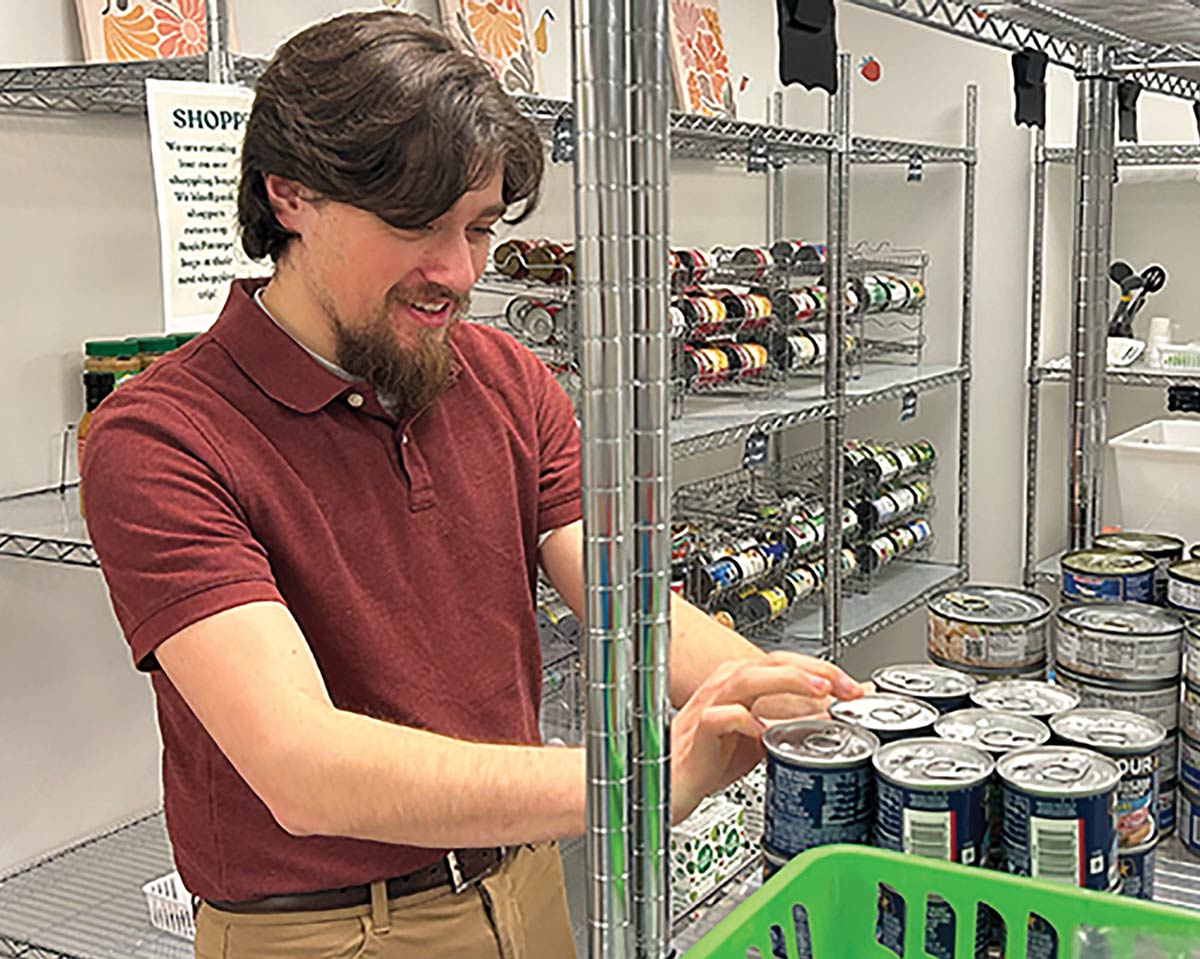
Hunger-Free Campus

Hunger is a nationwide issue for college students, with 41% experiencing food insecurity. The pantry at SRU serves more than 350 unique students each semester with a combined 13,000 pantry resource visits.
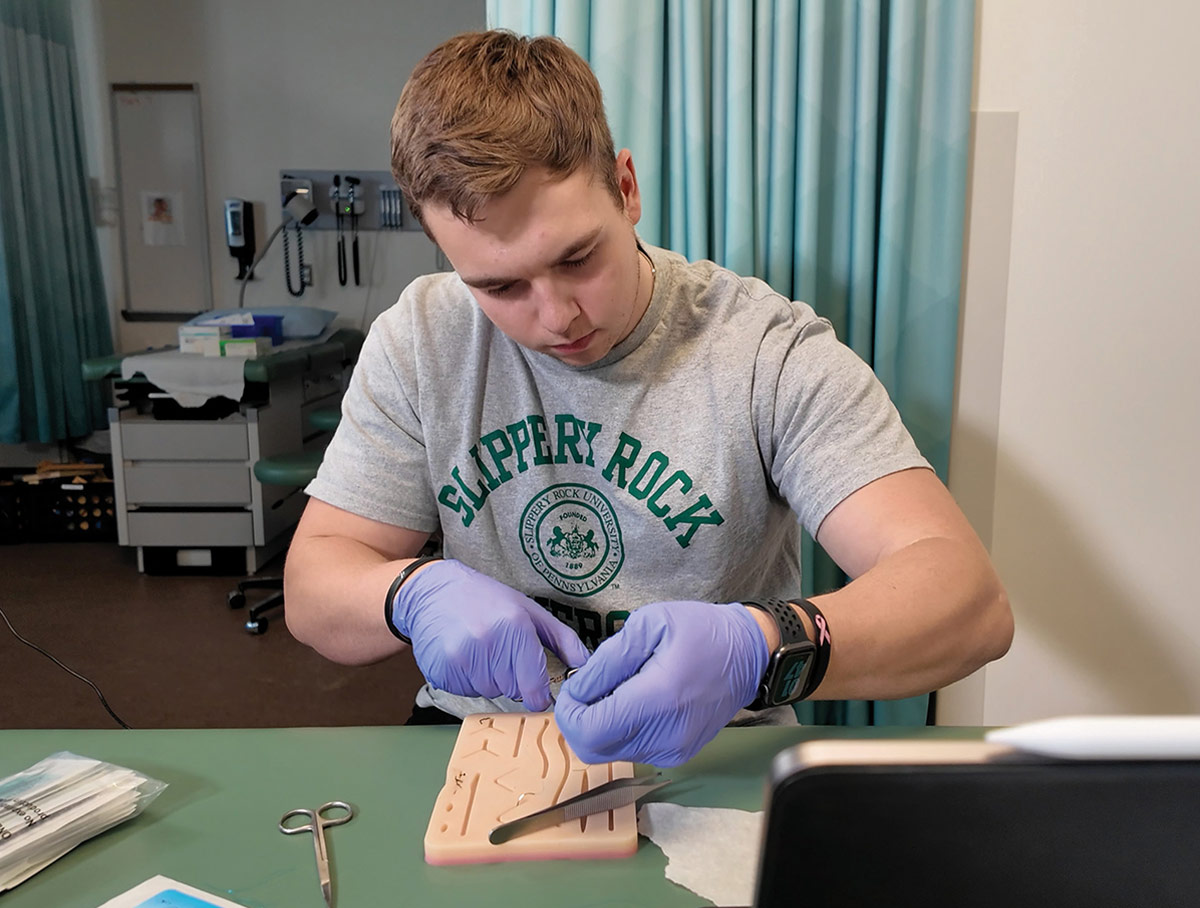
New Four-Year Nursing Program
Adding to the University’s existing 1+2+1 nursing program and online RN-to-BSN program, this new program is designed for students who want to start and finish their nursing education at SRU.
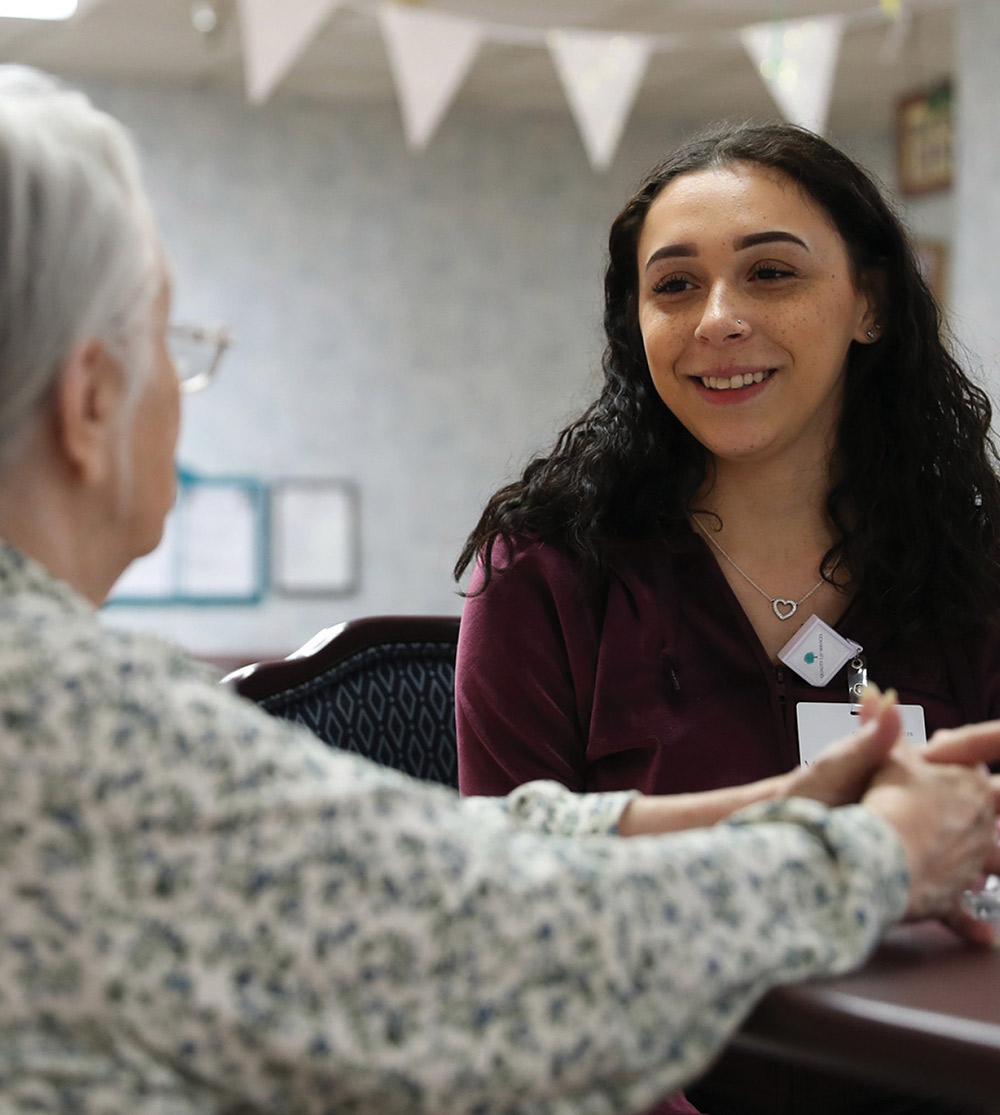
Community Engaged
AACSB Accredited

Only 6% of the world’s schools offering business degree programs are accredited by AACSB International. Schools with AACSB accreditation offer higher-quality programs that directly benefit students, result in increased graduation rates and produce graduates who are sought after by leading employers.
Student Firestarters
Mentor who lights a spark in others
s an aspiring educator, Dimajio Locante is well aware of the importance of providing opportunities for young people to develop their skills and broaden their horizons. Locante, a Slippery Rock University sophomore secondary education major from Pittsburgh, got to do hands-on work last summer with former Pittsburgh Steeler Charlie Batch’s Camp Batch, which seeks to provide students with such opportunities. Locante’s experience with the camp also gave him unique insight for his teaching career.
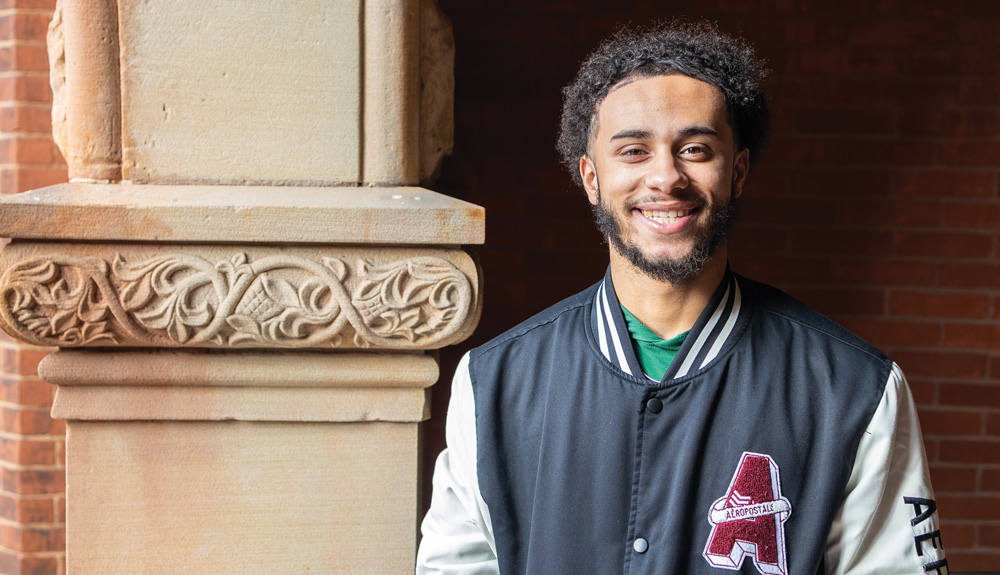
The experience underscored the importance of education as advancement and informs Locante’s own philosophy as a future educator and as a leader.
“I love helping people, and I love the idea of being able to mold young minds, not just to be able to adjust to society, but to be able to shape it,” Locante said. “Kids are the future.”
Locante applied his experience at Camp Batch to what he contributes to SRU community as he prepares for his teaching career.
In Locante’s opinion, the lion’s share of mentorship is relationship building, in the classroom and beyond as a youth mentor and leader among his peers as the president of Black Action Society at SRU.
“Collaboration is very important to me,” Locante said. “I want my classroom to be a social and collaborative space, and collaboration is something that I had to learn as a leader.”
Students don’t just succeed — they create pathways and lift others along the way.
“That’s when we’re the strongest,” he said. “That’s when we can truly advocate for our culture and speak on our experiences and build community on campus. Being an advocate in Black Action Society and in the classroom go hand in hand for me. It’s about making connections to meet goals.”
Locante’s work is all about people. Connecting people, advocating for people and helping others to be the best that they can be.
“When I wake up, my first thought is boom, ‘How can I make someone’s day today?,’” Locante said. “(This approach) builds community and it builds relationships. That’s what you need to do because we’re humans and we need each other.”
For him, it’s all about spreading that spark, something that he knows he can do in the classroom and also hopes to do by starting his own non-profit one day, investing in young people the same way that his mentor Batch does.
“We’re meant to share our light,” Locante said. “We’re meant to spread our joy.”
Blazing a path for women in business
rislyn Green was empowered by opportunities at Slippery Rock University, from classroom learning and campus involvement to practical experience through her internships with a Fortune 500 company.
A senior management major, Green never considered a career in the financial services industry before her 10-week internship with BNY in Pittsburgh last summer. That opened her up to possibilities for her career, but it also motivated her to blaze a trail for other women like her.
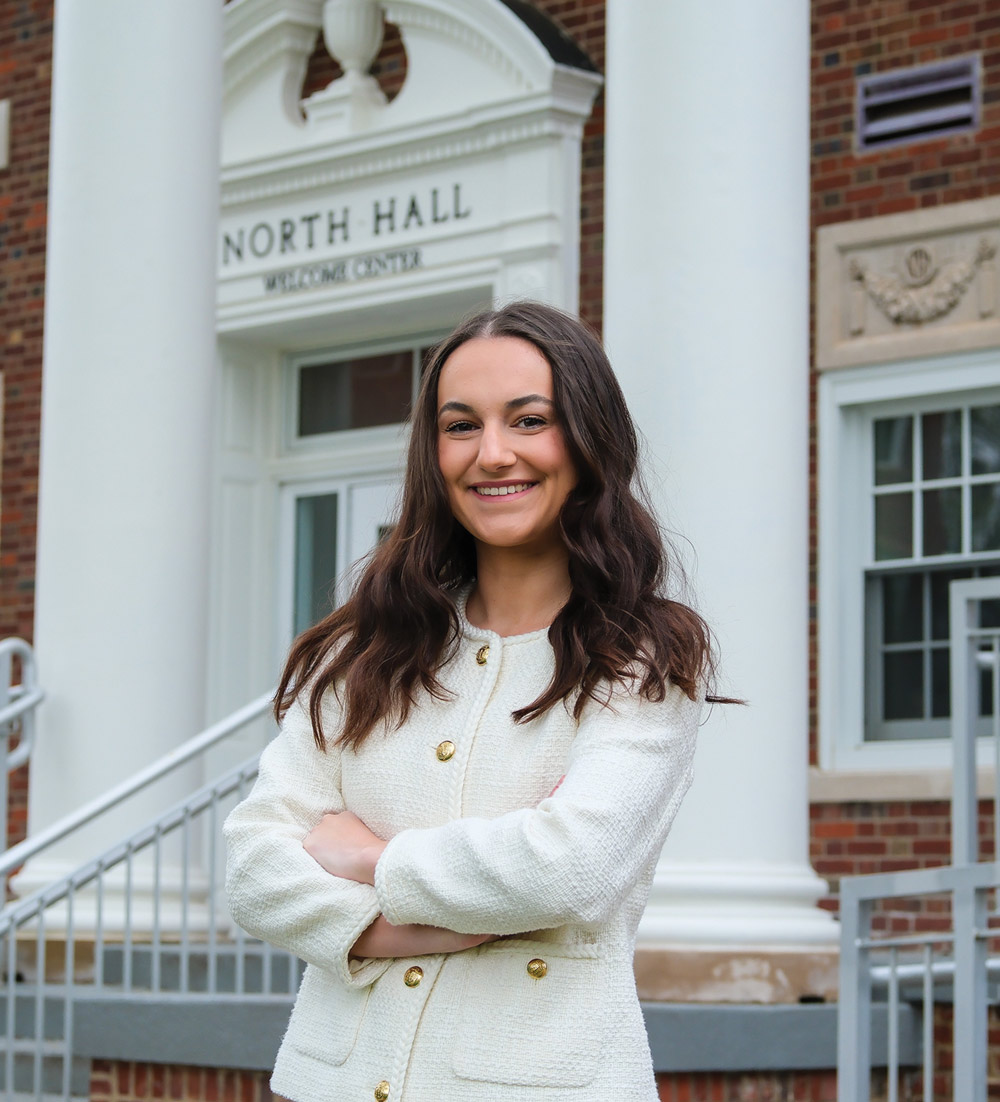
“We established this organization to empower women in the business world,” Green said. “We do a lot of professional events and networking as well as attending conferences. It’s so important to us because it helps people to get excited about their career.
“We’re really invested in exposing members to opportunities that allow them to grow professionally and to be prepared for their careers.”
One of the things that Green’s organization seeks to prepare members for is the necessity of collaboration in business. While the business finance world that Green is emerging into is often perceived as a cutthroat and perhaps isolating world, she maintains that collaboration is crucial to success in business.
“In this world, you do have deadlines and it’s a very fast-paced environment, but you also have to be able to delegate tasks to one another and to work together to get everything accomplished,” Green said. “There’s really no better feeling than to achieve something great together and to navigate challenges together.”
On top of Women in Business, Green is also the president of Society for Human Resource Management at SRU, and she has spent significant time working with her fellow executive members to provide opportunities for members through that organization as well. She also attends Butler County Chamber of Commerce meetings to network with other area professionals in order to learn from, connect with and serve other members of her community.
Investing in SRU fuels “firestarters” who drive lasting change beyond campus.
Upon graduating from SRU in May, Green joined BNY full-time as an analyst.
“I’m excited to be an SRU alum, to continue to support Women in Business at SRU, and to continue being involved in professional organizations in Pittsburgh and in Butler County,” she said.
While Green will continue to climb higher in her professional life, she is committed to staying connected to the places and organizations where she developed into the young professional that she is today.
Owned It. Rocked It.
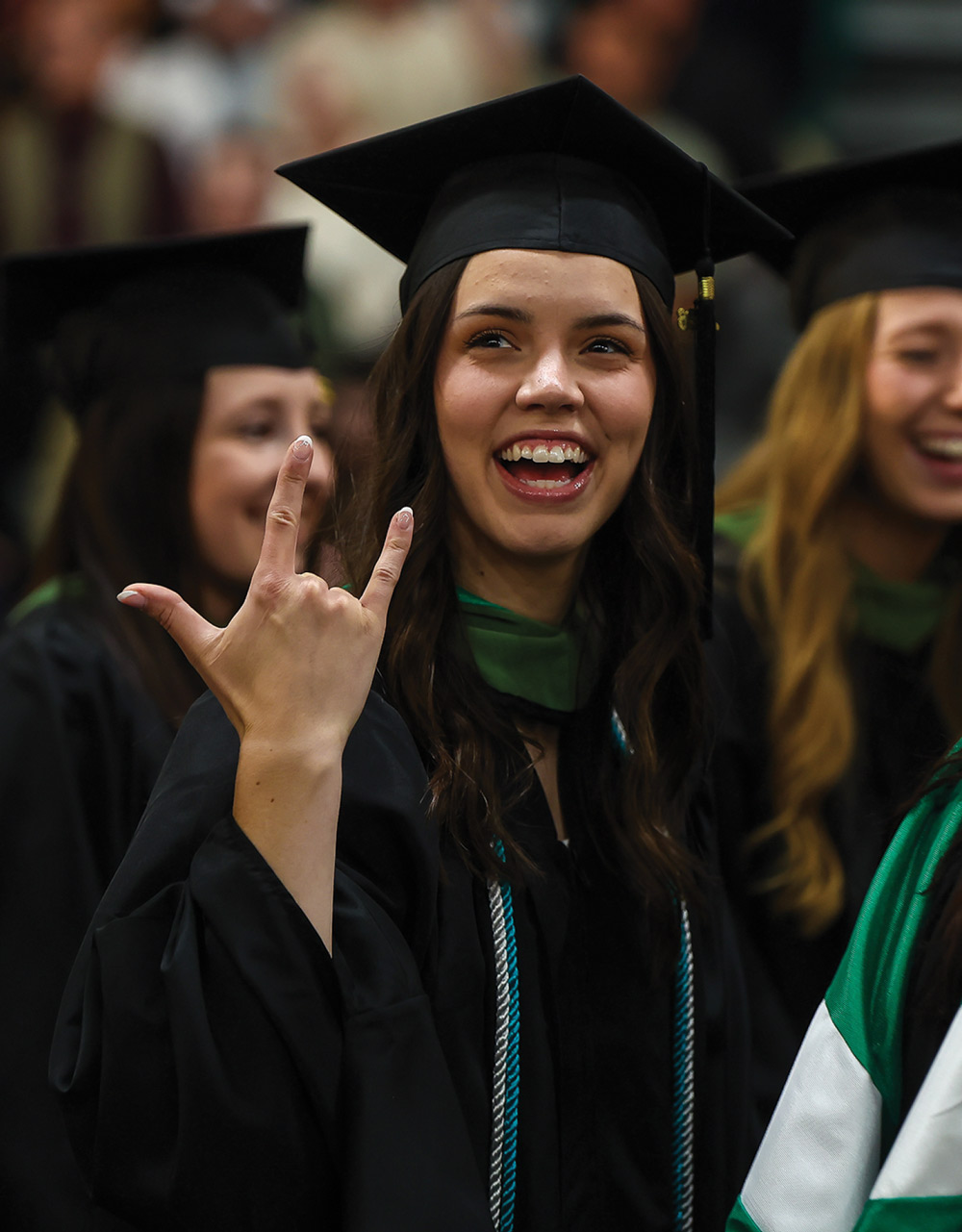
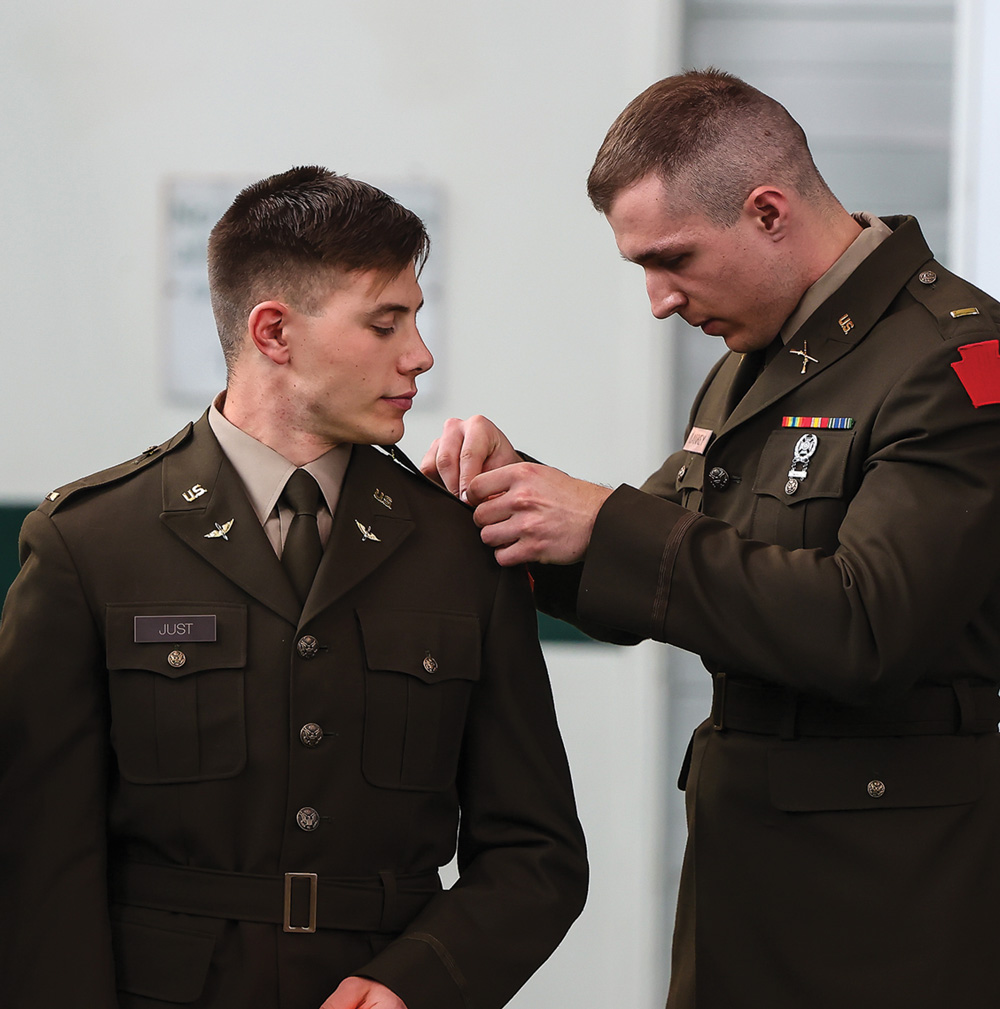
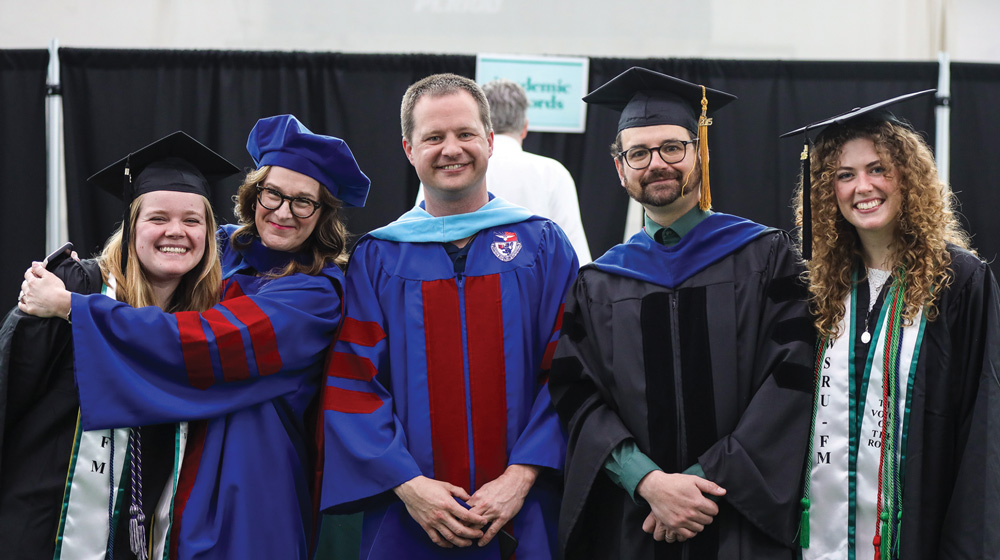
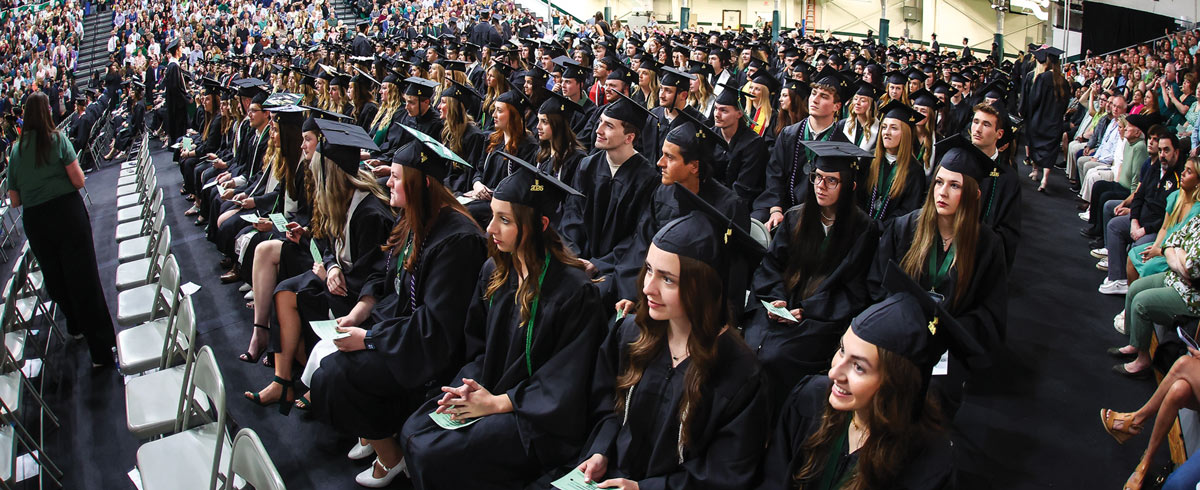
More than 1,600 graduates had their degrees conferred at the ceremony, including 20 members of the U.S. Army ROTC program who read their oaths and were commissioned as officers with the rank of second lieutenant.






Sparking
Fire
in Others
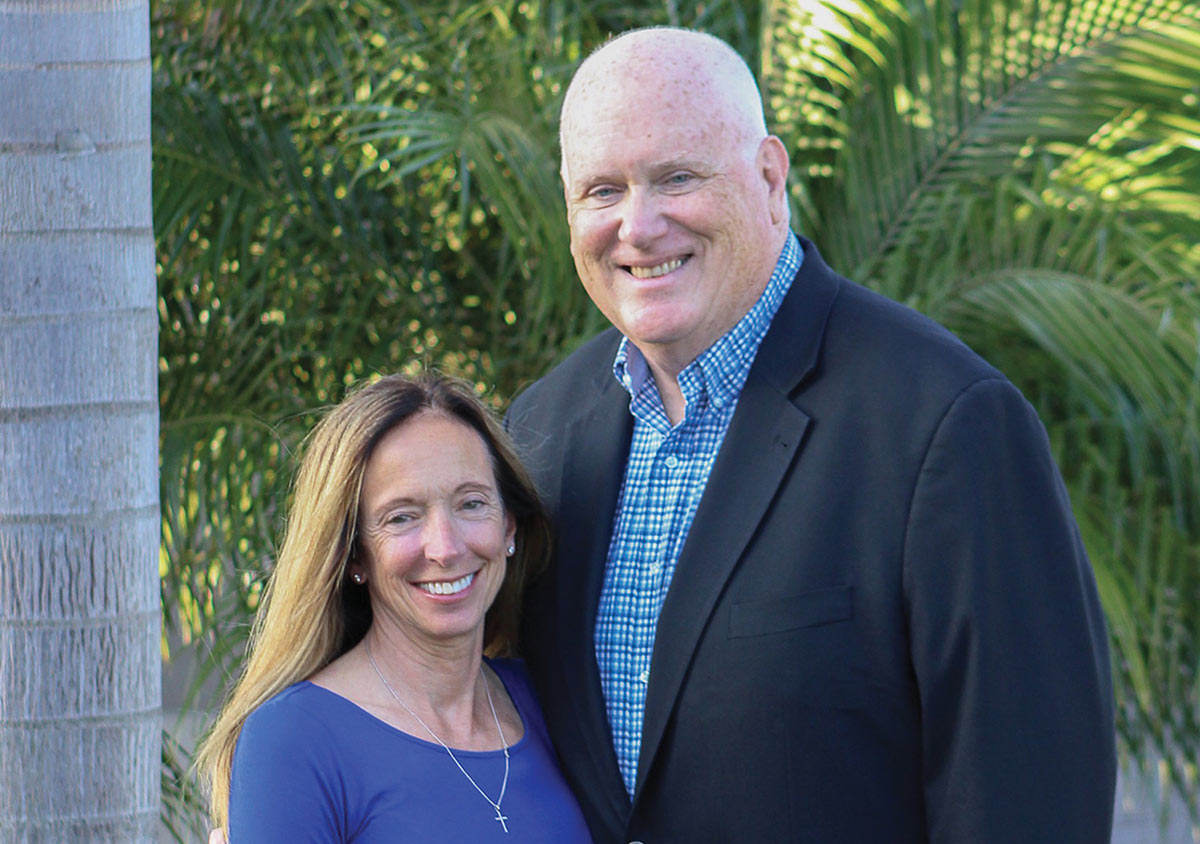
o be a leader, you need to create a spark in others. Whether you are running a company, teaching the next generation or investing in a meaningful cause, small actions can make a big difference. Elliott Haverlack wrote about impactful leaders in his business book “Firestarter: Igniting Change Through Leadership.”
“It’s a philosophy of servant leadership,” said Haverlack, ’80, a Slippery Rock University graduate who whose career as a business executive spanned more than 40 years in the consumer-packaged goods industry. “If you want to lead, you better be prepared to serve. You can spark excitement and you can create an inferno that is inextinguishable.”
Donor support fuels scholarships and experiences that empower students to succeed and lead.
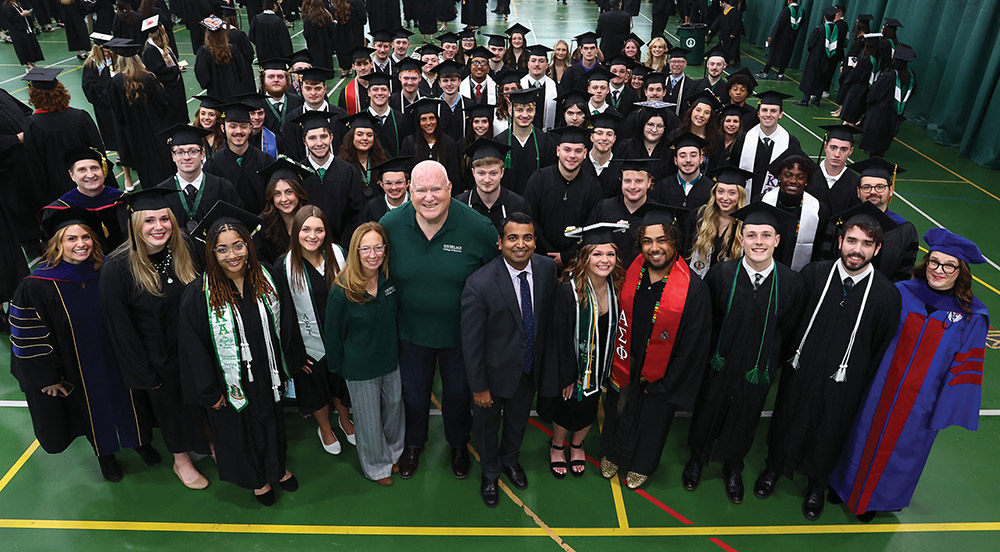
Rhonda and Elliott Haverlack attended the first commencement ceremony at SRU for a named college in December 2025, celebrating with graduates, faculty and Prasad Vemala, dean of the Haverlack College of Business.
“Education does so many things,” Haverlack said. “It is the best way to stop the cycle of generational poverty because not only does it equip you with the skill set, but it also equips you with discipline and it enables belief in yourself.”
An SRU education, in particular, is something that Haverlack believes in. After earning a degree in environmental science, he went on to become a successful business executive in the companion animal consumer product industry.
Investing in SRU sustains a legacy of opportunity, leadership and lifelong impact.
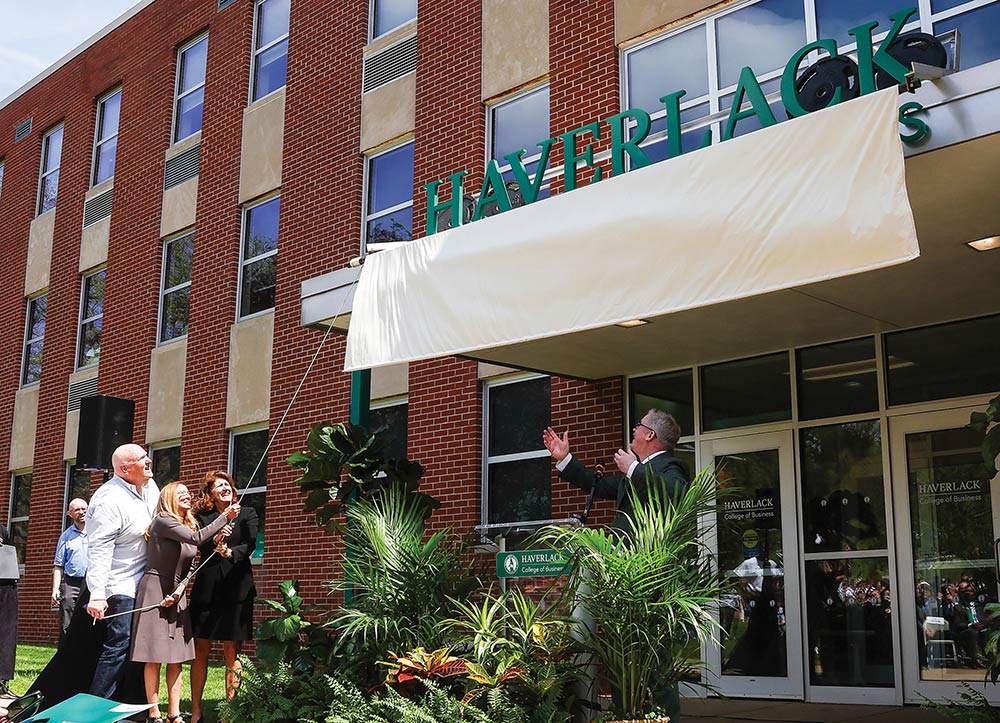
After growing up near Slippery Rock and graduating from his hometown University, Haverlack became a logistics manager for Ralston Purina before working as a vice president of logistics in the H.J. Heinz Company. He later became president and chief operating officer of Meadville-based Ainsworth Pet Nutrition. After retiring in 2012, he and Rhonda were cofounders and principals of Targeted Pet Treats headquartered in Warren, a business that they later sold.
Throughout his career, Haverlack developed high-performing teams, earning a reputation for driving growth through “people-first” strategies. During his retirement he committed to sharing his approach to leadership and business as a three-time published and two-time Amazon Best Selling author.
Opportunity for Impact
“Education has always been my passion,” Haverlack said. “I’ve always wanted to teach, and I’ve always tried to teach my employees and my superiors or anybody that will let me teach them. And I said to myself, ‘How can we help the most people with the kind of amount of money we have to work with?’ That’s when I thought about the University and what it meant to me as a student. The stewardship and leadership that currently is (at SRU) is about as close to perfect as you could get. That’s why I chose to make an investment.”
Future generations carry the torch because of donor investment.
“We never imagined we’d have this opportunity,” said Rhonda Haverlack. “Slippery Rock will always be home for Elliott, and it’s become a special place for both of us. Our hope is that every student who walks through these doors knows that the opportunities available to them are limitless.”
Not only did Elliott Haverlack make a financial commitment to SRU’s business programs, but he became a student by enrolling in the Master of Business Administration program last fall, saying he never worked at anything in his life harder than earning a graduate degree at age 67. Being compelled to stand by the product and attending the school that bears his name are consistent with his strong beliefs. When Haverlack worked at Heinz, he would eat ketchup every time he’d eat in a restaurant — despite not liking it.
The Rock, however, fits his tastes.
“Slippery Rock offers the best blend of authenticity, approachability and affordability,” Haverlack said. “All are welcome, and you’re going to get the real deal when you come here.”
SRU Responds
Within the Haverlack College is a School of Business that is globally recognized. Only 6% of schools have earned the prestigious AACSB accreditation. Vemala considers the Haverlack’s investment and naming as a catalytic moment that future-proofs the college and strengthens SRU’s role as an economic and leadership engine for western Pennsylvania and beyond.
“We are profoundly honored by the Haverlack family’s extraordinary generosity,” said SRU President Karen Riley. “This gift is more than philanthropy, it is a legacy of vision, purpose and enduring impact that will empower future generations to learn, lead and succeed.”
Ben Addison, ’87
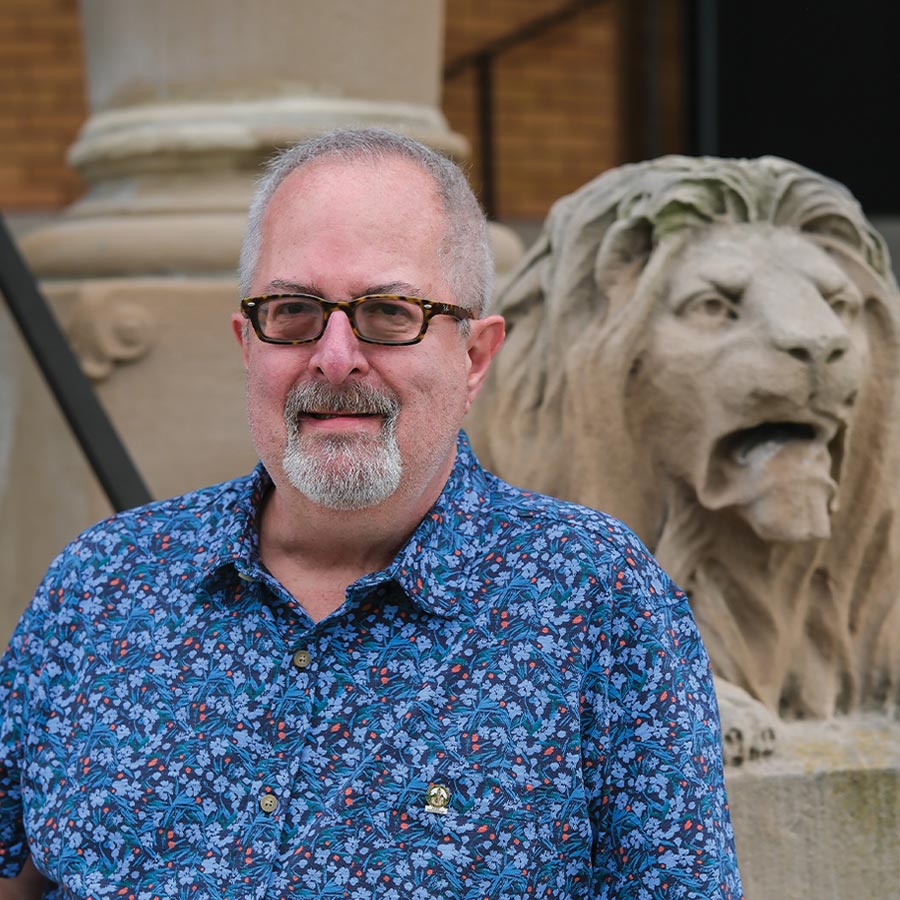
Ben Addison is a lifelong number cruncher. Sure, there are nuances and facets to his work in technology asset review, risk management and governance that he could get into, but his job is to help others succeed within standards. He started in the insurance industry before working 28 years for PricewaterhouseCoopers, one of the largest accounting firms in the world.
Now that he’s retired, Addison reflected on his career and what his SRU education has meant to him.
“I had a successful career because of Slippery Rock,” said Addison, who graduated in 1987 with a degree in computer science and a minor in business. “As many others who have donated back, I’m just grateful for the education that Slippery Rock provided me, and I just want to keep it going.”
Like his career mission to help other succeed within the standards, Addison is “keeping it going” by empowering students to achieve. Support from scholarships funded by alumni like him, prevents students from having to crunch the numbers and make difficult decisions.
“I hear the stories of people dropping out during their sophomore or junior years because they didn’t have the money and couldn’t continue on,” Addison said. “I was the first in my family to go to college, and I was fortunate enough that my parents paid for my education, along with the help of scholarships, and I came out with zero student debt, which was almost unheard of back then for a family from Sharon, Pennsylvania, whose dad worked for General Motors. So I was very grateful for all of the scholarships that I received, and if I hadn’t received them, I probably would not have been able to go to Slippery Rock. Scholarships are the catalyst that keeps people going to the finish line.”
Having just crossed the finish line of his career and into retirement, Addison continues to be a starter — that is, a Firestarter — through his philanthropic support.
Eric Conley, ’90
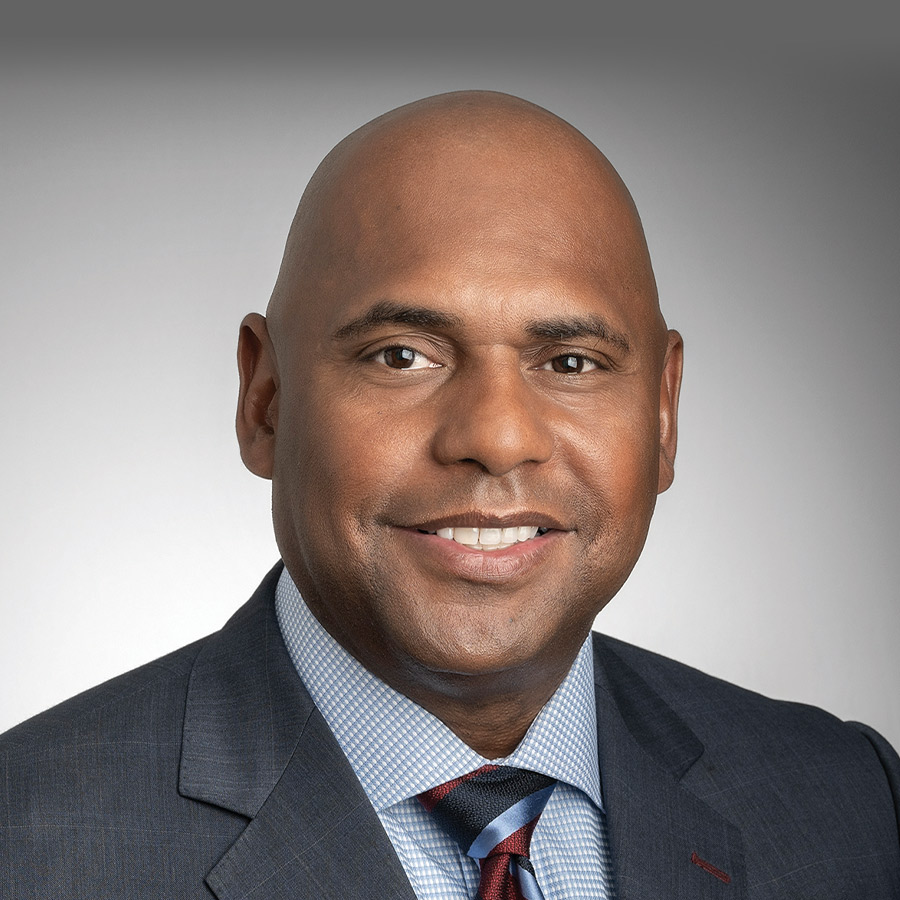
“Leading a high-performing team of individuals who are all driving toward accomplishing a major goal,” said Conley, a 1990 graduate with a degree in health services administration. “That opportunity really helped develop and initiate my leadership skill set. And then in the classroom, I had opportunities to do projects for hospital administration where I got to lead small teams on trying to accomplish a goal of a case study that our professors were leading us toward.”
As Conley has gone on to achieve success in his career, he continues to invest in SRU because the University is providing optimal conditions for more students like him to flourish.
“The importance now is investing in it to make sure that legacy of success continues — administrative success, athletic success and academic success, as well as the success of being a student in today’s environment, which gets harder from a cost perspective,” Conley said. “Slippery Rock has just done an amazing job over decades, so it’s about investing in and supporting a university that knows how to do it and do it right.”
Birtukan Hartman, ’28
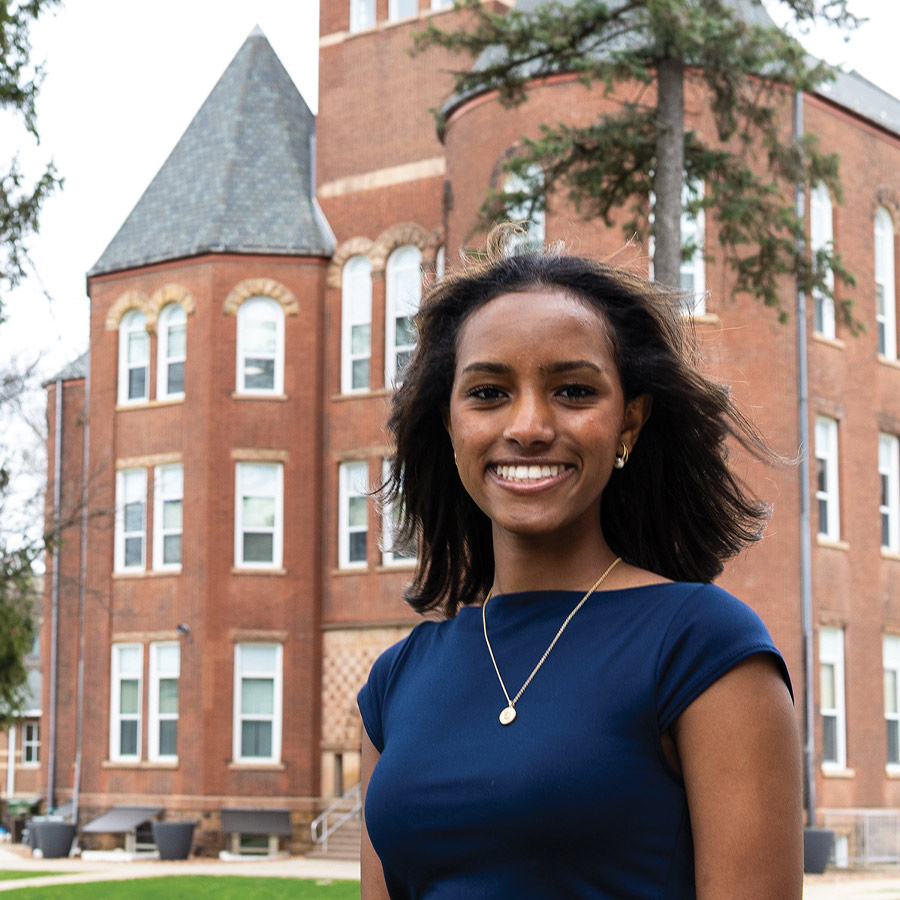
A rising junior marketing major who is a member of The Rock track and cross country teams, Hartman was part of a student group who read Haverlack’s “Firestarter.” She’s a standout in the classroom and is engaged on campus as a member of a Christian student organization and secretary of the American Marketing Association chapter at SRU.
“One of our sayings on the cross country team is that anybody can be a leader,” Hartman said. “Being on a team helps me put others before myself and encourage them.”
Motivated by her campus involvement and mentorship opportunities at SRU, Hartman plans to pursue a career as a marketing project manager after she graduates. She has learned that leadership is less about filling a role and more about how she interacts with other people every day.
“SRU has positioned me for success and given me the confidence to become a leader,” Hartman said. “Thanks to the Haverlacks and all the coaches, professors, donors and everyone who contributes to the student experience here at SRU, I now have a fire that cannot be extinguished.”
Securing Futures
elf-motivation, curiosity and resilience are vital qualities for students to succeed in cybersecurity, and these traits are exemplified every day by Nitin Sukhija, Ph.D., Slippery Rock University professor of computer science.
Sukhija is developing students skills so they can reduce risks, secure data and solve problems in an evolving world.

Sukhija, who is the director of SRU’s Center for Cybersecurity and Advanced Computing, was recently named a Trusted CI Fellow, one of only 10 individuals selected for this prestigious cyberinfrastructure fellowship through the National Science Foundation’s Cybersecurity Center of Excellence. Sukhija has participated in research and management of several projects regarding high-performance computing and software security over the last 20 years. His areas of expertise include computing focused on performance modeling, robustness and resilience analysis, cybersecurity, cyber analytics and big data analytics.
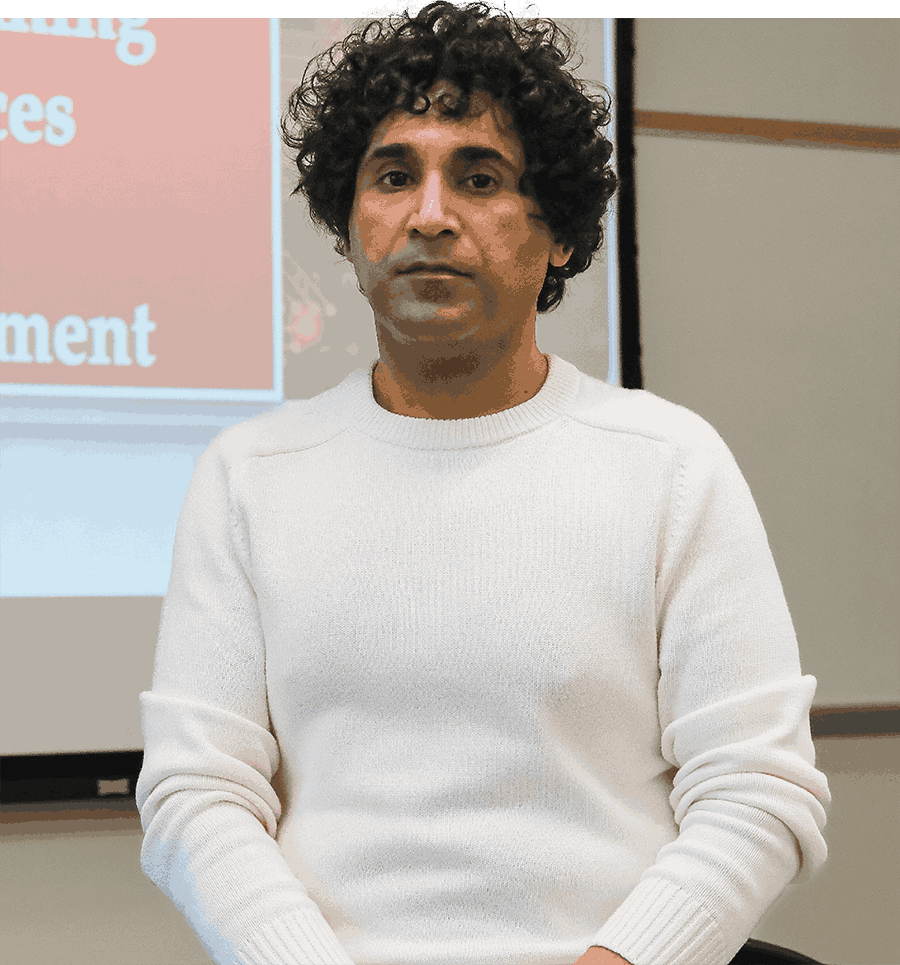
“I have found that blended learning has significantly improved student outcomes in my classroom,” Sukhija said. “This dynamic approach connects theoretical concepts with real-world applications in computing and cybersecurity, creating an engaging learning environment.“
Investing today in the leaders of tomorrow.
Sukhija also actively fosters adaptability and continuous upskilling, which allow students to build analytical foundations and develop relationships and the leadership abilities that they need for long-term success in today’s evolving technological landscape.
The Cybersecurity and Advanced Computing Center, launched in 2018, provides students with opportunities to seek mentorship and participate in research and events in cybersecurity and related fields, affording undergraduate students with invaluable experiences that they cannot access at many larger institutions.
Under Sukhija’s guidance SRU students are positioned to be collaborative achievers responding to engaging questions, creating solutions and establishing themselves as prominent voices.
Forward-Thinking Use of AI
rtificial intelligence is transforming the way the world works — and Slippery Rock University is ensuring its graduates are ready to lead that transformation. Few people understand AI and how students can leverage this emerging technology in their careers like Sam Thangiah, Ph.D., SRU professor of computing and security and director of the University’s Artificial Intelligence and Robotics Lab.
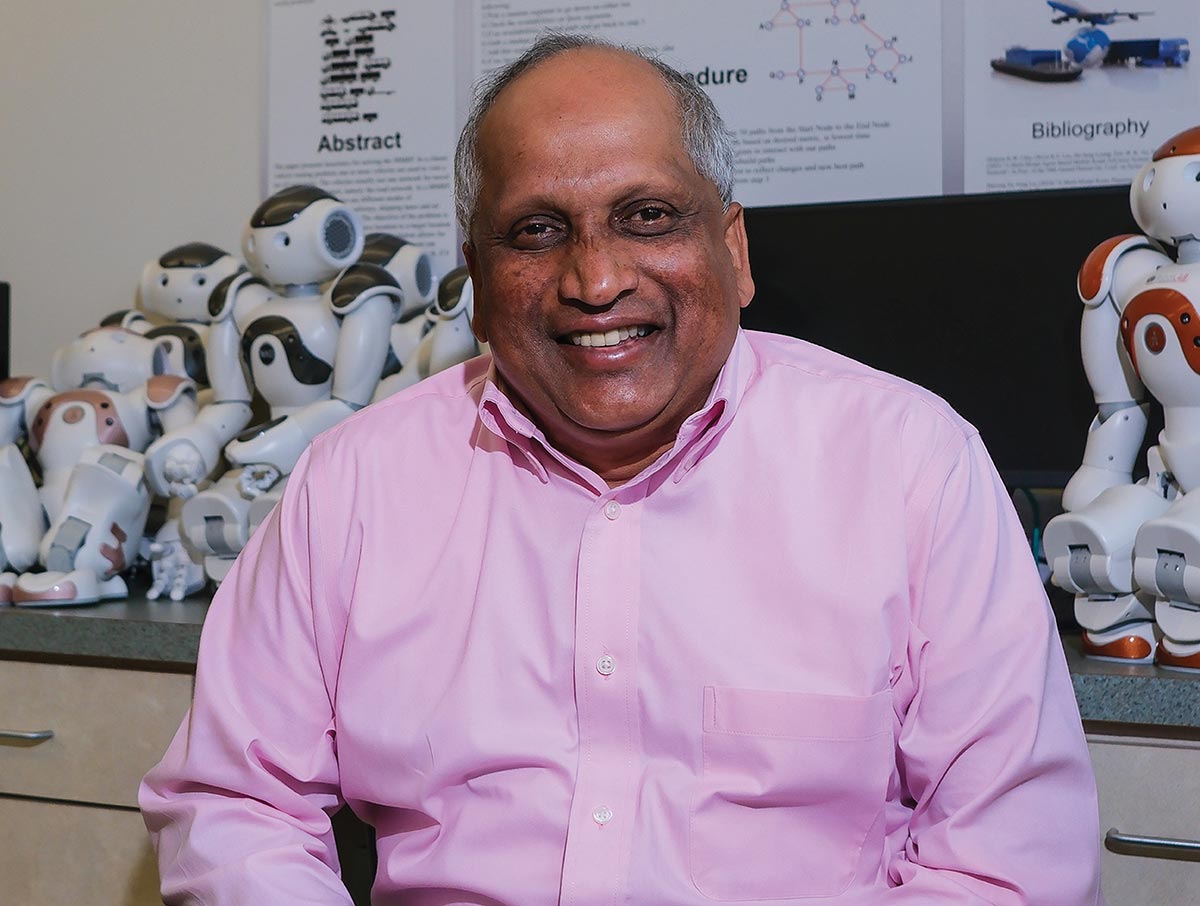
Thangiah has become a recognized expert in developing artificial intelligence algorithms to solve complex transportation problems, specifically vehicle routing and scheduling problems that have saved school districts up to 20% on their transportation costs through greater efficiency.
Defining AI
“AI is best and most often used for solving unstructured problems,” Thangiah said. “Structured problems are when you go through a sequence of steps to solve it, and every time you give it an input, you’ll get the same output. AI is unstructured so that if you give an input, you could end up getting different outputs for the same input. Artificial intelligence algorithms should be capable of learning and adapting.”
Supporting faculty who equip students with the skills to lead in rapidly evolving fields.
“AI isn’t just for coders or computing majors,” Thangiah said. “It’s impacting a large number of majors and professions.”
Examples include the banking industry using AI for detecting and preventing fraud and doctors using AI to read X-rays and scans to identify and diagnose health problems that they might have missed previously. One of the recent milestones in medical science involves protein folding, which is the process by which a protein chain twists into its correct 3-D shape so it can work properly. This application is important because misfolding can cause diseases like Alzheimer’s, Parkinson’s and cystic fibrosis.
Shifting Skills
“AI is going to have a large impact on the workforce, because any job that is repetitive in nature is most probably going to get replaced by AI,” Thangiah said. “Everything from manufacturing to customer service, even to point to where there will be robots flipping burgers.”
That doesn’t mean opportunities are disappearing. Instead, they’re shifting toward higher-level work that requires creativity, critical thinking and the ability to build and manage intelligent systems. SRU’s curriculum reflects that reality by embedding AI methods and models into computer science, cybersecurity, information technology, and data analytics courses.
“Employers want graduates who can communicate, collaborate and innovate; it’s not just about knowing the theory,” Thangiah said. “Here at SRU, our students are learning how to implement AI models, work in teams and present their solutions. These are skills that make them stand out to companies looking for more than just academic knowledge.”
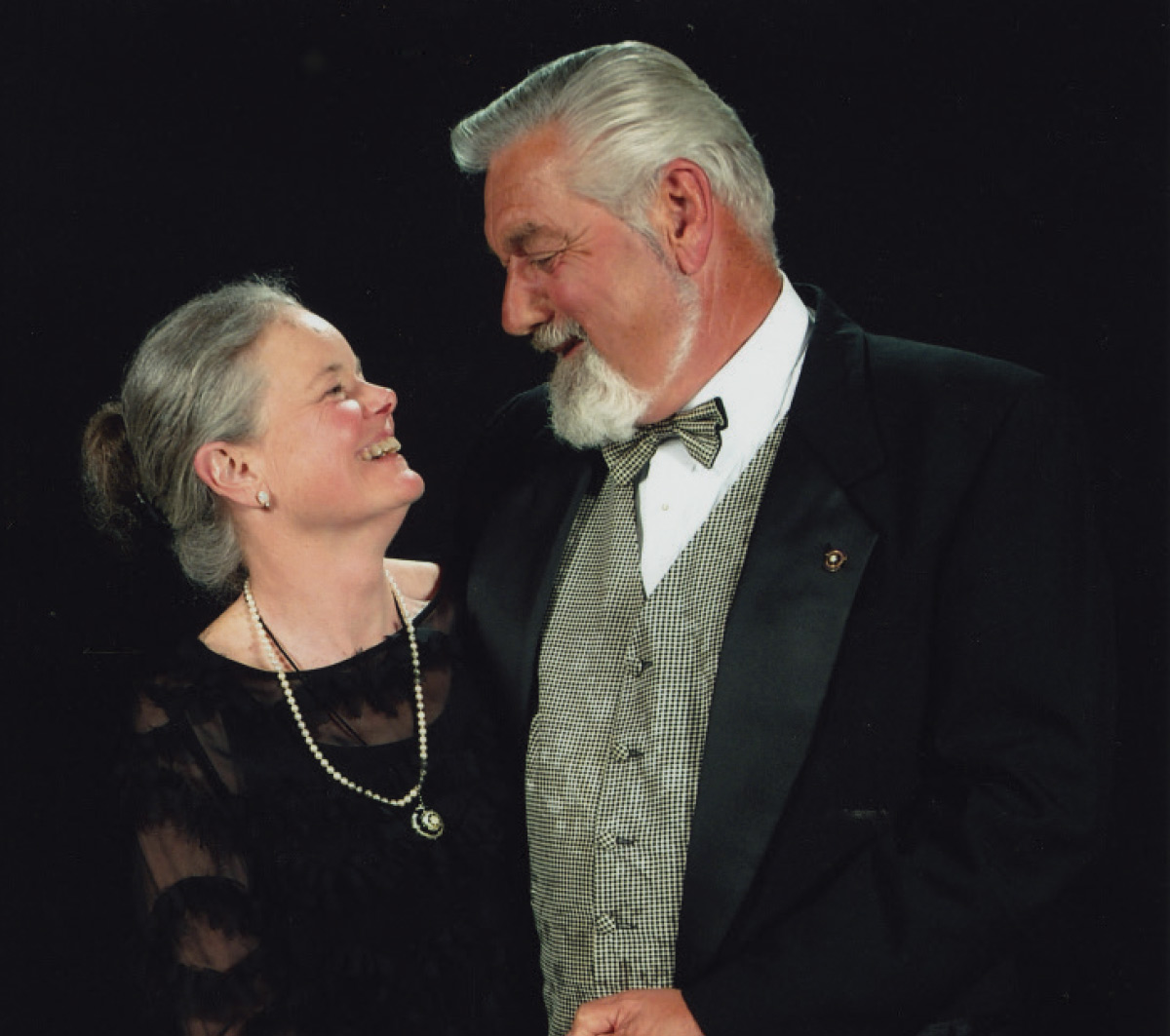
Remembering Paul Rizza
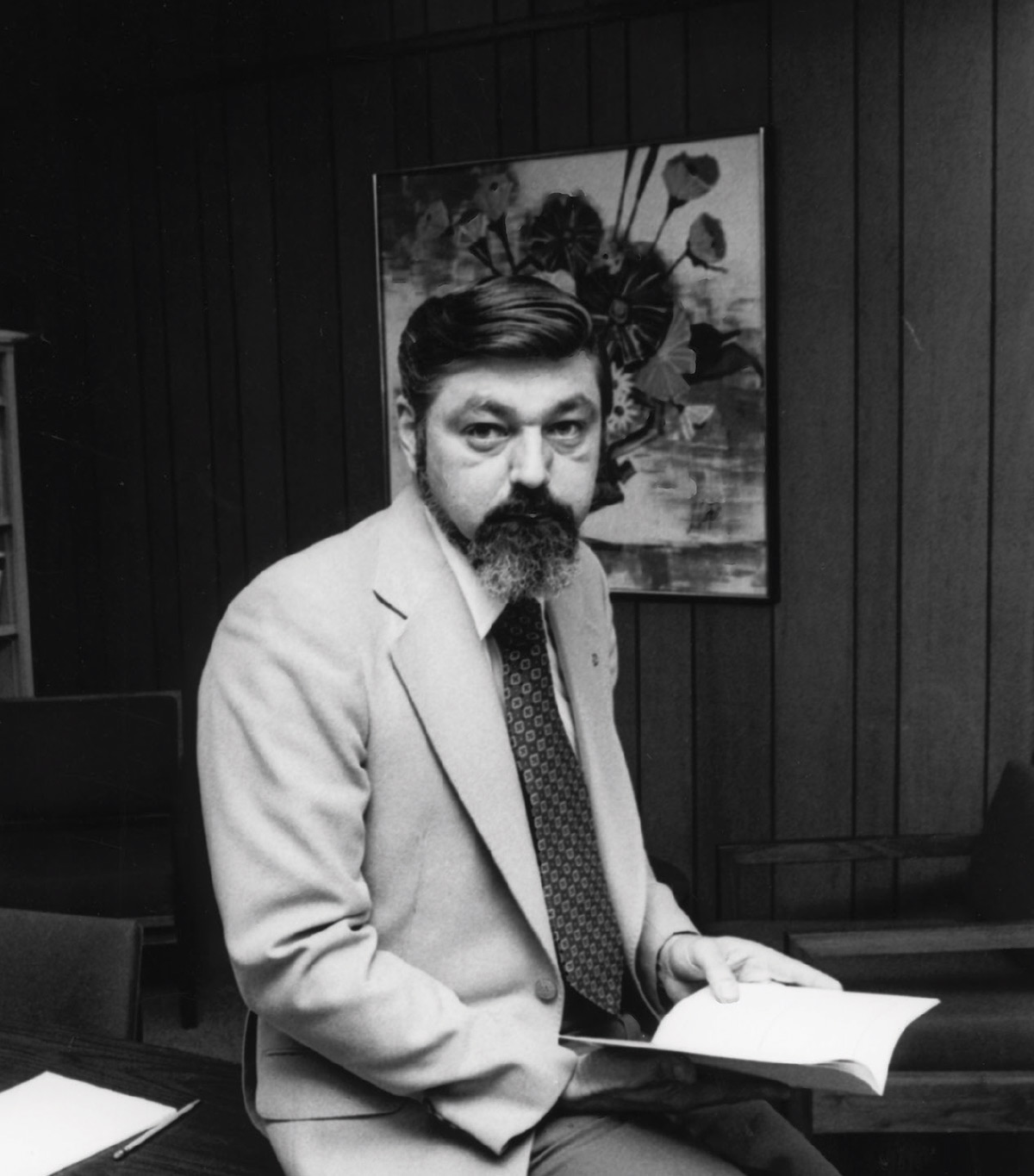
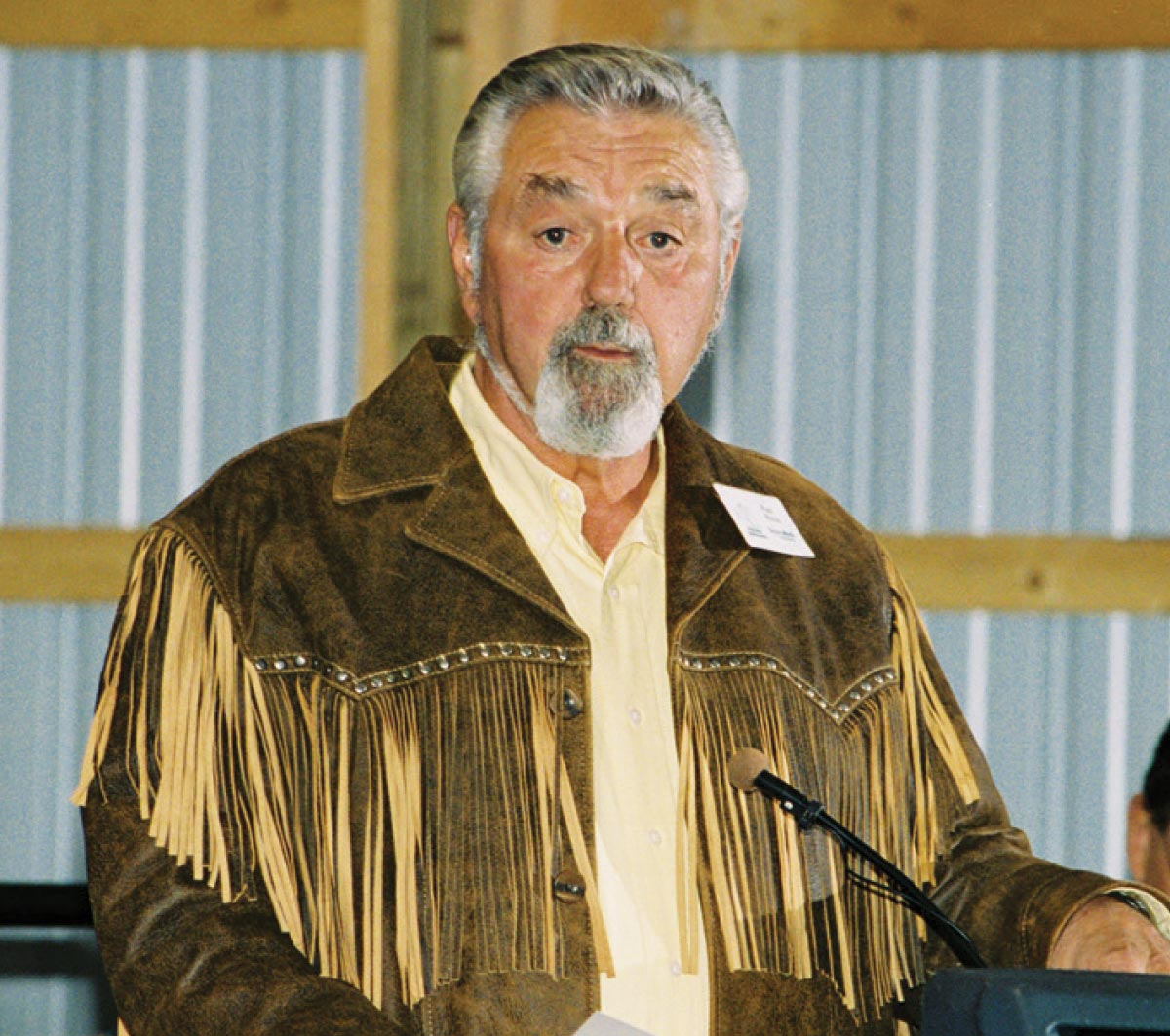
lifelong advocate for Slippery Rock University and a benefactor of the University’s Storm Harbor Equestrian Center, Paul Rizza, Ph.D., left an impact that goes beyond his time as a faculty member – it will be felt for decades to come.
Rizza served SRU from 1972-98 before retiring as professor and chair of the Geography and Environmental Studies Department, but his legacy also includes his commitments to students, global outreach, service in the community and as one of SRU’s most resounding philanthropists. Rizza passed away March 13 at the age of 87.
Rizza and his wife, Carolyn Carruth Rizza, who passed away in 2022, were best known on campus for their work founding and supporting Storm Harbor Equestrian Center. Carolyn Carruth Rizza also served on the SRU faculty for 24 years before retiring in 1999 as a professor of sociology and social work. Together, the Rizzas donated more than $1 million to Storm Harbor, including money to build the center and the endowment to pay its staff.
Storm Harbor provides equine-assisted activities and equine-assisted therapies for children and adults with disabilities, serving people from more than seven counties. It also provides SRU students opportunities to serve individuals with disabilities, giving them valuable field experiences.
Rizza also contributed to scholarships and other financial investments in students and programs that helped empower growth and development.
“His legacy is so much more than about the money he gave, he actually did the work on the ground and met with scholarship recipients and got to know people,” said Jack Livingston, an SRU associate professor of environmental geosciences. “He was an incredibly engaging professor who was just always there for you, and he was incredibly supportive of our students, our department and the University.”
The greatest gifts to SRU don’t end with a lifetime — they continue changing lives and strengthening the University for generations.
His achievements weren’t limited to SRU’s campus, as he was deeply engaged in service and global outreach. In 1976, he was awarded a Senior Fulbright Lectureship to Finland, which he adopted as his second country, where he was guest lecturer at three universities and he was selected to represent Finland at the European Fulbright Conference in Berlin.
A member of Rotary International for more than 50 years, he served as president of the Slippery Rock Rotary Club and later as district governor. His commitment to peace and international understanding was evident through his work with the Rotary Foundation, including supporting its Peace Fellowship Program. He and Carolyn endowed peace fellowships and traveled extensively, visiting all seven continents and 87 countries.
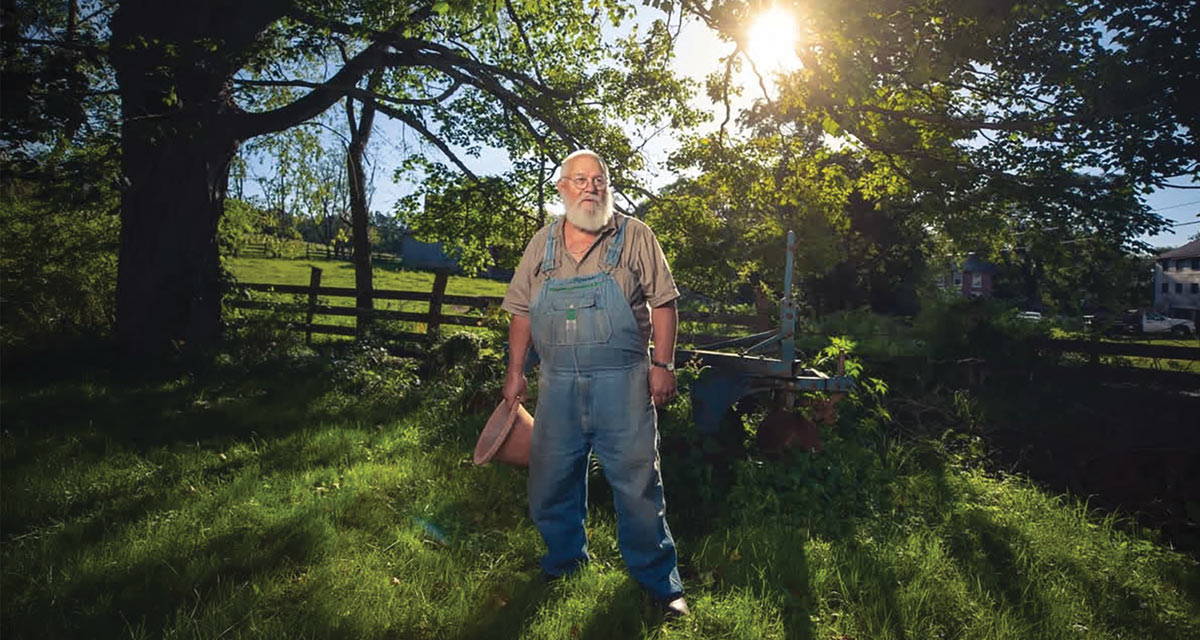
Remembering Dick Wukich
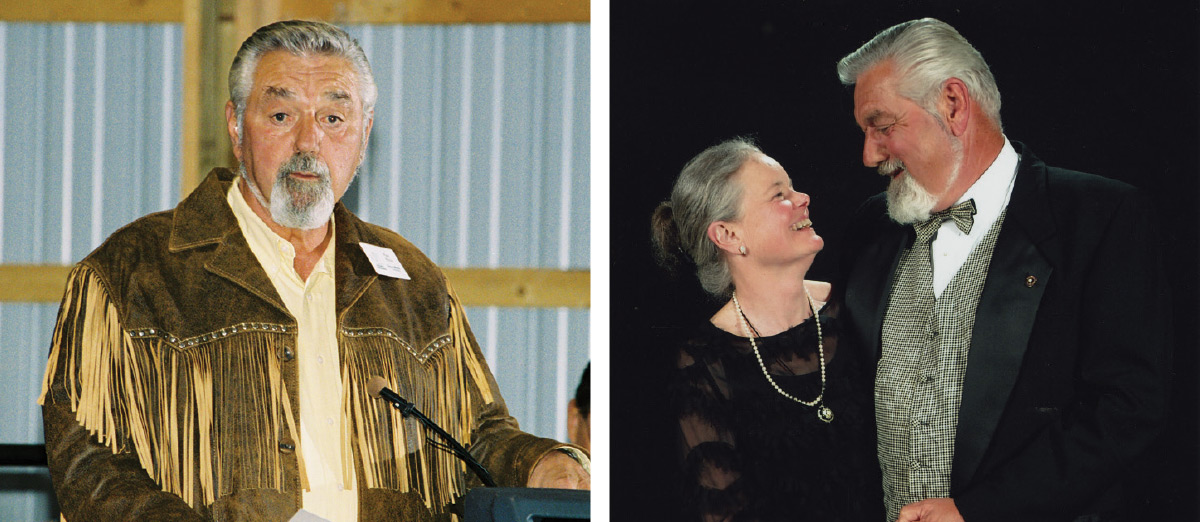
hile the annals of Slippery Rock University history are full of committed, passionate people who have left their mark on the University, precious few can match the particular fire and venerable reputation of Dick Wukich. A former professor of art and trustee, Wukich passed away on Dec. 25, 2025, leaving behind a vast legacy that spans both his active presence on campus and through humanitarian efforts addressing hunger and safe drinking water.
A native of North Braddock, Wukich joined the SRU art faculty in 1968, retiring in 2011. In that time, Wukich impacted the lives of students and contributed to faculty life as a founding member of SRU’s chapter of the Association of Pennsylvania State College & University Faculties.

Campus Impact
“Dick was very much an advocate for art as a means of advancing people,” Shumway said. “He brought art to underserved communities throughout the Commonwealth.”
One of those outreach efforts was the Summer Art Academy, a program that brought students from around Pennsylvania to the SRU campus for two weeks of intensive study of artistic disciplines ranging from fine arts to music. Students from towns all throughout Pennsylvania come to campus for two weeks each summer for intensive, conservatory level study of their craft.
The Academy was born of Wukich’s desire to provide high quality arts instruction to students from smaller, less affluent schools with struggling art programs, giving students from those places an equal opportunity to pursue their passions and broaden their minds.
“Dick was very much an advocate for art as a means of advancing people. He brought art to underserved communities throughout the Commonwealth.”
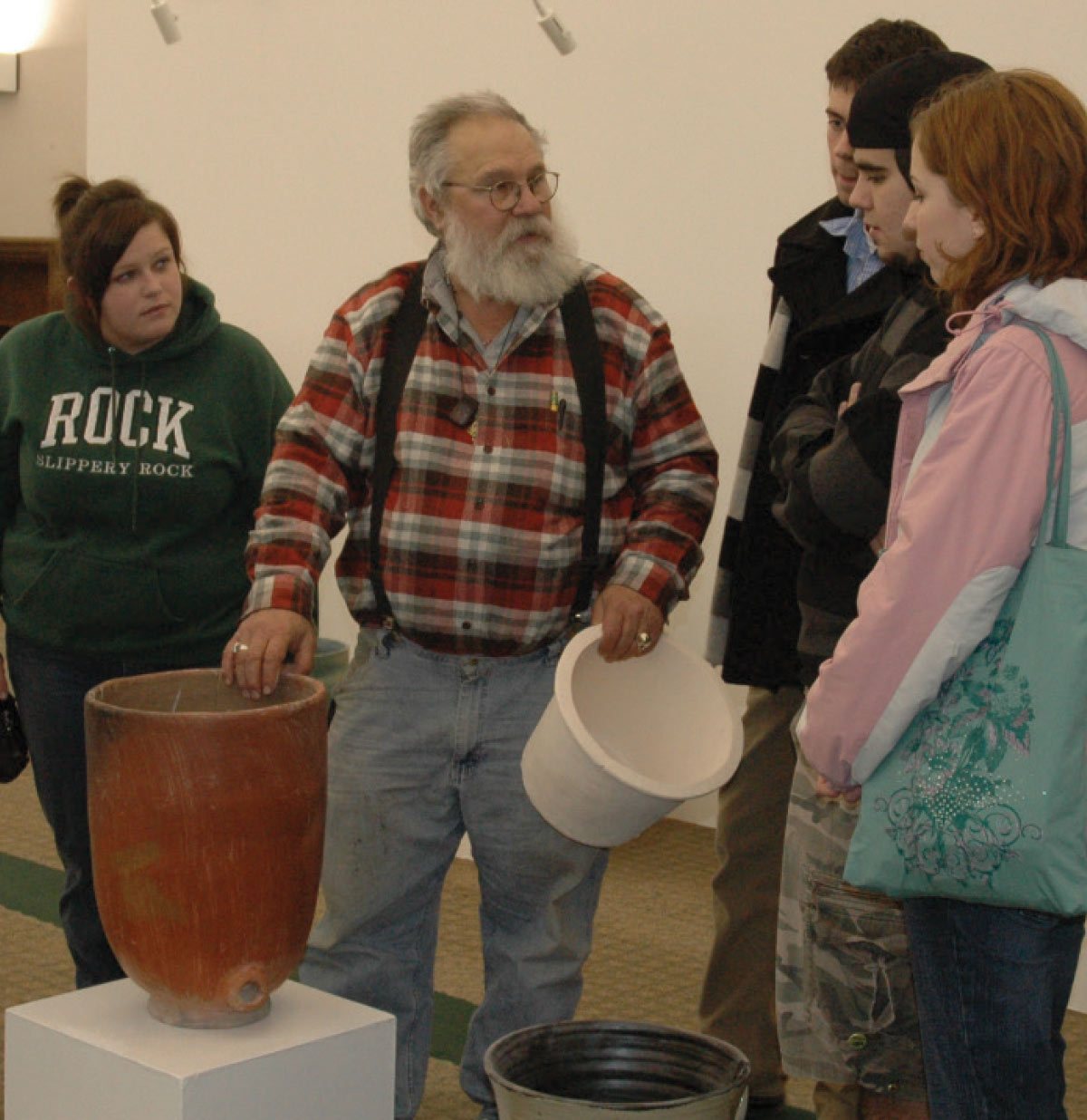
Legacy of Outreach
“He was promoting the water filter and helping people to establish facilities in Sudan, and he made a little video clip of him where he’s chanting ‘Here we go, Steelers, here we go!’ and a bunch of kids start calling back, mimicking him!” Shumway recalled, laughing. “It was just this little joyous experience where he was sharing where he came from and the kids were just enjoying the experience with him.”
That love of where he came from was something that spoke to Shumway throughout their time together.
“He showed the importance of staying true to who you are and standing up for what you believe in,” Shumway added. “He had very strongly held convictions, and he held them to his dying day.”
It is clear that Wukich left an impression on those who knew him with his strong personality alone, but this larger-than-life figure’s legacy is ultimately defined by those he helped as a teacher and activist.

Back on the Mat
restling is a sport that changes lives, and western Pennsylvania is a place where the best wrestlers are born and raised. Now, thanks to support of loyal alumni, Slippery Rock University is once again a place where college wrestlers can thrive and develop the skills they need to succeed in life.
When SRU announced in November 2025 that the University is bringing back wrestling as a varsity sport for the 2027-28 season, former Rock wrestlers like Robert Dudley could not have been more excited because he knows how important the sport is to not only his fellow alumni but the people of western Pennsylvania and wrestling enthusiasts and, above all, for the opportunities that young men will once again have to succeed on the mat and in life.
“The sport itself changed my life,” said Dudley, ’77, a retired sales manager who began his career as a physical education teacher. “It changed my outlook and allowed me to pivot from just being able to teach to understanding how to learn. There’s a deep appreciation from one wrestler to another, because you know the toughness, hard work and everything that goes along with wrestling and what it takes to succeed.”
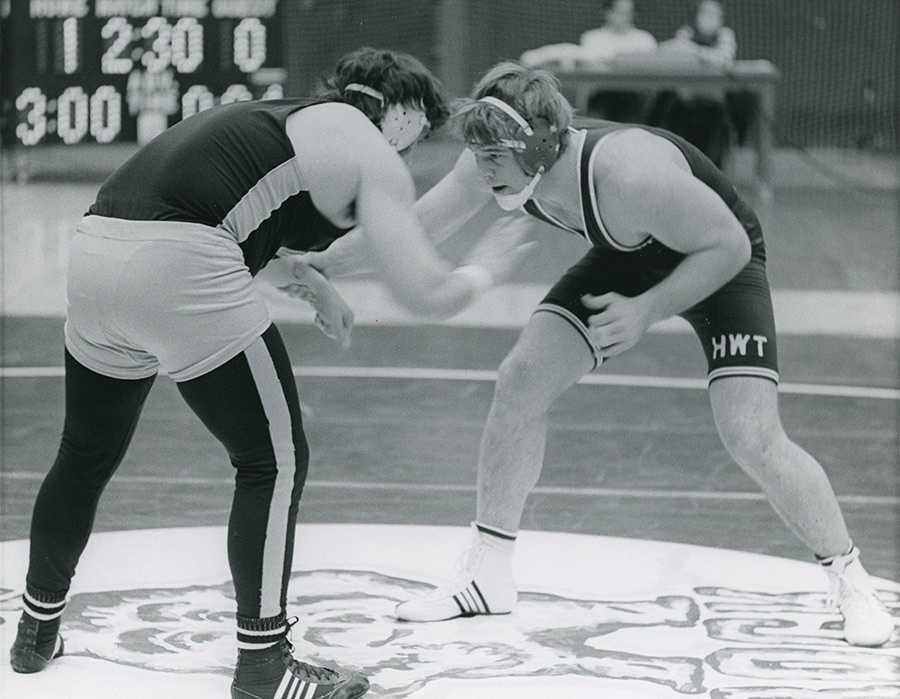
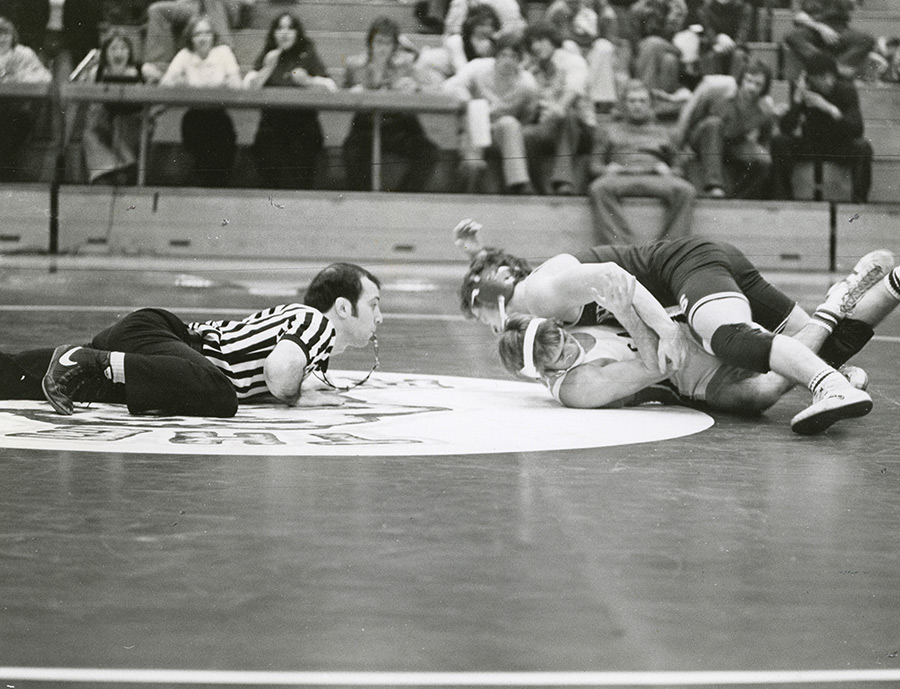
SRU contributed to this rich history with a successful program from 1958-2006, including a 24-year run under legendary coach Fred Powell in which the team won 66 percent of its matches and placed 10th at Division I nationals in 1974. Starting with a 19-0 season in 1969-70, Powell led the team to a seven-year stretch with a dazzling 98-9 record with nine All-Americans at both the Division I and College Division levels.
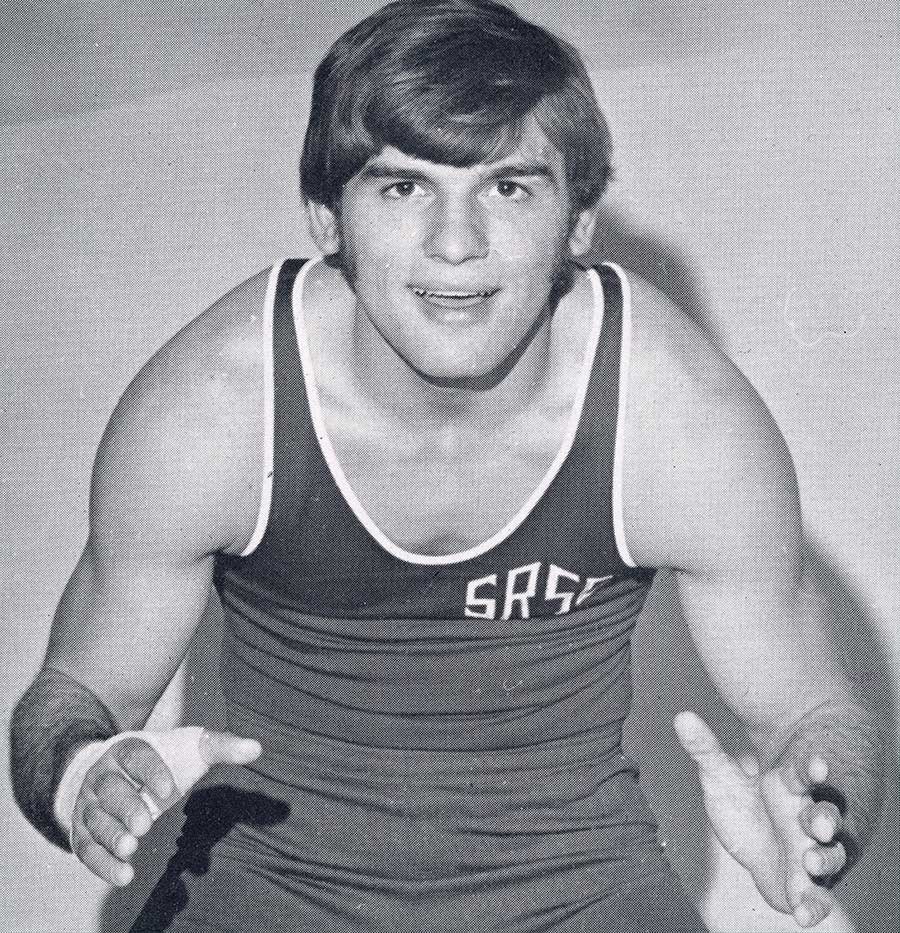
Among the many prominent wrestlers in program history is Stan Dziedzic, ’72, a national champion in 1971 who compiled a 118-2 career record and went on to win a bronze medal at the 1976 Olympic Games and a gold medal in the 1980 World Championships.
The Rock will compete in NCAA Division II when wrestling returns, the team’s level when the program went on hiatus two decades ago. NCAA rules have changed since the last time SRU fielded a wrestling team and a return to the Division I level is no longer possible.
Still, the excitement and potential for success around the sport has been building. Several supporters banded together to form SRU Wrestling Alumni and Friends Committee, now chaired by John Butch, ’72, and the University recently launched a wrestling campaign with an initial goal of $2 million.
“The passion of the past is coming back and whoever comes to Slippery Rock to wrestle will have a wealth of people supporting their work and effort,” Dudley said. “We’ve got the opportunity to bring back a very successful and respected program, and one that impacted a generation of wrestlers.”
Dudley has created a dollar-for-dollar match challenge (up to $250,000) to effectively double the impact of each additional dollar raised to help bring the program’s return to the next level.
“Your support today does not determine if Slippery Rock wrestling returns — it determines how strong it returns.”
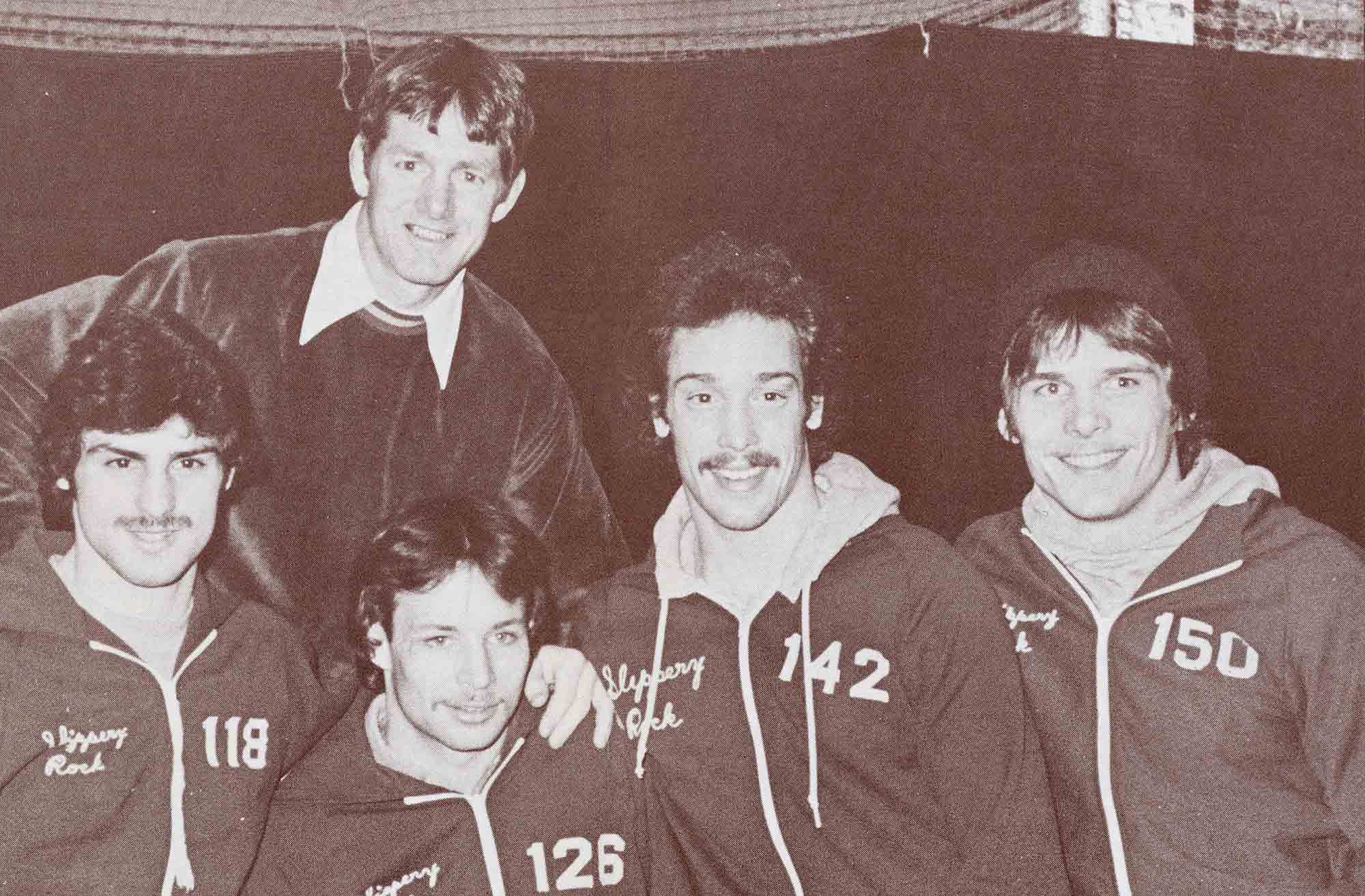
“SRU is excited to revive its storied wrestling tradition, and counts on the support of alumni, fans, and friends to get us to the mat,” said Roberta Page, SRU director of athletics. “The campaign will help fund essential needs such as equipment, coaching, travel and scholarships, ensuring SRU wrestlers can compete among the nation’s best once again.”
“Every gift directly strengthens the program’s long-term success by creating a program that attracts and develops top-tier student-athletes,” said John Stroup ’80, a former Rock wrestler. “Your support today does not determine if Slippery Rock wrestling returns — it determines how strong it returns.”

Women’s Flag Football
Flag football has been one of the fastest-growing sports in the country at the youth, high school and collegiate levels, with at least 65 NCAA schools sponsoring the sport in 2025-26 and more than 150 Pennsylvania high schools field teams since the state athletics board approved the sport in 2024.
Family from eastern Pennsylvania on the University that said ‘yes’
hen Nancy Zimmerman’s daughter Kaylee was searching for colleges, she had a very clear and specific view of what she wanted to study. Despite living in Langhorne, north of Philadelphia near the New Jersey border, the Zimmerman’s found an ideal match on the other side of Pennsylvania.
A longtime musician, Kaylee wanted to study music therapy and pursue a doctorate in occupational therapy. The Zimmermans desired a school like SRU that would give Kaylee the support and opportunities she would need to reach her goals.
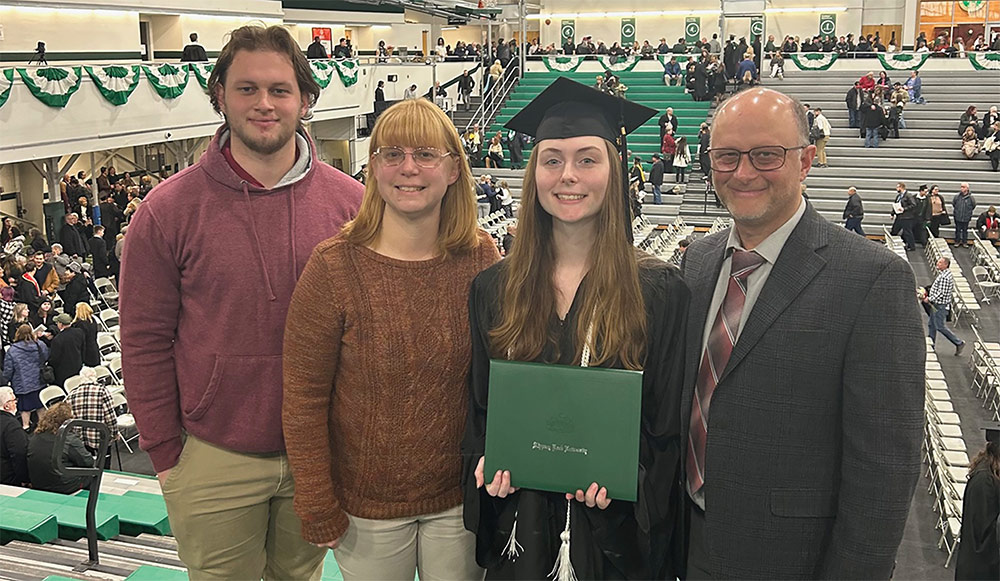
At many schools, occupational therapy programs operate as “3+3” programs in which students spend three years studying occupational therapy as undergraduate students before going on to spend three years in doctoral programs. While these programs do accelerate students’ progress, they aren’t always the best path for students with interests as specific and specialized as Kaylee’s.
“The approach was to do a traditional four years of undergrad in music therapy and then the three-year doctorate in occupational therapy. The school had physical therapists do this, but Kaylee was the first music therapist,” Nancy said.
The Zimmermans are a State System of Higher Education family: Kaylee’s brother recently graduated from PennWest California, and both Nancy and her husband attended state universities.
“We looked at a few private schools, too, but the state schools offer so much financially and in terms of overall experience,” Nancy said.
While the Zimmermans knew the merits of state schools, their first visit to the town of Slippery Rock for a tour of the University helped seal the deal.
SRU advances students’ ambitions by turning goals into life changing realities.
After that first visit, Kaylee, a French horn player, was put in touch with French horn players on campus and even had a French horn lesson conducted via Zoom with a faculty member. Then, when Kaylee went in for her audition for the music therapy program, she got the opportunity to sit in on classes and to meet other music therapy students who showed her around campus and had lunch with her.
“Everyone went out of their way for her,” Nancy said. “After we got home, she was like, ‘That’s it. It’s Slippery Rock. I don’t need to look anywhere else.’”
Kaylee’s advisers in music therapy and occupational therapy also worked together to ensure that she was poised to approach issues from both disciplinary perspectives to make her a consummate expert in both fields.
While the Zimmermans live on the other side of the state, they knew that SRU was the place for Kaylee when they experienced the University’s commitment to going the extra mile to help students meet their personal career goals. The Zimmermans had the confidence to say ‘yes’ to SRU because SRU first said ‘yes’ to Kaylee’s goals.

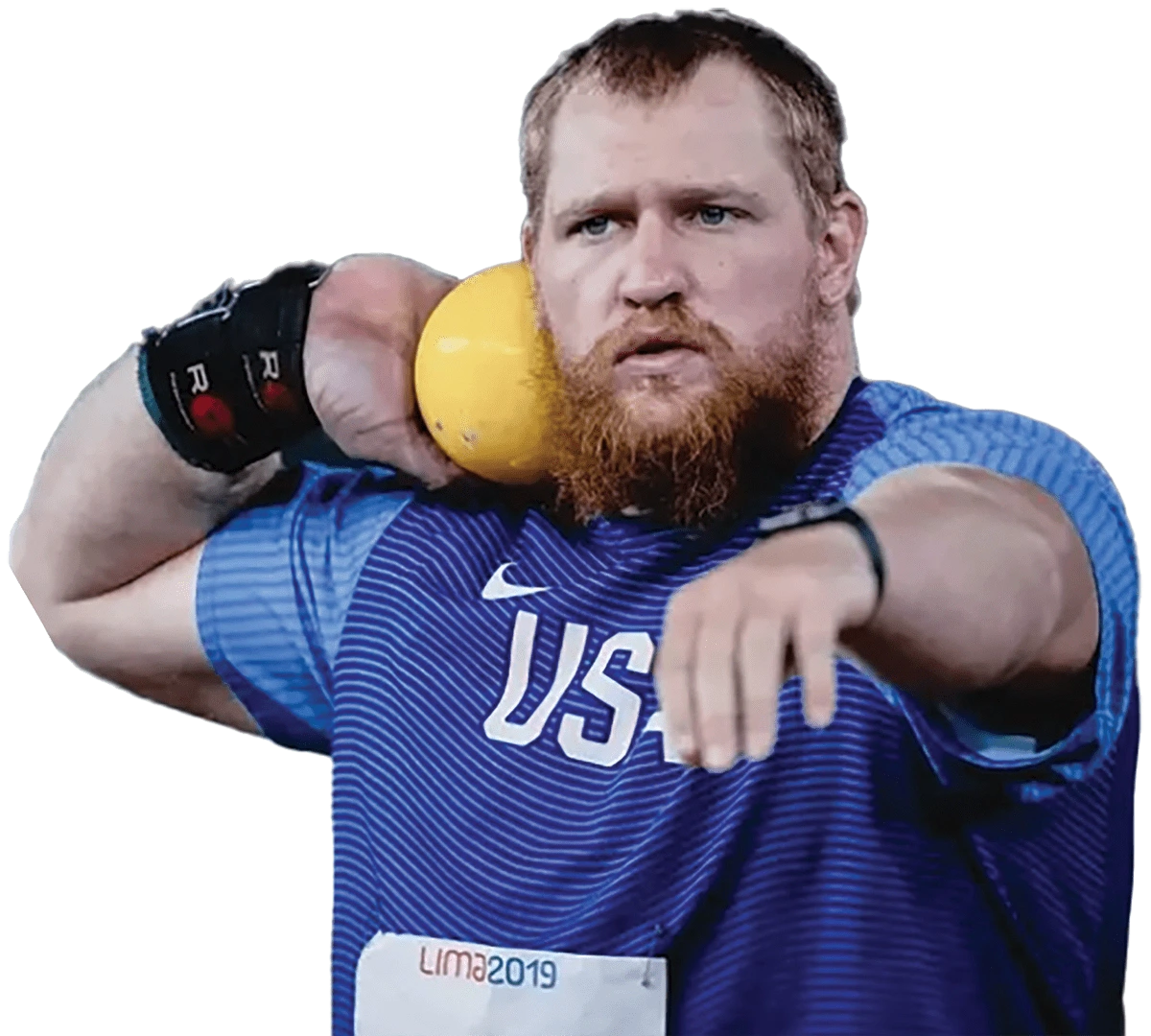
World-Class Coach
Since then, Geist has continued to compete on the global stage for Team USA at the World Athletics Indoor Championships in Poland. His shot put throw of 21.64 meters earned him a silver medal at the competition.
A native of Saxonburg, Geist works alongside his parents, volunteer coaches Jim and Judy Geist, in coaching the SRU throwers. Both Judy and Jim are in the SRU Hall of Fame after storied careers as members of The Rock track and field program. This winter, Geist helped the SRU men’s throwers break two indoor school records.
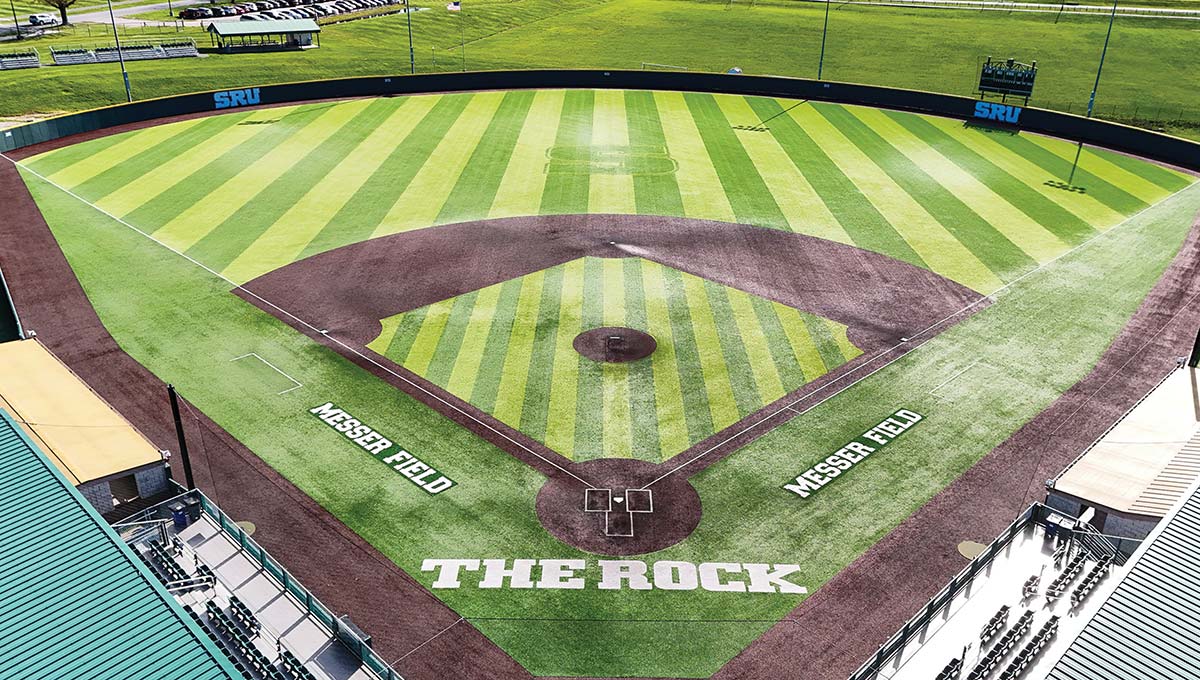
Messer Field Dedicated
Last fall, the SRU council of trustees approved a naming resolution to honor SRU baseball head coach Jeff Messer, and earlier this spring former players and other alumni and friends gathered to celebrate the honor.
The council approved to name the playing field at Jack Critchfield Park as “Messer Field” in recognition of pledged philanthropic support of the SRU baseball team by alumni and friends to honor Messer. The field and stadium is now collectively named “Messer Field at Jack Critchfield Park.”
Alumni from the baseball team have embarked on a $100,000 fundraising campaign in support of the Messer Field naming project that will support the program and its student athletes.
One of the most decorated coaches in Division II history, Messer has compiled a 1,172-774-5 overall record during his accomplished career at The Rock.
A 2023 American Baseball Coaches Association Hall of Fame inductee, Messer currently ranks eighth in Division II history for wins in a career as well as being the third winningest active coach in DII.
Springing Champions
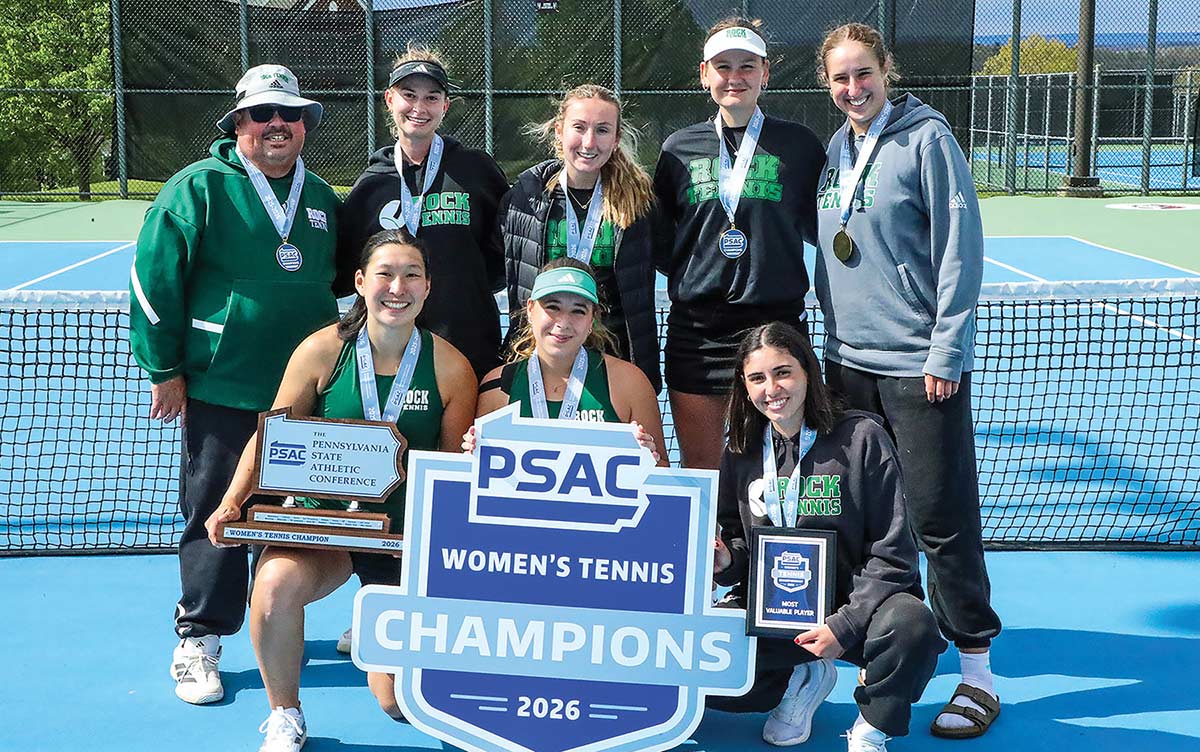
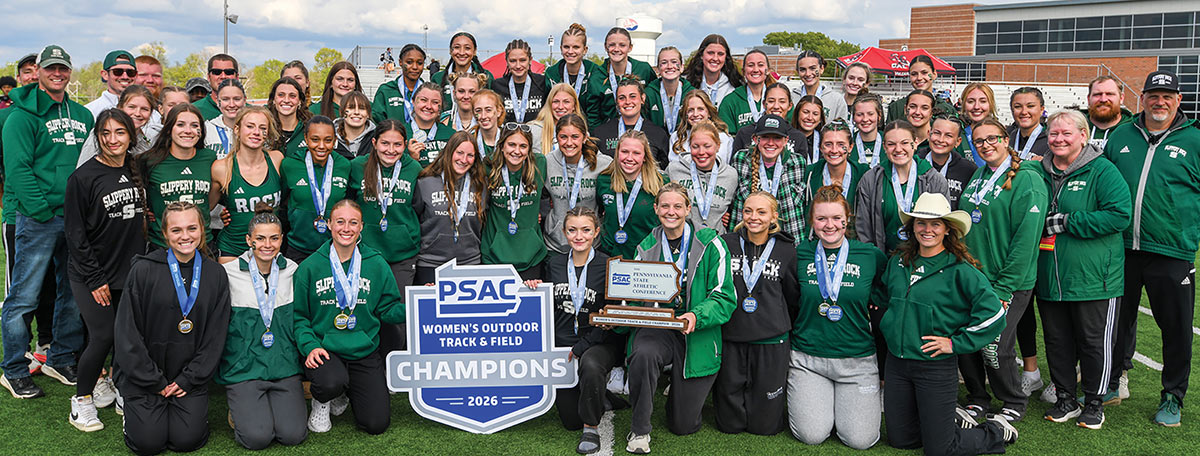
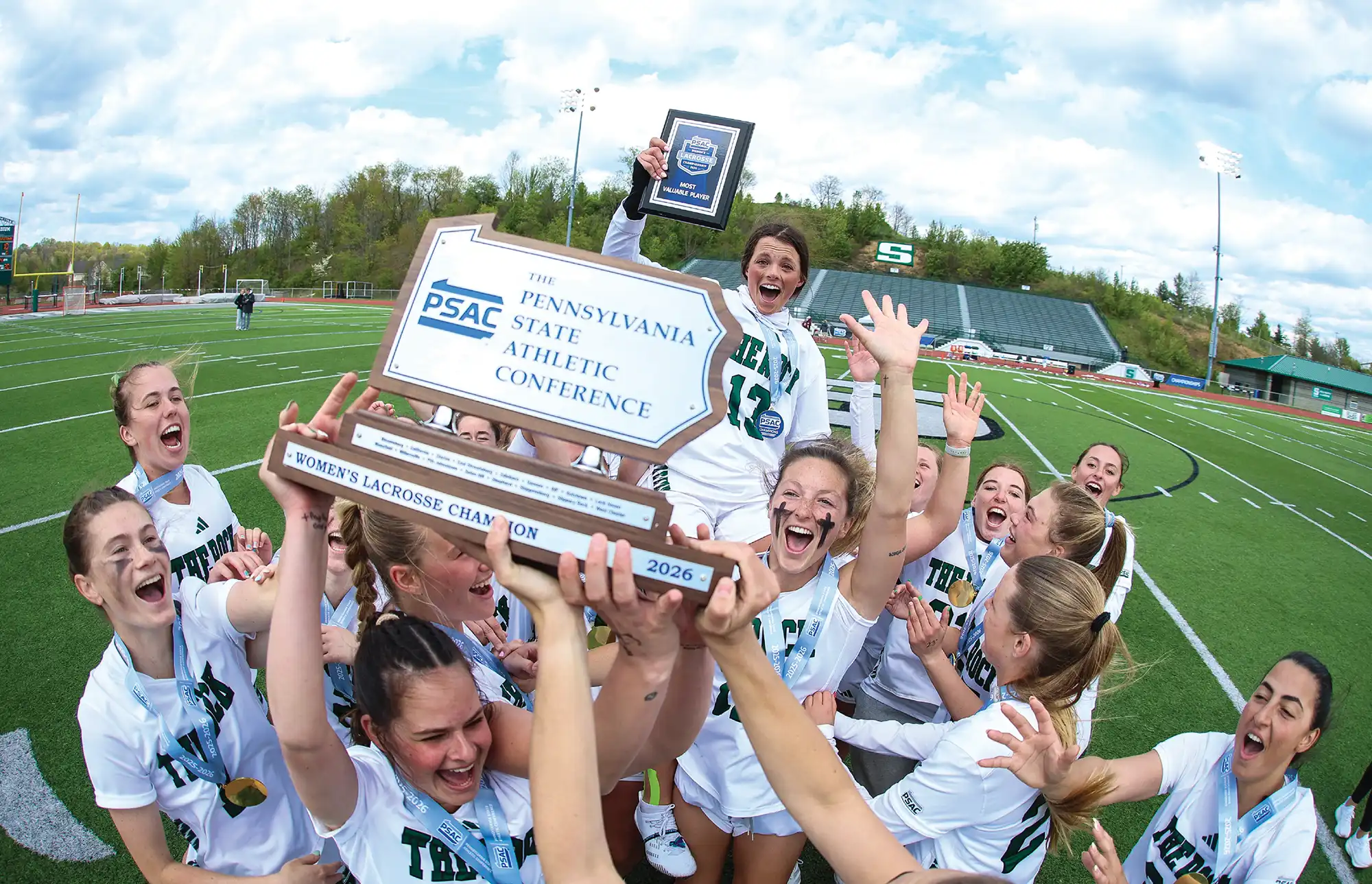
The Rock is home to three conference champions this spring. The women’s track & field team won its second straight and 19th overall outdoor title at the Pennsylvania State Athletic Conference Championships. The women’s tennis team knocked off defending champion IUP to claim its fourth all-time conference championship, and its first title since 2003. The women’s lacrosse team finished the regular season with a perfect 20-0 record by winning its first PSAC title in program history (see the Big Picture for more).
Built on The Rock: Eric Cunningham, ’97
rocurement intelligence is the type of service that Eric Cunningham’s company provides, but to him it is a proving ground for resilient competitors and collaborative achievers.
“There’s a lot of synergies between sport and business,” said Cunningham, ’97, a Slippery Rock University graduate who earned his degree in sport management before entering the field of technology sales. “We don’t call it going to work every day. This is our sport. I treat this like I’m the general manager or the head coach and we all know what we have to do to prepare every day, to get better every day, to win every day. That’s the kind of culture that we have here.”

Dozens of the 200 employees at Green Cabbage are former college athletes, including Cunningham who played football at The Rock. But that’s not the only recipe to Green Cabbage’s success with ingredients sourced from SRU.
Cunningham credits the knowledge, network and social skills that he gained at The Rock to prepare him to lead an emerging international company.
“Some of my first phone calls every day are from people that I went to Slippery Rock with, and my last phone calls are people I went to Slippery Rock with,” Cunningham said. “I walked away with a lot of lifelong friendships, but a network, too. That helped me grow my business.”
Cunningham gives back to SRU as part of what he calls a “circle of life,” one where today’s alumni recognize they were once supported by others and feel a responsibility to pay that forward.
His story highlights how the University’s growth (its facilities, programs and opportunities) exists because generations of supporters chose to invest in students they would never meet. Now, he sees giving back not just as generosity, but as a shared obligation to ensure future students have the same opportunities he did.
“Slippery Rock gave me a lot, so I feel responsible to give it back,” Cunningham said. “Somebody was there to donate to help build these buildings, or (provide resources to start a) new track within the curriculum. I just think that if people are in that position, they should give back. Even a little bit helps a lot and it’s not always about money. There are other ways to give back.”
Making those daily phone calls and strengthening the SRU network while helping others win at the game of life is also part of giving back.
“At our company, we’ve people who went to Stanford, Wharton School of Business, Harvard and all these Ivy League schools,” Cunningham said. “I’m proud to say that I went to Slippery Rock University.”
Paw Patrol
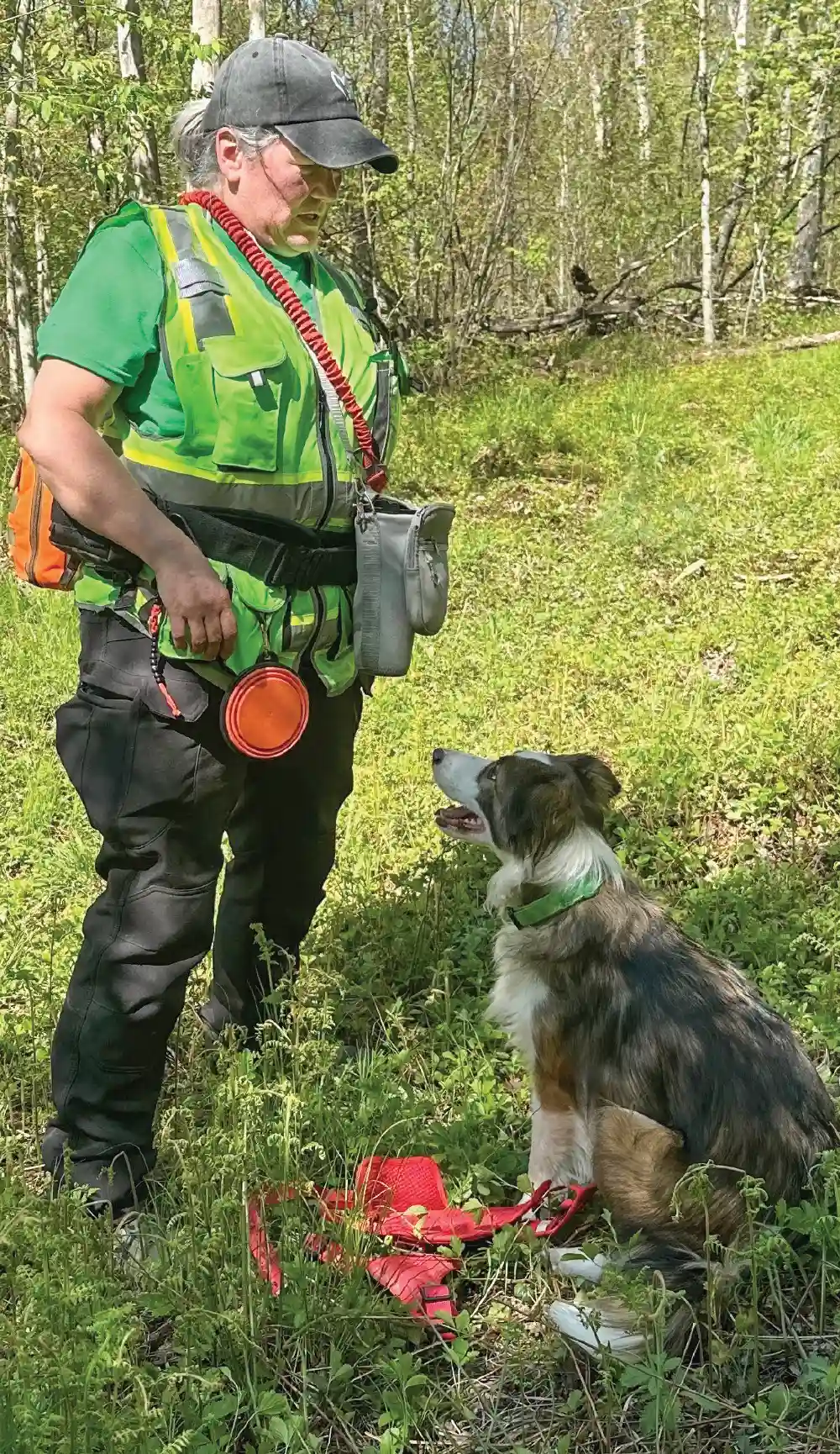
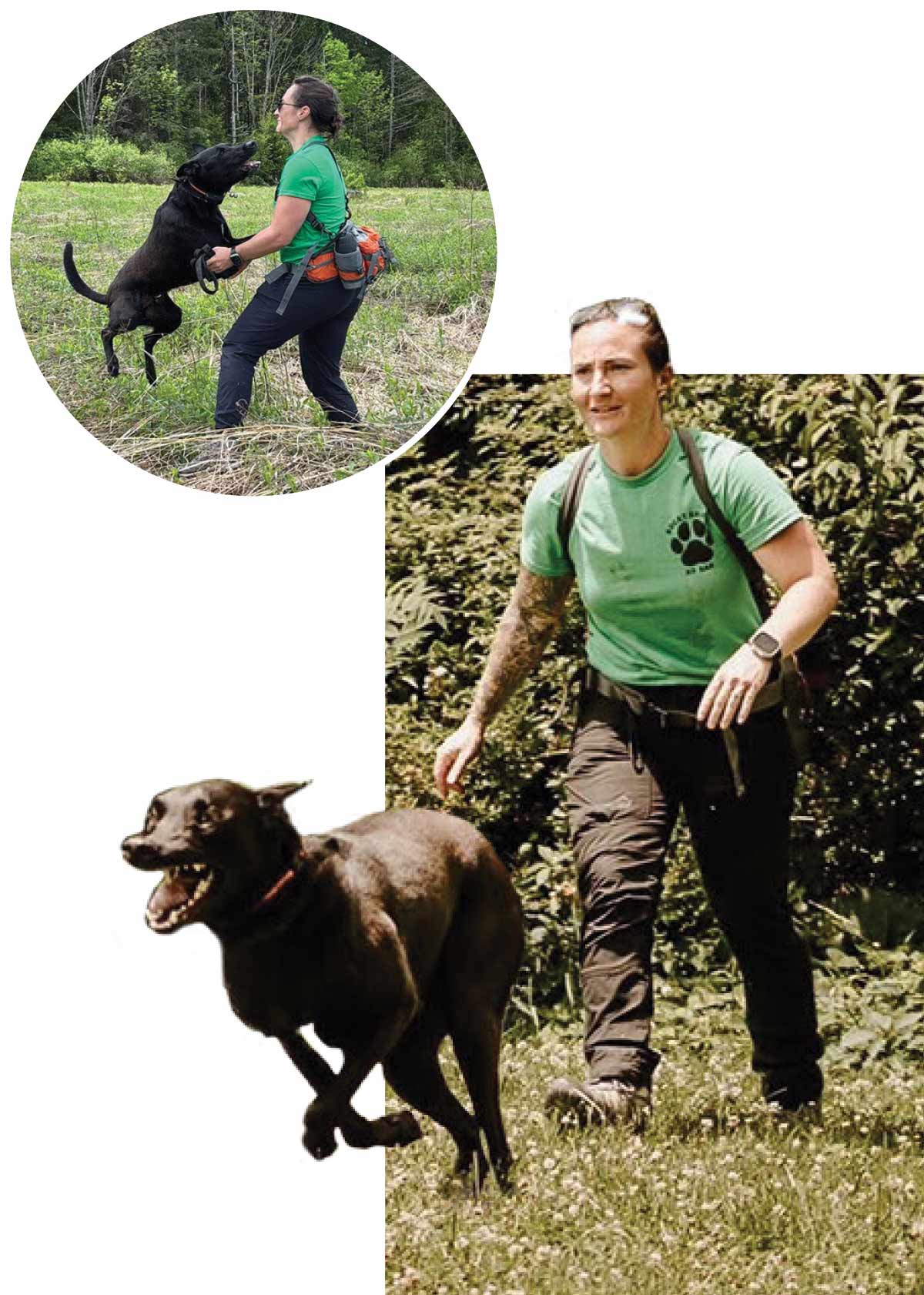
enise Ross and Marie Johnson have continued the proud history of Slippery Rock University alumni collaborating to make a difference in their own communities, but this pair is making an impact with the help of their canine companions. Ross, ’13M, and Johnson, ’19, ’22M, are volunteers with Venango County’s Rocky Grove K9 Unit.
This small but mighty pack helps track down missing people with the help of their dogs, Willow and Echo.
The team is part of the Rocky Grove Volunteer Fire Department’s new canine search and rescue unit, a group of volunteers, certified professionals, and dogs put together to fill the gap in the department and greater community’s operations for locating missing persons.
The dogs are trained in such skills as trailing, air scent and human remains detection for anywhere from a year to two years and often serve from six to eight years. The group also meets regularly to keep everyone’s skills sharp to ensure that they’re ready to help whenever they are called upon.
By day, Ross, who received a master’s in special education at SRU, is a reading specialist in a public cyber school. Johnson attained a degree in psychology from SRU before going on to graduate from SRU’s physician assistant program and is now working as a physician assistant through Meadville Medical Center. Both Ross and Johnson feel that the careers that SRU prepared them for have helped them in their work with the K9 unit.
“I studied a lot of the behavior of missing people as an undergrad, so I understand the psychology of people in this situation, and we also deal with a lot of psychological issues when people are missing,” Johnson said. “My PA degree also helped me to be able to perform medical care in the wilderness, if necessary.”
Ross and Johnson were thrilled to find that they were both SRU alums once they met through the K9 unit.
“Any time I hear that someone is an SRU alum, it’s so nice to say, ‘Hey! I’m an alum too!’” Ross said.
Their shared affinity for SRU created an immediate connection between the two of them, adding a new level of meaning to their already crucial work.
Ross and Johnson also shared some important tips regarding the pursuit of missing people.
“If you have a family member or friend who is missing, call 9-1-1 quickly,” Johnson said. “Not everyone in public safety has expertise in searches, so it’s important to call quickly and request those services. We work closely with law enforcement and fire departments and game wardens, so get in touch quickly and request us.”
“We want to bring closure,” Ross said. “Whether we find a loved one alive or deceased, we want to provide closure. But our goal is to find people’s loved ones alive, and an early response helps us to do that. We want to bring the lost home.

Full Circle
Sharif Bey, ’98, exhibits sculptures at The Warhol Museum for his ‘Homecoming’
early three decades after graduating from Slippery Rock University, Sharif Bey, ’98, returns to his hometown’s cultural forefront with a landmark exhibition at The Andy Warhol Museum—a full-circle moment that reflects both the scale of his artistic ascent and the enduring influence of his SRU roots.
“When I was a student at SRU, the Andy Warhol Museum was just getting started,” said Bey, who earned his degree in fine arts: ceramics. “And, since I’ve graduated, I’ve gone off and done quite a few things, but I’m coming full circle here.”
Bey is a professor of studio art at Syracuse University where he’s been a faculty member since 2009. He had the opportunity to come home to Pittsburgh to display his artwork back in 2021 for the Carnegie Museum of Art, but this time feels much different.
Supporting Big Dreams
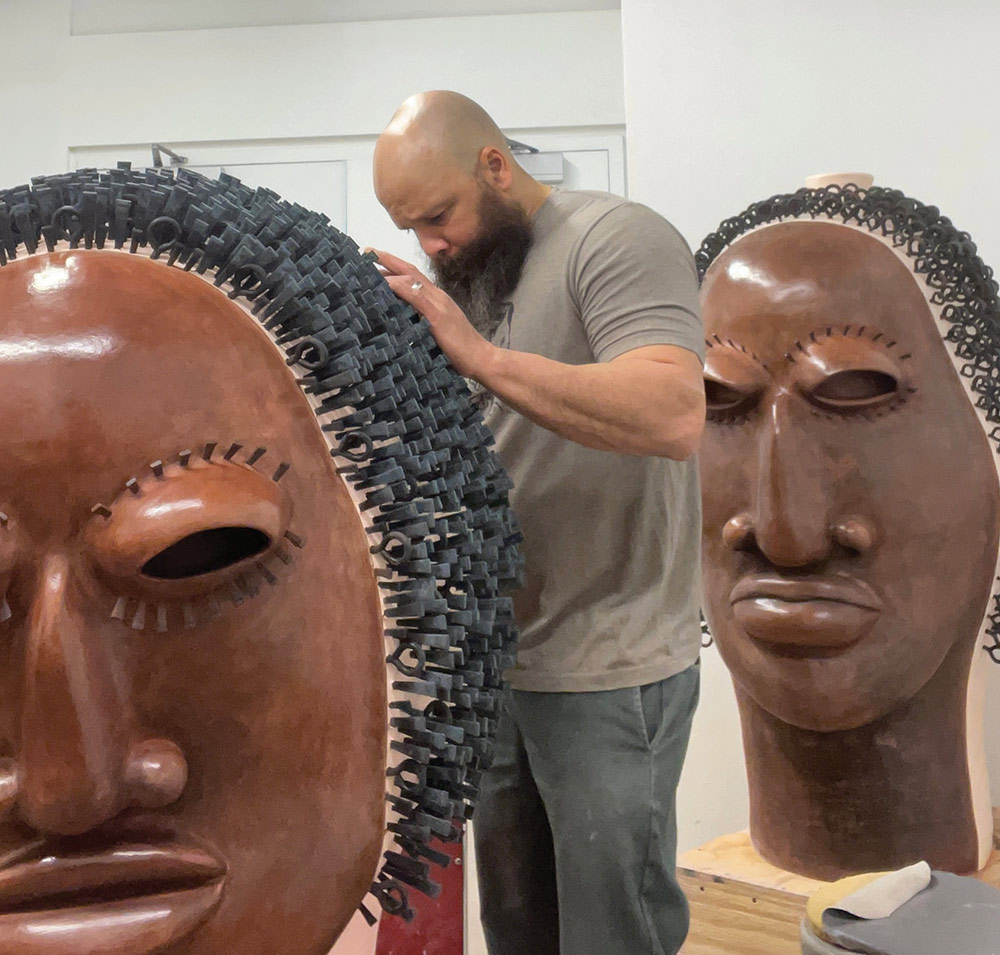
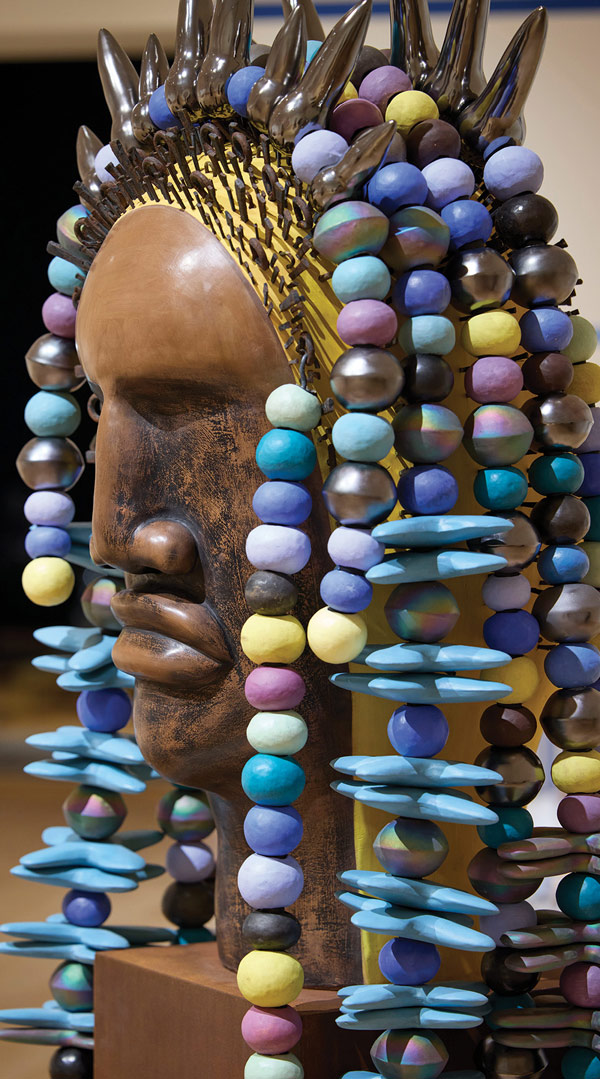
For Bey, “larger” is both physical and metaphorical, as his sculptures have generated massive amounts of buzz for their monumental size and scale. He creates complex sculptures inspired by modernism, functional pottery and Oceanic African Art.
“When I’m saying larger scale,” Bey said, “I mean that literally. The works in this upcoming exhibition are mostly monumental. I’m talking five to six and a half feet tall.”
At this point in Bey’s career, the definition of “homecoming” has taken on a different meaning. It is not just about returning home to Pittsburgh, but also about embracing the point of life that you are in and taking pride in where you come from.
“The focus of this show is on homecoming, and what it means to come back to an art community as a seasoned professional,” Bey said. “There aren’t a lot of mid-career Pittsburgh artists who were born and raised there, like I was. I feel like there’s a unique perspective here. I’m turning 52, but I don’t see myself slowing down for another 25 to 30 years at least. I’m excited about this chapter of my life, not only as a working artist, but in being able to take inspiration from my hometown. My city.”
Shaping Futures
“The impetus of my earliest work was the vessel, and I started to make them at a very young age,” Bey said. “I worked in a community center called the Manchester Craftsmen’s Guild; it’s a nationally known community arts organization. They had a world-class visiting artist program, which was so impactful that the arts community, hobbyists, local colleges and professors would converge to partake in it. This program received sponsorship in part by SRU, thanks to the efforts of (Professor Dick Wukich).”
Wukich was a faculty member at SRU from 1968-2011 who passed away in December (see page 15 for memorial).
“(Professor Dick Wukich) was instrumental in working with the founder of the Manchester Craftsmen,” Bey said. “He ensured that these workshops were funded. So here I was, 14 or 15 years old, and I was engaging in hands-on workshops with college students, most of whom were from SRU.”
The early exposure to college-level art encouraged Bey to pursue a career centered around creativity and community.
Travel Abroad Experiences Change Lives
During his time at SRU, Bey would go on to travel abroad for a symposium, and from 1994-95, he studied at the Academy of Fine Arts and Design in Bratislava, Slovak Republic, before earning his degree at SRU. Bey later earned a master’s degree in fine arts from the University of North Carolina at Greensboro and a Ph.D. in art education from Pennsylvania State University.
“The thing that made my time at SRU so special, is that when you’d work with other students, you get their network,” Bey said. “Their network then became a part of the arts and educational community. The faculty would host workshops or they would bring other artists in. They’d bring their teachers and colleagues from various universities.”
Bey felt as if there was always a major sense of community among the students and faculty while attending the University, something that could only be captured at a place like Slippery Rock.
“One of the (benefits) about the programming that came out of SRU was that we were taught how to engage with a bigger world from a smaller stage,” Bey said.
Bey’s “Homecoming” exhibition at the Andy Warhol Museum not only highlights his growth as a nationally recognized sculptor, but also reflects the impact of his roots in Pittsburgh. His journey, from early community art programs to international study and large-scale exhibitions, represents how strong artistic foundations and meaningful mentorship can shape a career.
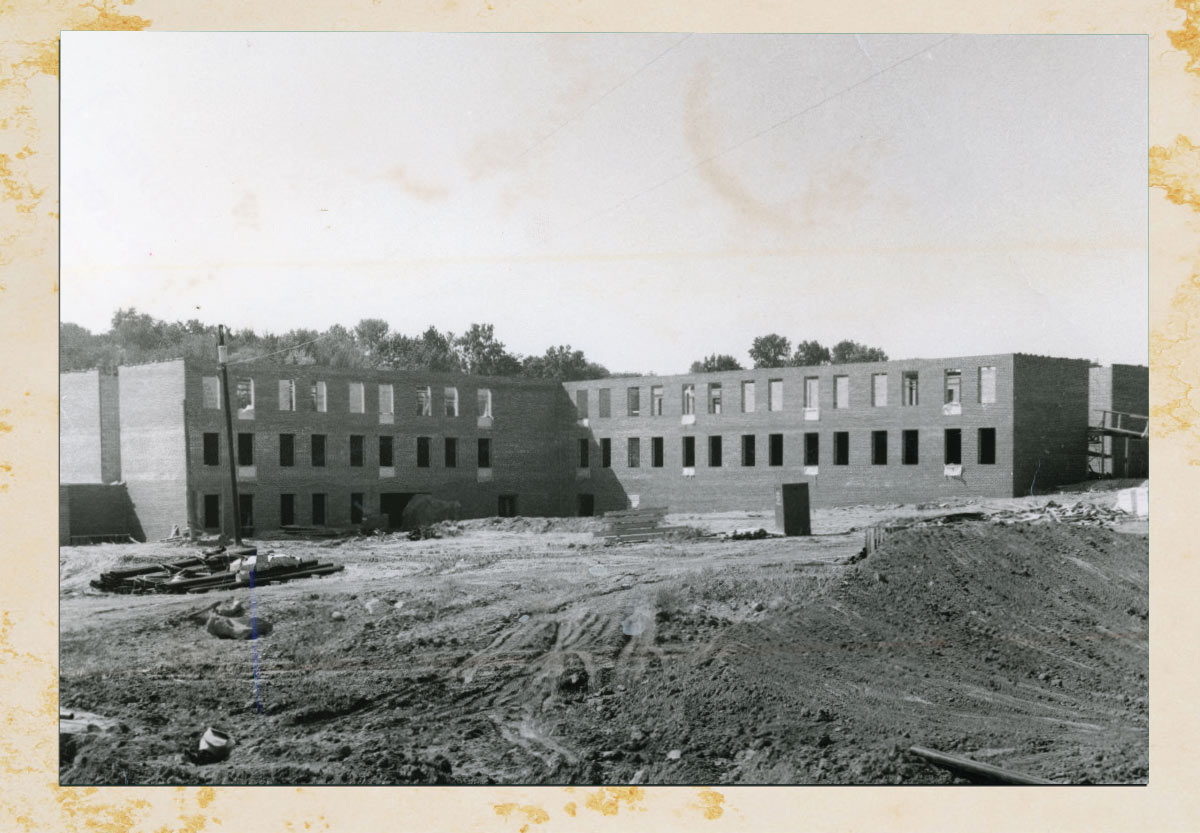
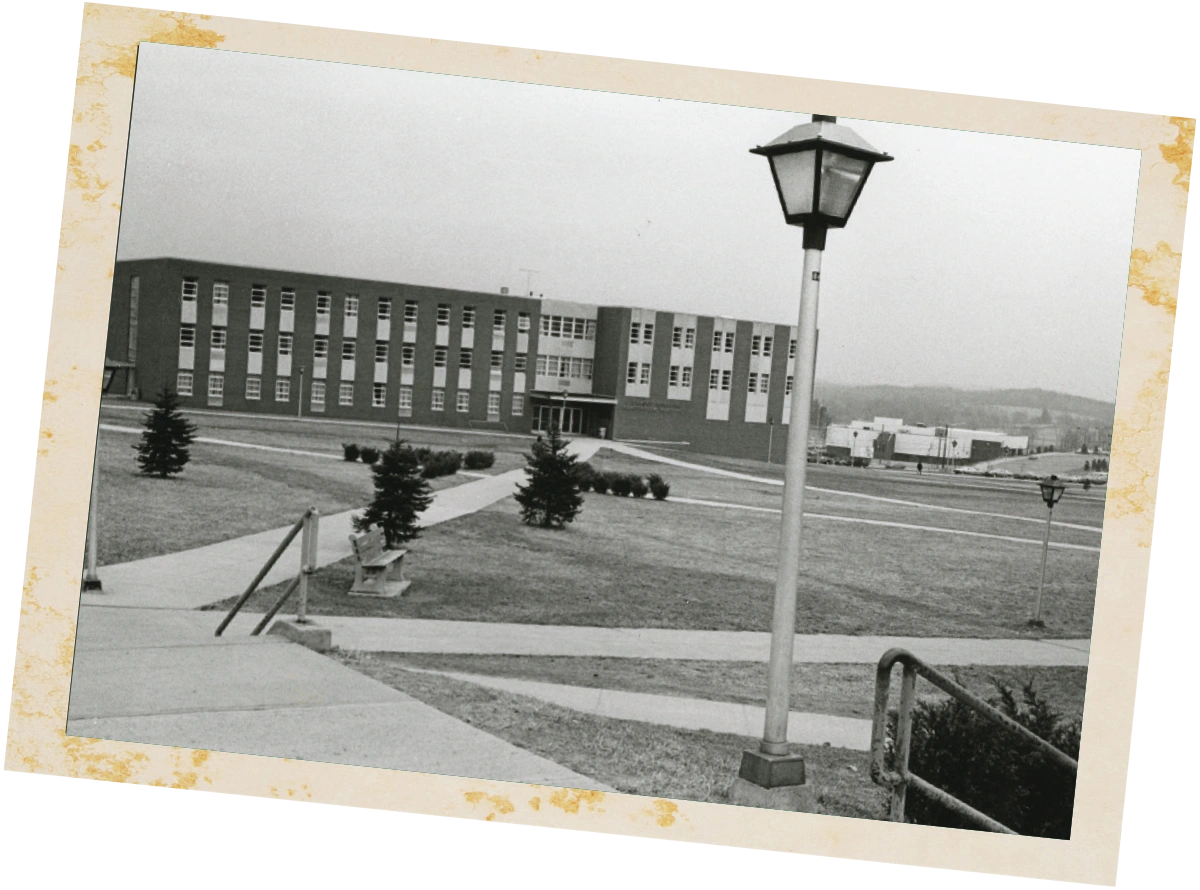
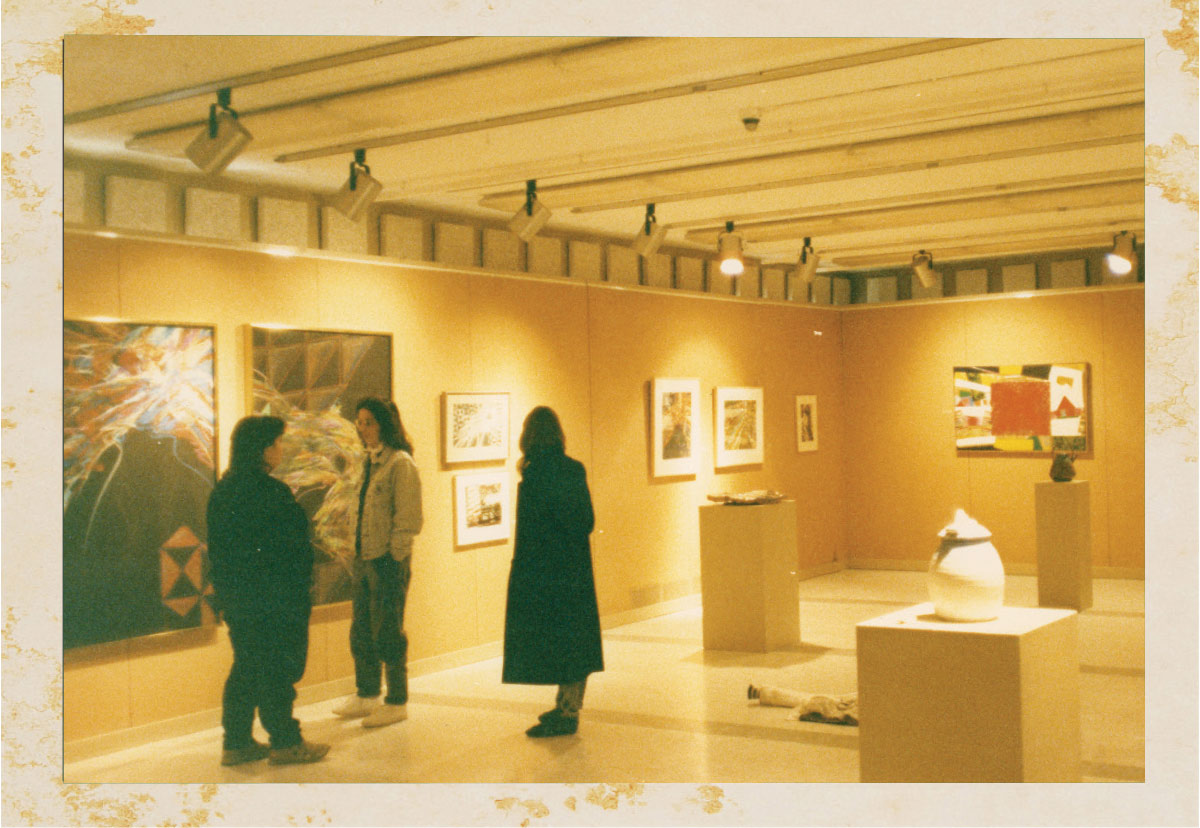
From the Archives: Eisenberg Classroom Building

Class
Notes
-
1960s
Janet (Waddell) Hurley, ’63, and Dennis Hurley, ’62, celebrated their 62nd anniversary in Edinburgh, Scotland, at the Military Tattoo with the sound of 400 bag pipes. Janet is Scottish.
- Chuck White, ’68, was inducted into the South Carolina Deaf Athletic of Fame. White was recognized for his 29 years as director of athletics and director of residential life. White was also recognized by the South Carolina High School League for service as coach and administrator.
-
1970s
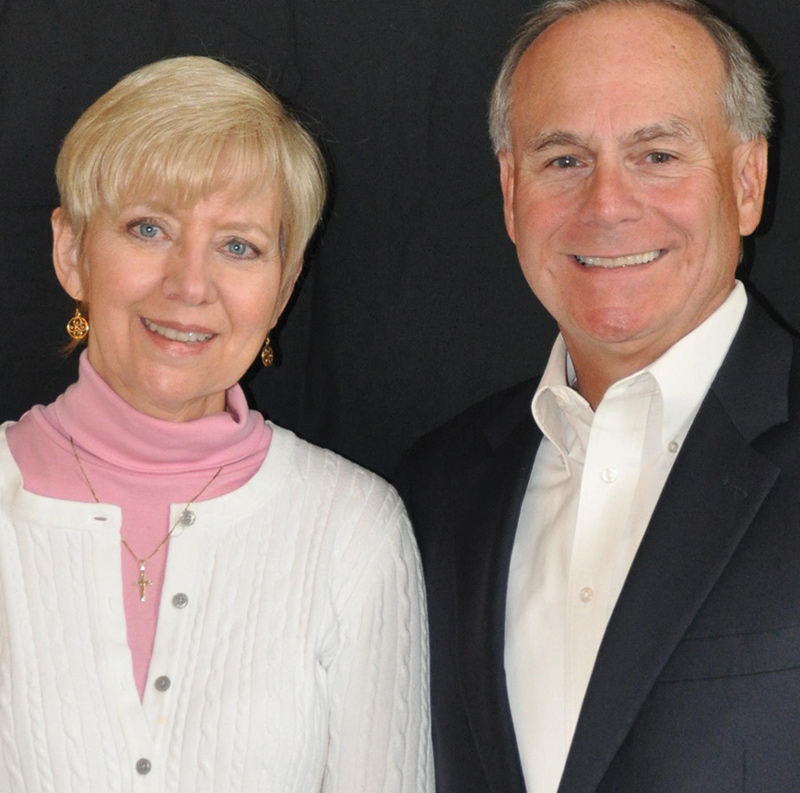 Martha and Phill Morgan
Phill Morgan, ’73, serves as the national board president of YMCA alumni, which is comprised of more than 1,500 YMCA retirees and spouses representing 17 chapters throughout the United States. YMCA alumni approved a national service project and built a tiny home village (four, 465-square-foot homes) on the Cheyanne River Reservation in Dupree, South Dakota, at the YMCA of the Seven Council Fires. Following their graduation, Phill and his wife, Martha (Thorn) Morgan, ’73, entered the Peace Corps in Venezuela and thereafter enjoyed careers with the YMCA and in public school education as a media specialist, respectively. Phill and Marti recently celebrated their 52nd wedding anniversary.
-
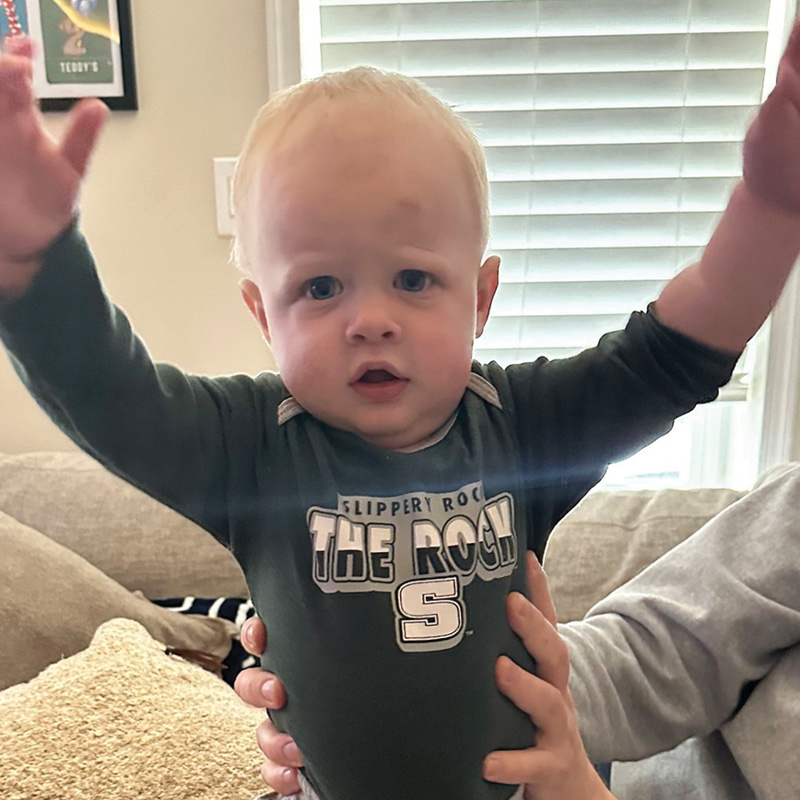
Jesse Sheaffer, ’21, and Molly (Sheaffer) Kinney, ’77, have a new nephew, Teddy Sheaffer.
-
1980s
Bob Petrini, ’83, was inducted into the Mercer County Athletic Hall of Fame in January 2026. Petrini was inducted into the SRU Athletic Hall of Fame in 1996.
- Mike Timpani, ’86, authored a book, “Movie Watchers Notebook,” a guide for families and movie lovers. Timpani is a media lover and librarian.
-
1990s
Scott Zema, ’90, ’92M, was named director of the Office for Students with Disabilities at PennWest University-California, after a 35-year career in intercollegiate athletics as a certified and licensed athletic trainer. Zema started his career at Olivet College as head athletic trainer and served in similar roles at Alfred University, Stevenson University and California University of Pennsylvania. Zema worked at SRU from 1999-2013 as an assistant professor in the athletic training program as well as serving as the head football athletic trainer.
- Judge Nicola Henry-Taylor, ’93, was presented the Drum Major for Justice Award January 2026 during the 27th Annual Rev. Dr. Martin Luther King Jr. Prayer Breakfast and Program at Mt. Ararat Baptist Church in Pittsburgh. Judge Henry-Taylor is a member of the Allegheny County Court of Common Pleas and was recognized for her career that reflects a deep and enduring commitment to advancing justice, equity and meaningful access to the legal system. Judge Henry-Taylor is also a board member of the SRU Foundation.
- Mary Beth Jenkins, ’93, was named to the Pittsburgh Business Times Power 100, an annual list highlighting the region’s most influential business leaders.
- Tonia (Asel) Kaufman, ’95, was inducted into the Cavalcade of Bands Hall of Fame. Established in 1980, the hall of fame recognizes directors, instructors and organizers with significant, long-term contributions to the Cavalcade of Bands Association, a nonprofit organization of member schools who come together to compete on the interscholastic level.
- Douglas Carlquist, ’96, was appointed chair of the Pennsylvania State Private Academic School Board by the Pennsylvania Department of Education. The board provides statewide oversight of licensed private academic schools and is responsible for approving and renewing school licenses, establishing professional standards, and ensuring quality of educational programs.
-
2000s
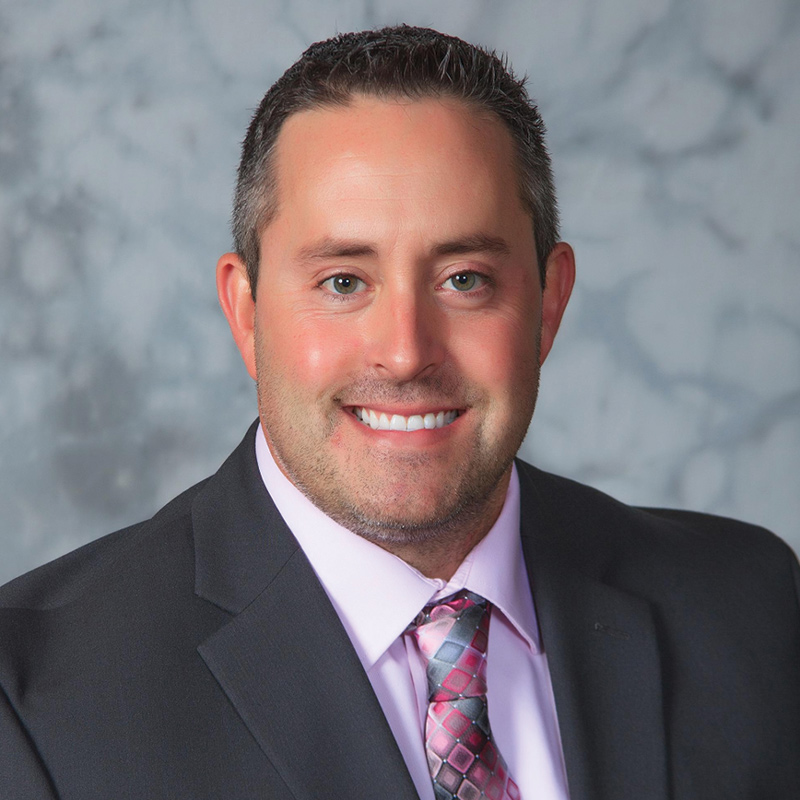
Jason Edsall, ’02, was selected as the new dean of the College of Health Sciences at Chatham University. Arriving at Chatham in 2017, Edsall has served as associate professor of athletic training, chair of the Department of Health and Human Performance and program director of the Master of Science in athletic training program.
- Tim Moore, ’02, will be inducted into the Beaver County Sports Hall of Fame in June 2026. The Beaver County Sports Hall of Fame preserves and celebrates those who have brought recognition to Beaver County through sports. Moore has excelled as a women’s basketball coach at Penn State Beaver.
-
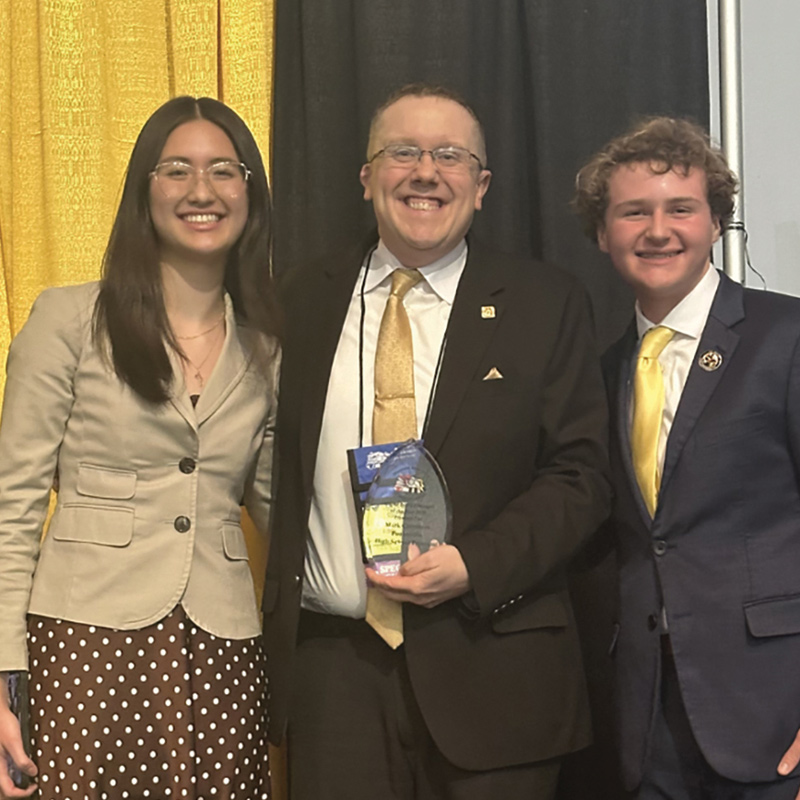
Mark Carothers, ’03, (center) was named Wayne Perry High School Principal of the Year by the Maryland Association of Student Councils. This honor recognizes Carothers’ outstanding commitment to elevating student voice and leadership. Carothers received the award at the MASC’s annual awards banquet, celebrating his work to create meaningful opportunities for students to engage in decision-making and leadership at Poolesville High School.
- Rosie Trump, ’03, was promoted to full professor of dance at the University of Nevada, Reno. Trump also had an article, titled “The Third Coast Dance Film Festival and COVID-19 Adaptive Programing in 2021,” published in the International Journal of Screendance.
- Joshua Young, ’04, was appointed president of the Caln Township Board of Commissioners. Young, who was first elected as a commissioner in 2005, began his sixth term on the board in 2026 and his first as president. Young is also a member of the SRU Council of Trustees.
-
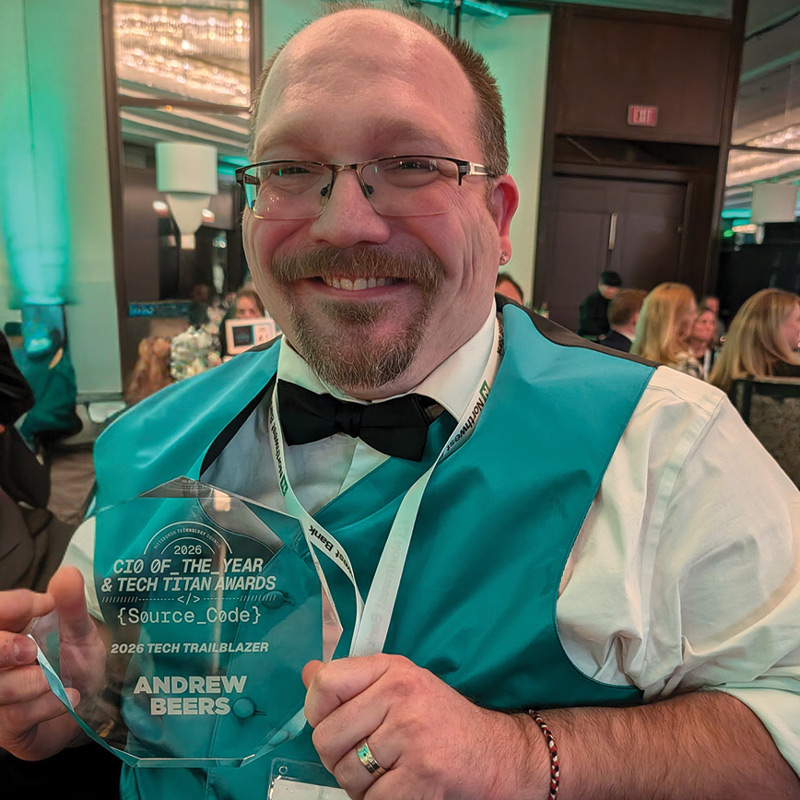
Andrew Beers, ’06, won the Pittsburgh Technology Council’s 2026 Tech Trailblazer Award as part of the council’s CIO of the Year and Tech Titan Awards. Beers is a founding partner of Drean Invent Inspire, an engineering lead team of inventors focused on software as a service technologies and agriculture technology innovation.
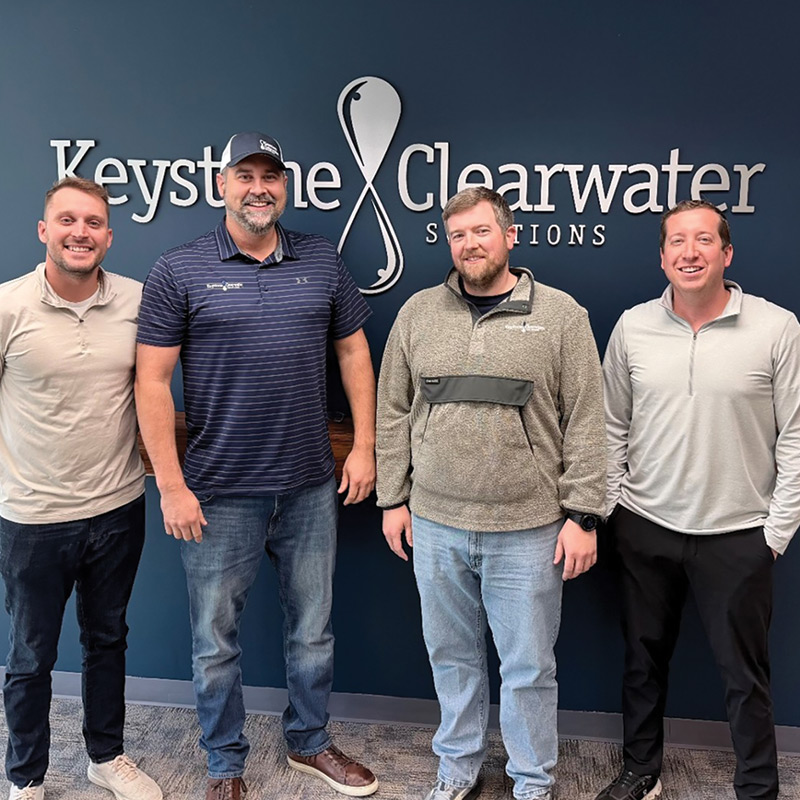
- From left, Tanner Ambrisco, ’17, Lenny Zucco, ’05; Zach Zucco, ’12; and Jordan Crescenzi, ’14; are leaders of Keystone Clearwater Solutions, which was named the KPA 2025 EHS Innovator of the Year at the Stars of EHS awards. KPA is a provider of environmental, health, and safety software solutions, as well as work compliance services for a wide variety of businesses. The award honors organizations that demonstrate exceptional leadership, innovation and commitment to safety excellence across industries. Ambrisco is director of HSE field operations, Lenny Zucco is training and employee development manager, Zach Zucco is vice president of operations, and Crescenzi is vice president of HSE.
- Dan Hooven, ’06, was named vice president of marketing at Schneider Downs, one of Pittsburgh’s largest accounting firms. Hooven has nearly 20 years of enterprise marketing experience across the professional services, financial services and software industries. Since joining the firm in 2019, he has served as director of marketing strategy and senior marketing manager.
- Susan Kelley, ’07, authored “The Before,” a creative nonfiction essay, published in “The Perch,” Yale University School of Medicine’s creative journal, detailing the experience of parenting an adult child with substance use disorder. Beginning in February of 2020, the essay follows a year of a tumultuous sobriety journey and moving from the before to the after in segments of stress, anxiety, hope and fear.
-
2010s
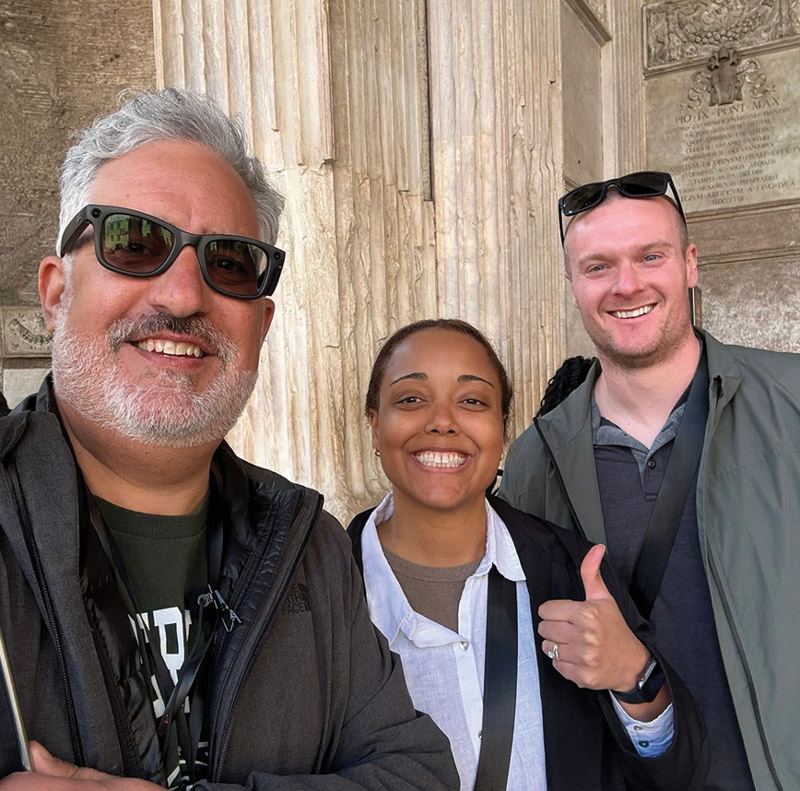
Mercy (Kroh) Dahlstrom, ’17, (middle) and Nicholas Dahlstrom, ’17, (right) were vacationing in Italy in March when they encountered a fellow SRU alumnus, Scott Spinucci, ’91, (left) wearing an SRU shirt at the Pantheon in Rome and the group posed for a photo. PHOTO
- Victor Kustra, ’14, was elevated to member (equity owner) of The Lynch Law Group. Kustra is a key member of the firm’s business and corporate law, real estate law and business succession planning practice groups. Kustra focuses significantly on mergers and acquisitions and serving as outside general counsel to owners and C-suite executives. Kustra was named among Best Lawyers in America: Ones to Watch in 2024 and 2025, and to PA Super Lawyers Rising Stars List for five consecutive years (2021–25).
- Abbey (Ballas) Arrington, ’19, earned her Master of Education degree from Western Governors University and Education Specialist degree from Liberty University. Both degrees were in curriculum and instruction. Arrington is a third-grade teacher at West Creek Elementary, Clarksville-Montgomery County School System in Tennessee. Arrington was also named chair of the student support team, third-grade lead reading teacher. Despite being pregnant with her second child and her husband getting deployed, Arrington accomplished all of this within the past year.
- Clare Clark, ’19, was named on the Pittsburgh Business Times’ 30 Under 30 list for 2026. Clark is the coalition manager at the Pittsburgh Food Policy Council.
-
2020s
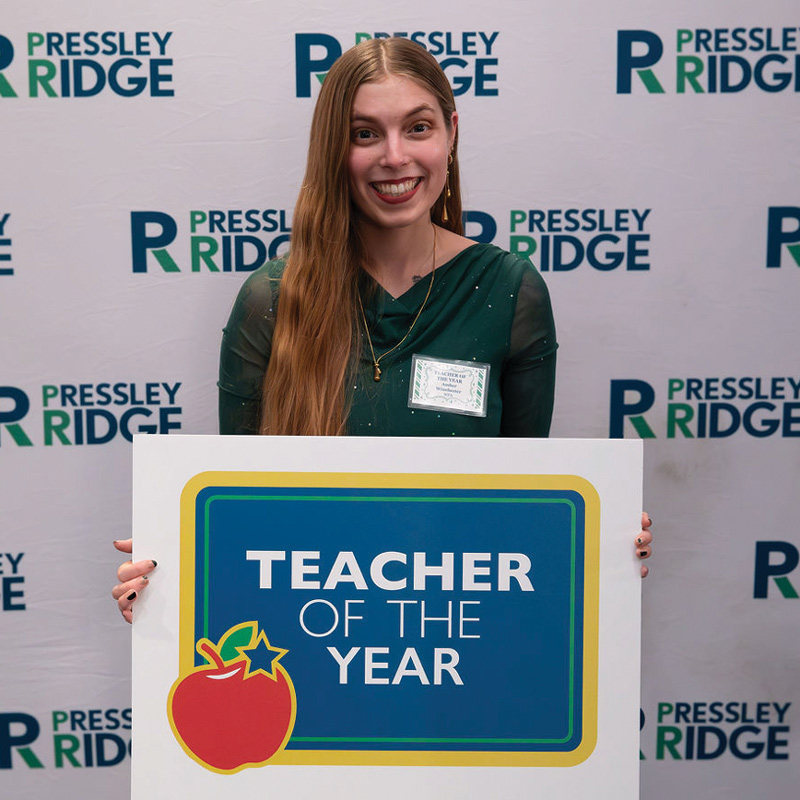
Amber Winchester, ’21, ’26M, was selected as the 2025 Teacher of the Year for Pressley Ridge and Texas Family Care Network. Winchester was chosen among educators across seven states for her dedication, commitment and service to the students and families she serves. In honor of this award, the organization hosted a celebration in February 2026 in downtown Pittsburgh.
- Tyler Anderson, ’23, was named on the Pittsburgh Business Times’ 30 Under 30 list for 2026 for his outstanding work with the Pittsburgh Cultural Trust as an Arts Educator Program Coordinator.
- Alyssa Mascolo, ’24, an account executive at Havas Red, received Public Relations Society of America, Pittsburgh Chapter, Member of the Year Award.
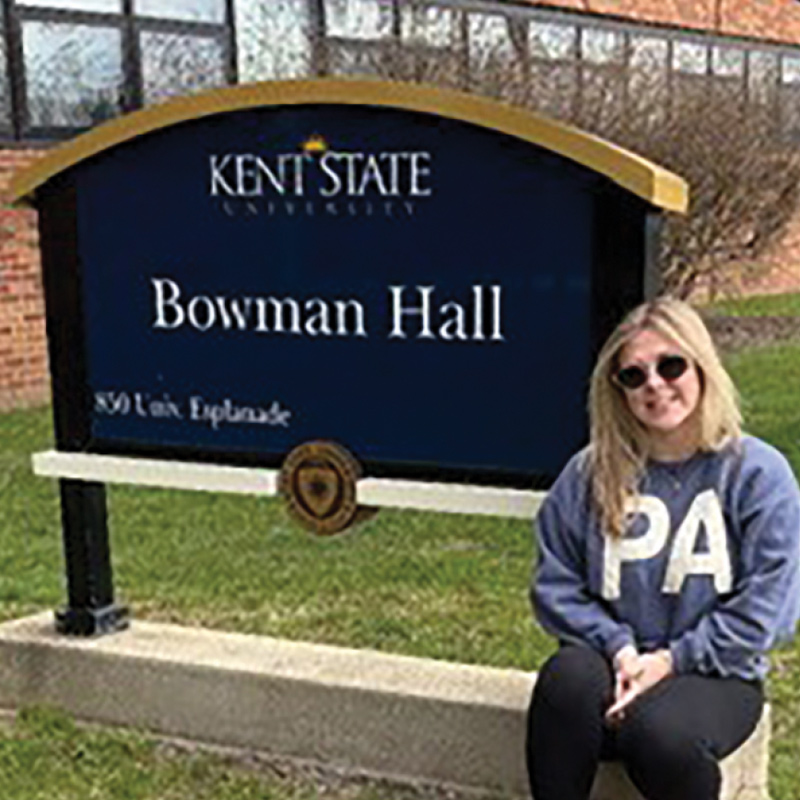
- Mikayla Habursky, ’25, continued her education at Kent State University in the political science master’s program. Habursky was awarded a full tuition waiver and is a graduate assistant working for the department. Haburksy’s educational and professional goal is to obtain her doctoral degree to teach at the collegiate level.
- Justin Ventura, ’25M, was promoted to senior manager of operations at Saxton & Stump, a law firm with more than 150 attorneys. Ventura works out of the firm’s Pittsburgh office, which he helped establish in 2025, and collaborates with the firm’s HR, facilities, IT and concierge teams to ensure the firm runs smoothly both daily and with a long-range vision in sight.
- Carrington Williams, ’25, was named on the Pittsburgh Business Times’ 30 Under 30 list for 2026. Williams is a Development Associate at Auberle.
-
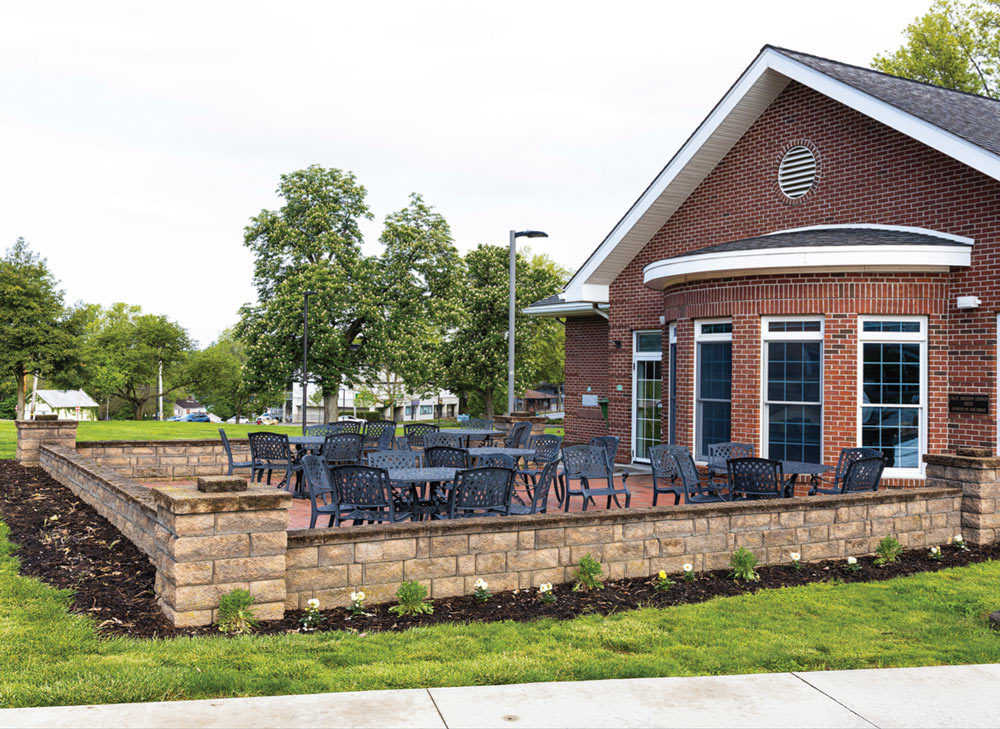
Remembering Sally Lennox
Sally Jackson Lennox, ’59, who served as SRU’s director of alumni affairs before retiring in 1999, passed away April 5 at the age of 88. During her 16 years at SRU, starting as assistant director of development in 1983, Lennox coordinated alumni activities, as well as the production of “The Insider” portion of The ROCK Magazine. Lennox worked closely with the SRU Alumni Association board of directors to fulfill their dream of having an Alumni House on campus that opened in 1998. The Sally Jackson Lennox Patio at the Alumni House is named through her financial contributions to the project’s success.
-
Weddings


Lea Bialek, ’16, and Matt Sovocool were married Oct. 3, 2025, in Pittsburgh where the couple also resides. -
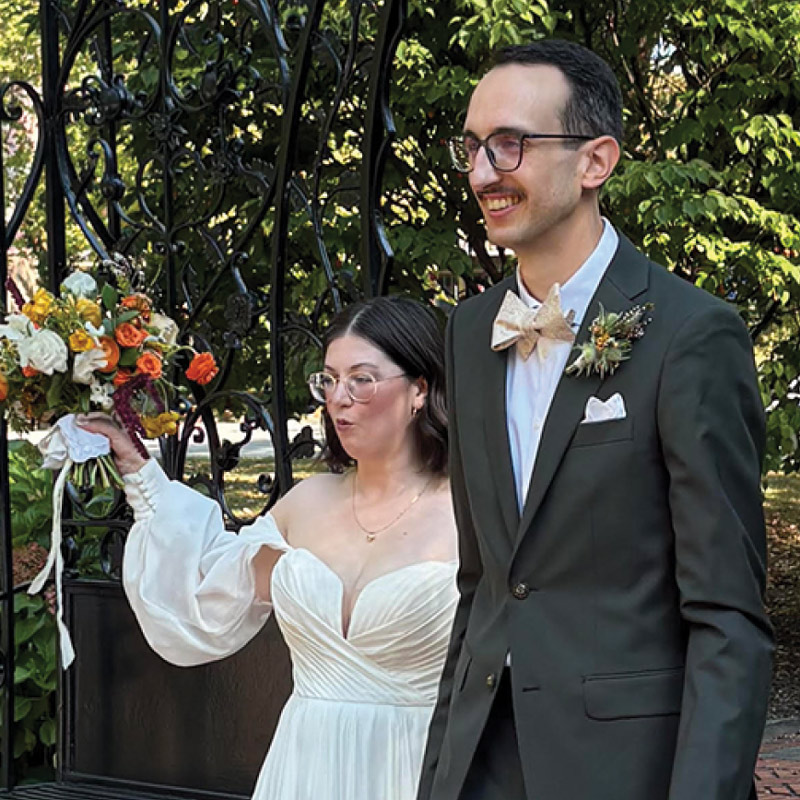
Billy Killmeyer, ’16, and Cassidy Lowden were married Oct. 4, 2025, in Cleveland, Ohio, where the couple also resides. -

Mary Thomas ’21, ’22M, and Aaron Smith, ’22, were married June 21, 2025, at the Scottish Rite Cathedral in New Castle. -

Carly Cooper, ’21, and Logan Conboy were married Aug. 16, 2025, in the mountains of western North Carolina, surrounded by family, friends and several fellow SRU alumni. Standing with them on their special day were Courtney Jakiel, ’21 (second from left); Kaitlyn Dietz, ’19 (third from left); Samantha Pugliese, ’21 (fourth from left); Shelby Searight, ’18 (fifth from left); Cassandra Cooper, ’18 (sixth from left); and Nick Harayda, ’18 (first from right). Carly’s stepfather, Joel Brown, ’89, had the honor of walking her down the aisle. -
Births

Corey DeSantis, ’13, ’24M, and his wife, Robin, welcomed their first child, Eliana Iris, Aug. 24, 2025. The DeSantis family resides in the south hills of Pittsburgh. -

Becky Morgan, ’09, and her husband, David, welcomed their first child, Archer “Archie” Gabriel, Oct. 21, 2025.
In Memory
- Dorothy J. Colton (Catherwood) ‘52
- Zane L. Nossokoff ‘52
- Elmer C. Morrow ‘52
- Mary Lou Aufmann (Graham) ‘53
- William J. Karpinski ‘53
- James F. Watson ‘54
- Eleanor Stewart ‘55
- Christian F. Lampe ‘57
- Margaret C. Barnes (Patterson) ‘57
- Rose Dillner (Spataro) ‘57
- Joan M. Smith ‘57
- Eleanor J. Ventresca (Depaoli) ‘58
- Thomas P. McCarthy ‘59
- Sally J. Lennox (Jackson) ‘59, Retired Staff
- Rose Walton ‘59
- Vonnie-Kaye Brough (Galvin) ‘60
- Joseph E. Yost ‘60
- Edward McCullough ‘61
- Ethel A. Warren (Myers) ‘61
- Eleanor L. Smith (Anderson) ‘62
- John A. Miller ‘62
- Jane H. Moore (Hughes) ‘64
- James Mirto ‘64
- Tom W. George ‘64
- Donald F. Hannon, Ph.D. ‘65
- Nancy Howard (Kovacik) ‘65
- George A. Marsh ‘65
- Margaret A. Dattilo (Russo) ‘65
- Marilyn A. Natili (Odrey) ‘65
- Frederick Haberlen ‘66
- Pauline Janocha ‘67
- Harry V. Herlinger ‘67
- Michael R. Vankirk ‘68
- Mary B. Benedict ‘68
- Jean M. Thompson (Daughenbaugh) ‘68
- Sally M. Ohl (Labor) ‘69
- Benjamin F. Bruno Jr. ‘69
- Frederick S. Lesnett ‘69
- William J. Murrin ‘69
- Richard B. Ganster ‘70
- Rhonda R. Ridinger ‘70
- Elvasio Vaccaro ‘70
- Edward C. Blanck ‘71
- Paul L. Mills Jr. ‘71
- Cheryl J. Peterka (Hamilton) ‘71
- Mary T. Mintas (Liska) ‘71
- Robert C. Rectenwald ‘71
- Christine Springer (Betty) ‘71
- Maureen L. Galardini (White) ‘71
- Sharon L. Smith ‘71
- James B. Zambelli ‘72
- Mary Del Brady (Delsignore) ‘72
- Paul E. Hohman ‘72
- Richard Berger ‘72
- Michael A. Sheppeck ‘73
- Charlene F. Dillaman ‘73
- Annette Carolus (Roseto) ‘73
- Charles T. Lesnick ‘73
- Mary A. Laughlin ‘74
- Gary A. Jedinak ‘74
- Marilyn C. Bullock (Siuta) ‘74
- Lynn S. Hamilton (McCauley) ‘74
- Allan F. Shiflett ‘74
- Randy E. Wolford ‘74
- Geoffrey L. Barnes ‘75
- Stanley P. Wojton ‘75
- David A. Barron ‘75
- Jeffrey A. Buirge ‘79
- Charles M. Oberlin ‘79
- Coleen S. Myers ‘79
- Ruth F. Hoffman ‘79
- Cynthia M. Shipman (Cangey) ‘80
- Esther J. Santilo ‘80
- Laraine Fardo (Nawrocki) ‘81
- Laura M. Herman (Spear) ‘81
- Shirley K. Hildebrand (Keeple) ‘81
- Mary R. Holt ‘81
- Patricia A. Tellish ‘82
- Linda J. Sydeski ‘82
- Betty A. Wagner (Brown) ‘83
- Robert K. Smith ‘86
- Roger G. Cooling ‘86
- Rose M. Mong (Oertel) ‘86
- Margaret S. Foster ‘87
- Kathryn A. Fray (Senko) ‘88
- Shirley Weber ‘88
- Constance S. Troy ‘88
- Joanne E. Klamer ‘90
- Leslie W. Martin ‘90
- Kathleen A. Harris ‘91
- Glenn T. Miller ‘92
- Tibor Cseszneki ‘93
- Patricia C. Sovern (McCall) ‘95
- Stephanie L. Senft (Havens) ‘97
- Thomas M. Stafford ‘97
- Melissa A. Bargo (Miller) ‘00
- Amy J. Nagy (Eshenbaugh) ‘00
- Gayle D. Barrett ‘02
- Bobbi J. Bailey (Welton) ‘02
- William I. Tegethoff ‘04
- Kevin R. Wolf ‘05
- Michael T. Muha, Esquire ‘06
- Bradley J. Dovey ‘13
- Maurice D. Lewis-Briggs ‘14
- Cheryl E. Mounts ‘23
- Rhoda E. Taylor, Professor Emeritus
- Richard M. Wukich, Retired Faculty
- Gene J. Wilhelm, Professor Emeritus
- Edward E. Leone, Retired Staff
- Paul F. Rizza, Professor Emeritus
- Florine Ferrere-Plavny, Retired Staff
SRU Alumni Association
Executive Committee:
President Elect, Mike Zody ’88
Treasurer, Don Huddart ’87
Secretary, Justina Cerra ’13
Immediate Past President, Melissa Visco ’04
Board Members:
Lee Bowers ’98
Hollie Carlson ’14
Joe Coudriet ’23
Joe Dropp ’03
Jack Dugan Jr. ’87
Bruce Ferguson ’94
Claudia Hartmann ’18
Lisa McCullough Holmes ’88, ’01
Jeff Milliner ’04
Karen Taylor Perry ’79, ’80
Greg Sferra ’78
Chris Thrasher ’23
Matt Vannoy ’09
Holly Vogt ’97
Dave Wolfe ’13
Sam Zyroll ’78
First Hoist
First Hoist
Homecoming 2026




CREDITS
Managing Editor: Justin Zackal, associate director, University Marketing and Communication.
Designer: Megan Cassioli, ’14, director of graphic communication, University Marketing and Communication.
Photography: Mike Schnelle, visual communication director, University Marketing and Communication; Lauren Jaroch, ’27; Alumni Engagement; University Archives.
Executive and Editorial Advisory Committee: Kelly Bailey; Erin Bryer; Jason Hilton; Troy Miller; Roberta Page, ’88; Michael Zieg.