

Securing Futures
elf-motivation, curiosity and resilience are vital qualities for students to succeed in cybersecurity, and these traits are exemplified every day by Nitin Sukhija, Ph.D., Slippery Rock University professor of computer science.
Sukhija is developing students skills so they can reduce risks, secure data and solve problems in an evolving world.

Sukhija, who is the director of SRU’s Center for Cybersecurity and Advanced Computing, was recently named a Trusted CI Fellow, one of only 10 individuals selected for this prestigious cyberinfrastructure fellowship through the National Science Foundation’s Cybersecurity Center of Excellence. Sukhija has participated in research and management of several projects regarding high-performance computing and software security over the last 20 years. His areas of expertise include computing focused on performance modeling, robustness and resilience analysis, cybersecurity, cyber analytics and big data analytics.
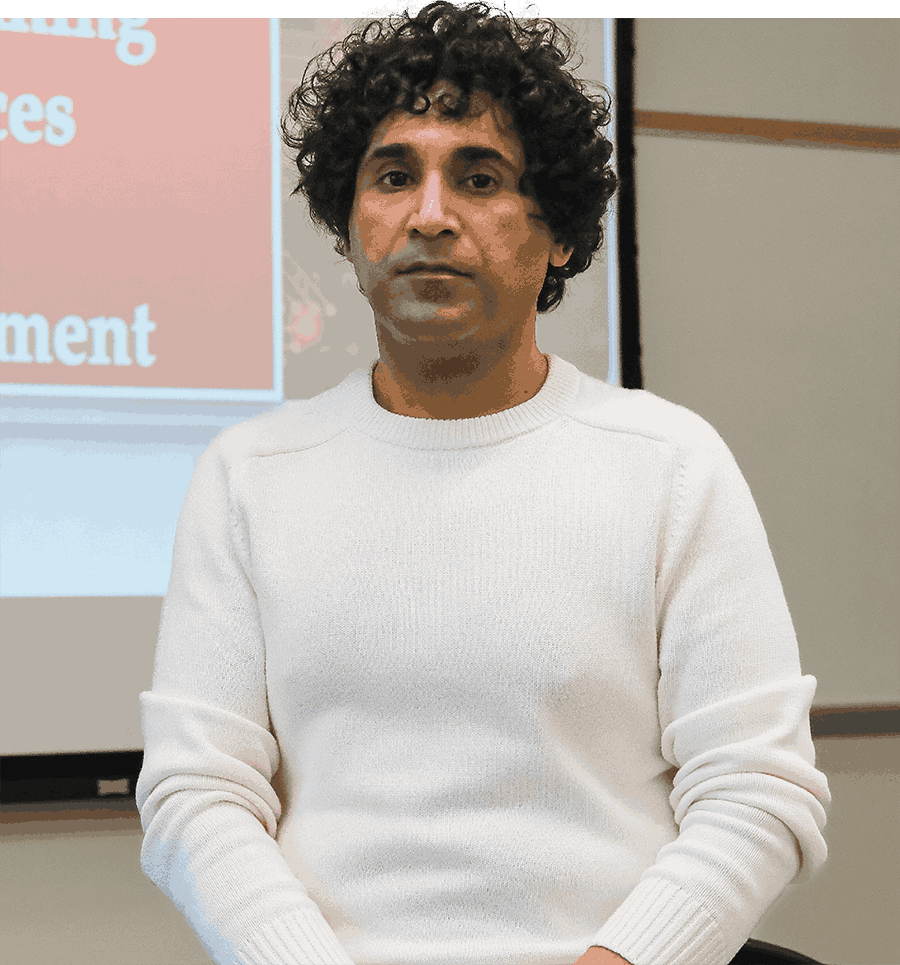
“I have found that blended learning has significantly improved student outcomes in my classroom,” Sukhija said. “This dynamic approach connects theoretical concepts with real-world applications in computing and cybersecurity, creating an engaging learning environment.“
Investing today in the leaders of tomorrow.
Sukhija also actively fosters adaptability and continuous upskilling, which allow students to build analytical foundations and develop relationships and the leadership abilities that they need for long-term success in today’s evolving technological landscape.
The Cybersecurity and Advanced Computing Center, launched in 2018, provides students with opportunities to seek mentorship and participate in research and events in cybersecurity and related fields, affording undergraduate students with invaluable experiences that they cannot access at many larger institutions.
Under Sukhija’s guidance SRU students are positioned to be collaborative achievers responding to engaging questions, creating solutions and establishing themselves as prominent voices.