

Public
Eye

Behind the Scenes

The work that goes into a theater production at SRU is more than what is performed on stage. There’s another artform in the problems solved by the crew and creative team.
I

t’s easy to see and appreciate the performing art of a theater production at Slippery Rock University. All eyes are on the actors at a show. But behind the scenes is another world to experience. Contributors outside of the dozen or so cast members outnumber those on stage by about 2 to 1. And it’s not all technical work and following a script — there’s what Rebecca Morrice calls “creative problem-solving.”
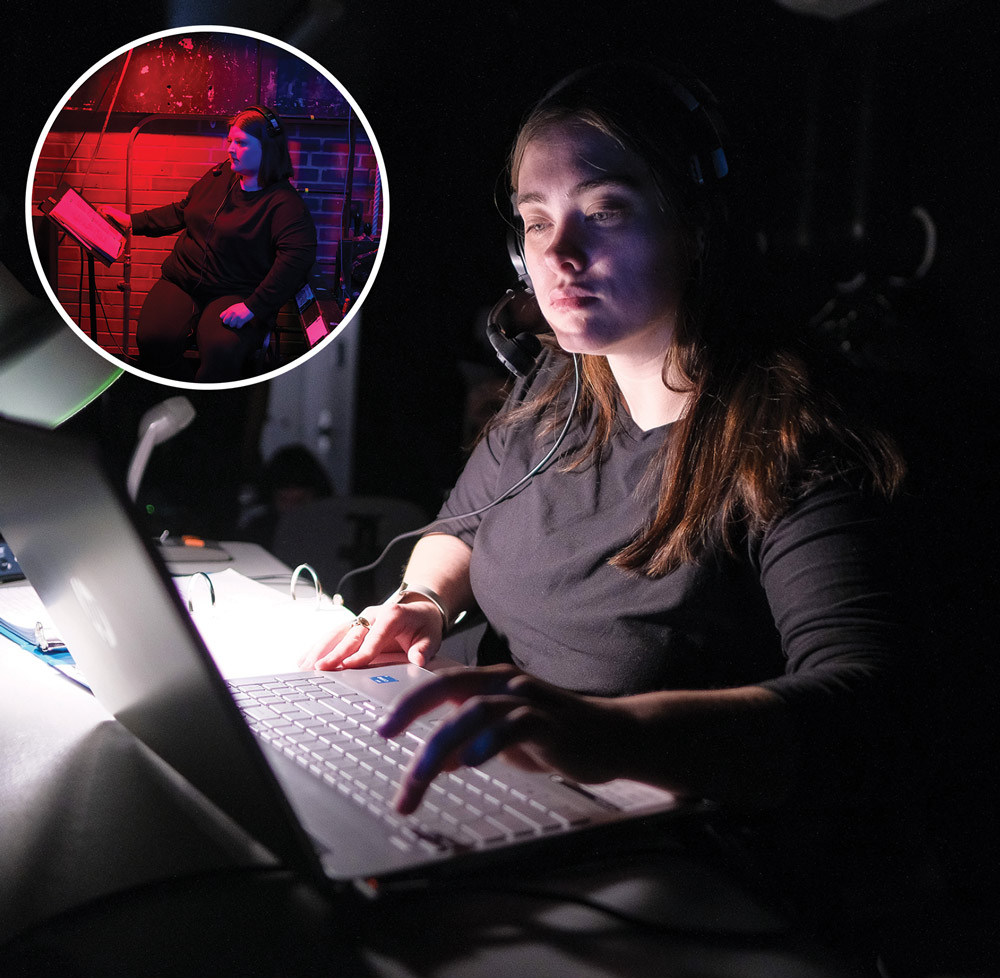
student under red light backstage with headset on while seated; Stage manager Brittany Walsh communicating with crew during laptop
Stage managers Brittany Walsh (above in booth) and Alyssa Starkey (inset) are on headsets during productions communicating with the crew.
“Whether it’s the props, costumes, sound and lighting or the actors, they’re all helping tell a story,” said Morice, professor of theatre and department chair. “Every bit of what we do is unique problem-solving. Sometimes it’s solving through design, sometimes it’s through performance. You can be handed a script, and it can be interpreted in a million different ways, so it all depends on the story that we’re trying to tell as a group.”

The SRU Theatre Department typically produces about four shows per academic year. In April 2025, SRU presented “The Curious Incident of the Dog in the Night-Time,” which was directed by Burton Tedesco, SRU assistant professor of theatre, and adapted from a popular 2003 mystery novel about a 15-year-old boy who is a brilliant mathematician with behavior difficulties and social challenges.

The story epitomizes how the cast and crew, comprised of students and some faculty and staff, must think like they’re solving a math problem but also be creative and unconstrained by the script, guidelines or expectations of the world. Like the boy, they make the story work for them.

Here’s a peek behind the curtain at some of the creative problem-solvers involved:

Stage Managers

The people calling the shots are the stage managers. For “The Curious Incident,” that is Brittany Walsh, a senior theatre major from Waterford, and the assistant stage manager, Alyssa Starkey, a sophomore biology major from Apollo.

Walsh is the main communicator, both in terms of preparing for the show and making sure the director, cast and designers are on the same page. But also during the show she is on the headset in the lighting booth in the back of the theater, calling sound, light and projection cues.

Starkey is stage right — for some shows there’s another assistant on stage left — and she is also on a headset with the blocking notes, which keeps track of the movements of cast and ensembles members: when and where they are entering and exiting the stage. She is also in charge of making sure that the props are in place and she directs two stage crew members who run backstage to set up costume changes and set transitions.
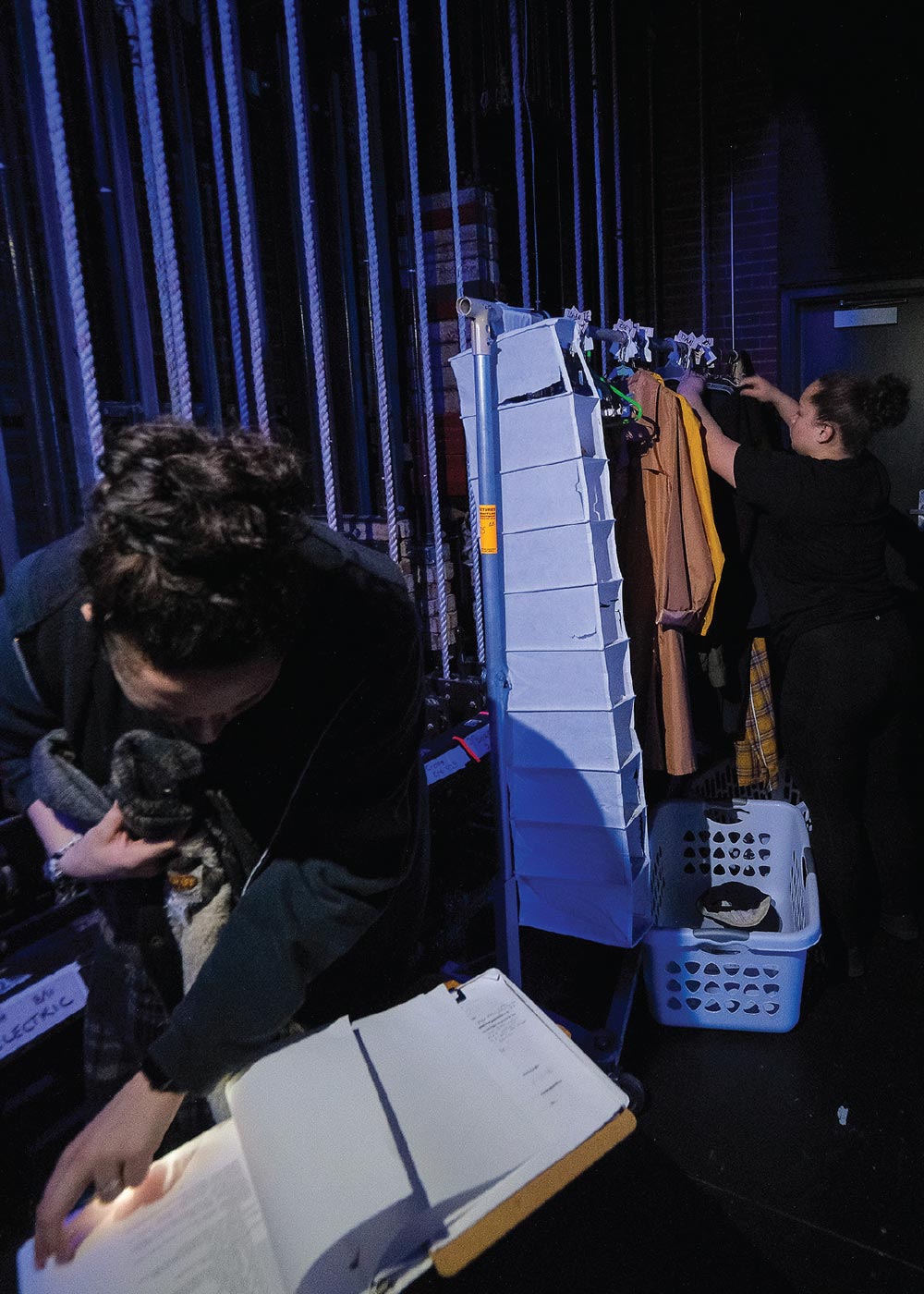
Stage crew members following the script backstage and pulling labeled costumes
Stage crew members follow the script backstage and pull labeled costumes (right) from clothing racks.
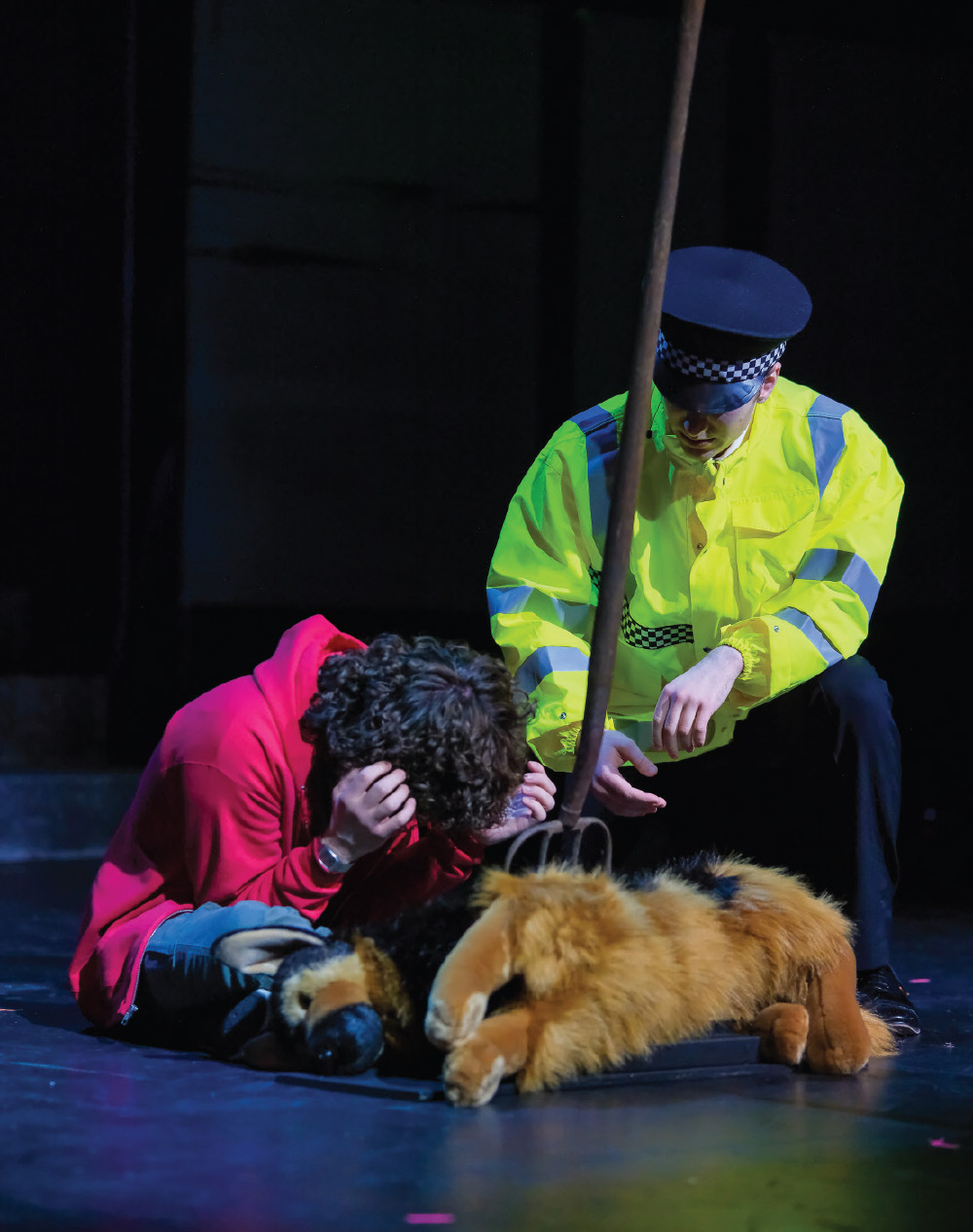
English police officer uniform and a stuffed dog being used on stage
Authentic-looking props, including an English police officer uniform and a stuffed dog, require attention to detail.

Propmaster

Lee Spark, a junior theatre major from Cranberry Township, is the propmaster. He is responsible for acquiring and maintaining more than 100 props per show, some of which are in storage at SRU and others he purchases online or scavenges, like a vintage Nintendo video game controller that he borrowed from his brother. He also prepares the props for the show, which can be a meticulous process with great attention to detail. One example is the stuffed dog that is killed in “The Curious Incident.”

Costume Designers

clothing racks with labeled hangers
Theatre Department faculty and staff are part of the creative team, such as Morrice serving as costume designer, but they also mentor students who play integral roles in designing the show. Kadence Storms, a sophomore theatre major from Shohola, is the assistant costume designer who helps Morrice pick the clothing from stock and coordinates the colors, so that they achieve the ideal aesthetic, reflecting the character who is wearing the costume.

The number of costumes varies per show, but each character in “The Curious Incident” had about 20 pieces maintained by Storms. There are 14 base costumes, but an actor might wear a different sweater or appear on stage as a different character, requiring a costume change.

Costumes for these productions are rarely rented or part of a predetermined outfit. Like the props, there’s searching stock, thrift stores and, of course, sewing and creating pieces in the costume shop on campus so that they properly fit each actor.
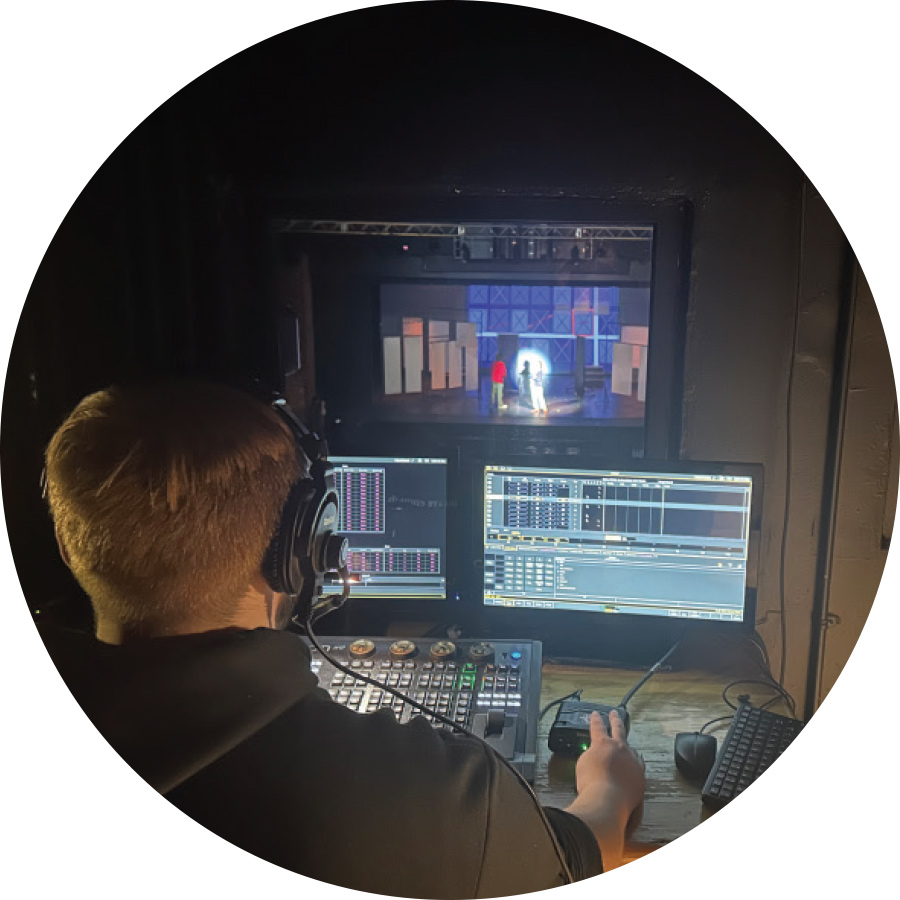
board operators bringing to light a main-stage production
Bringing to light a main-stage production takes board operators who solve problems with creative and technical skills

Lighting Designer

Five months before the show, Isaac Smith is handed a 75-page script for “The Curious Incident.” Smith, a junior theatre major from Edinboro, is the show’s lighting designer. Although he is responsible for programming the show and listing all the spotlight operators’ cues, Smith’s job is not prescribed by the script. He researches film, television and online productions to find inspiration for the colors and light positioning he chooses for the show.

After days with long hours of meetings and rehearsals, Smith winds up with 130 lighting cues. His choices complement the larger story being told by the other contributors. Once the show begins, Smith’s work is done. The two spotlight operators and lighting board operator that he trained take their cues from Walsh, the stage manager in the booth.

Many Others

A combined 55 people contributed to “The Curious Incident,” from scenic and sound designers to ushers and box office assistants, not to mention carpenters, electricians and other members of the technical team. Many have multiple roles, including the cast.

There are also swings and understudies, who take notes and follow the script the way a backup on a sports team must be ready in case the starter is injured. And that has happened: a cast member lost her voice last fall on the day of the show and an understudy had to step in and perform.
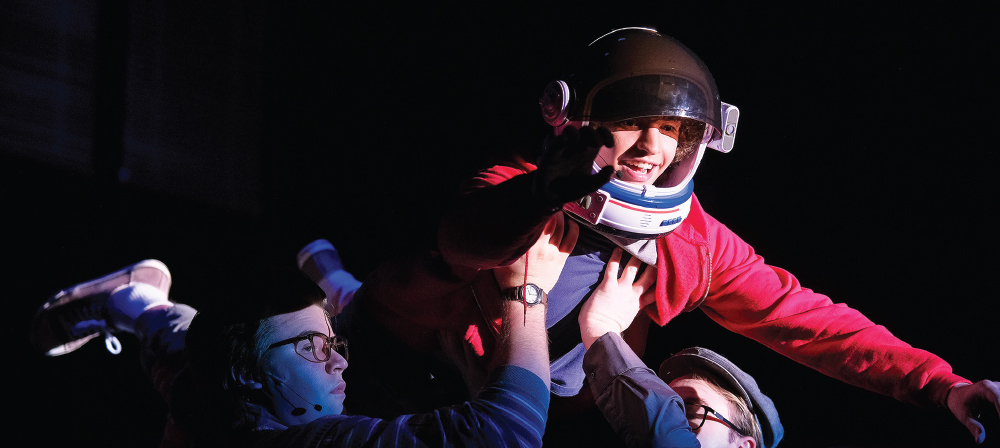
Conor McAleer in astronaut costume being held up by two others
Conor McAleer plays the lead role in “The Curious Incident of the Dog in the Night-Time,” which requires coordination from fellow cast members hoisting him so spotlight operators have the correct placements.
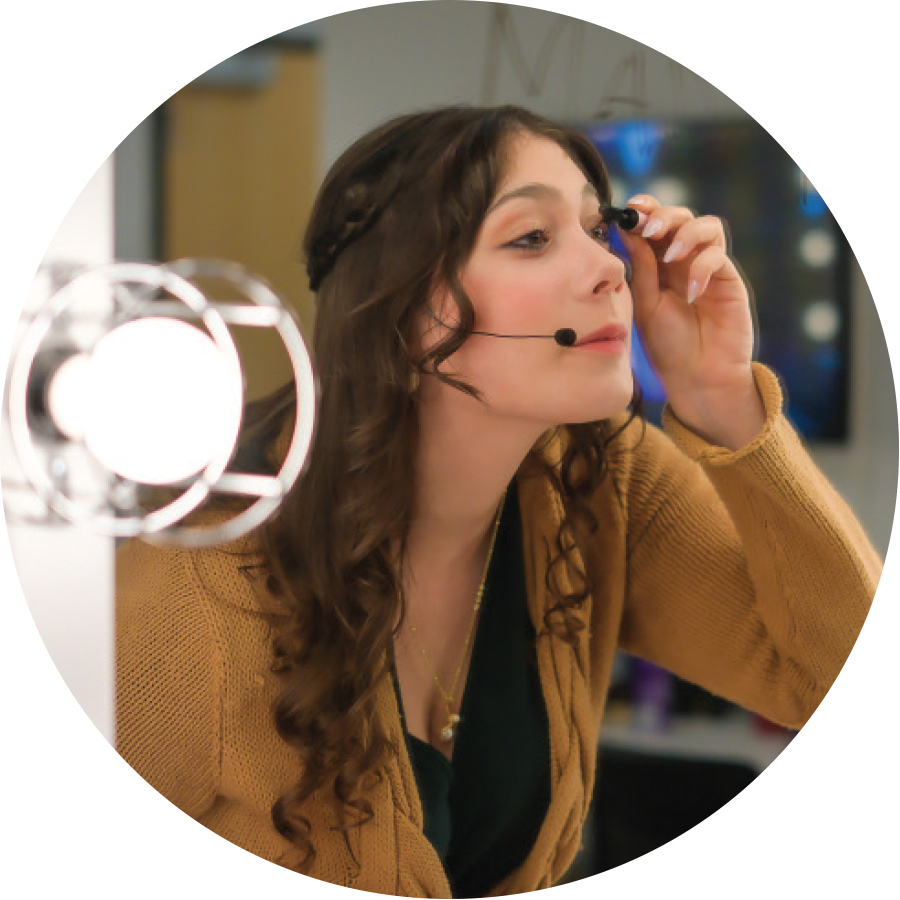
actress with headset microphone looking into mirror putting on mascara

Culminating Effort

A typical theater production at SRU involves five weeks of rehearsal (three nights per week), three straight nights of technical rehearsal and three nights of dress rehearsal, all before the four to six performances. Although approximately half of the students earn academic credit for their work, the total hours are beyond measure but worth the time.

The experience students receive is much like what they would experience in a professional setting — that could mean working for a theater company or any workplace environment where problems are solved.

“Why are we bothering to tell these stories again and again?” Morrice said. “Because it’s how we get there. It’s the human connection that you’re making on the way. You can manufacture an experience in a classroom, but it doesn’t click until you actually get out here and do it. “It’s getting together a unique group of humans and creatively solving problems until we get to a final product.”