

Economics in Action
hen local families dial PA 211 for help with food, housing or utilities, Slippery Rock University students are behind the scenes using data to help community agencies respond faster and smarter.
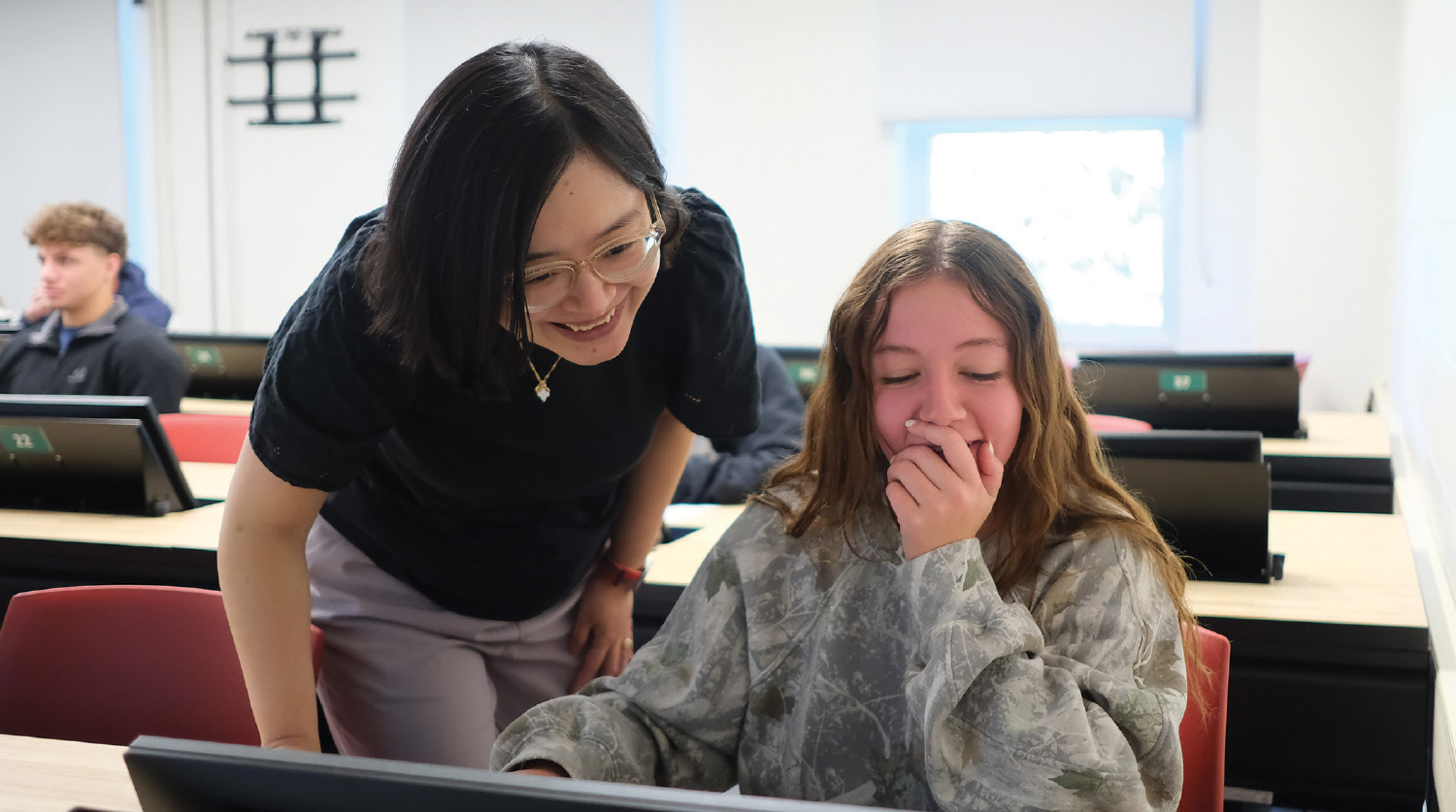
This vision was developed by Xintong Wang, associate professor of economics, who transformed her econometrics course into a real-world impact project. Through a partnership with a local software company, Wang connects students with nonprofit clients, giving them opportunities to apply classroom learning to solve local community challenges.
Building the bridge for community impact
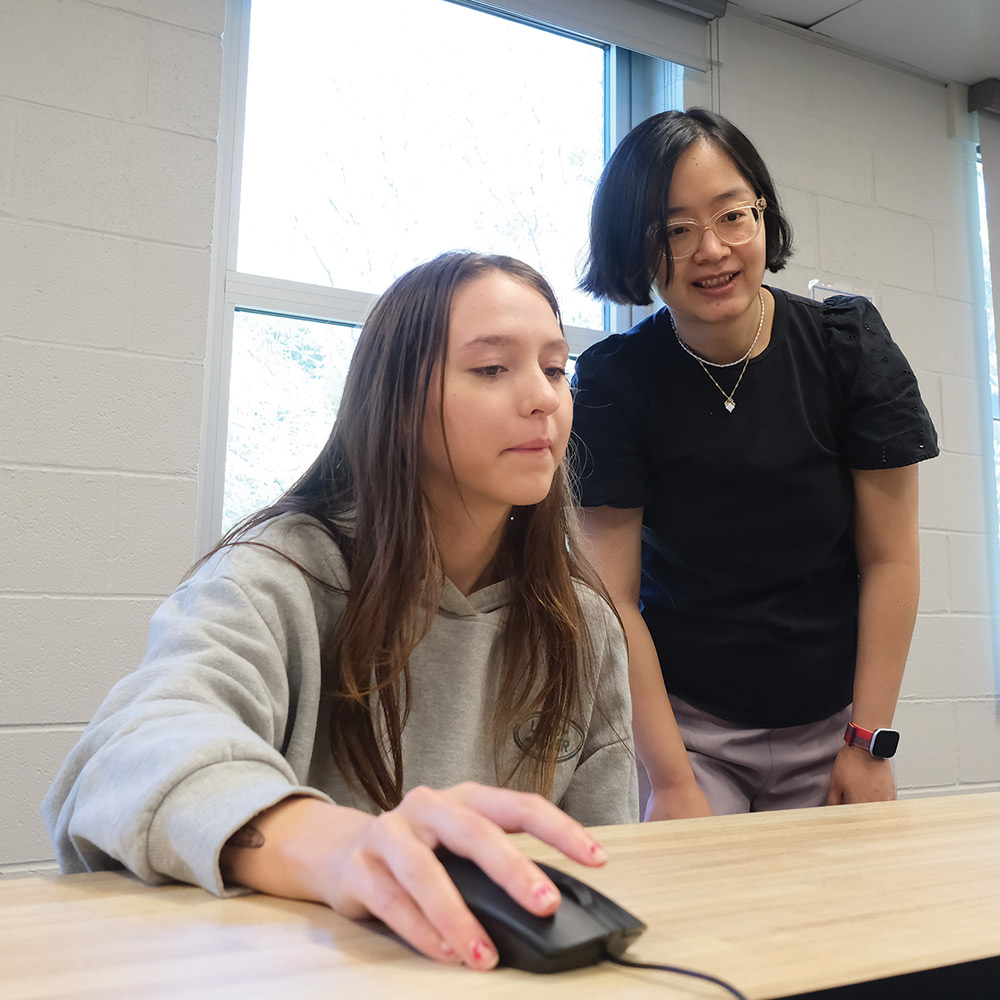
“MAPS mostly helps organize and store the data for their clients through information systems,” Wang said. “When their clients asked for business analytics, they didn’t have that service. I then thought, ‘That’s exactly what my students could provide while they learn in the classroom.’”
The collaboration quickly took shape in the spring with Wang’s econometrics class assisting eight nonprofit clients, including food pantries, a youth hockey league and mental health organizations.
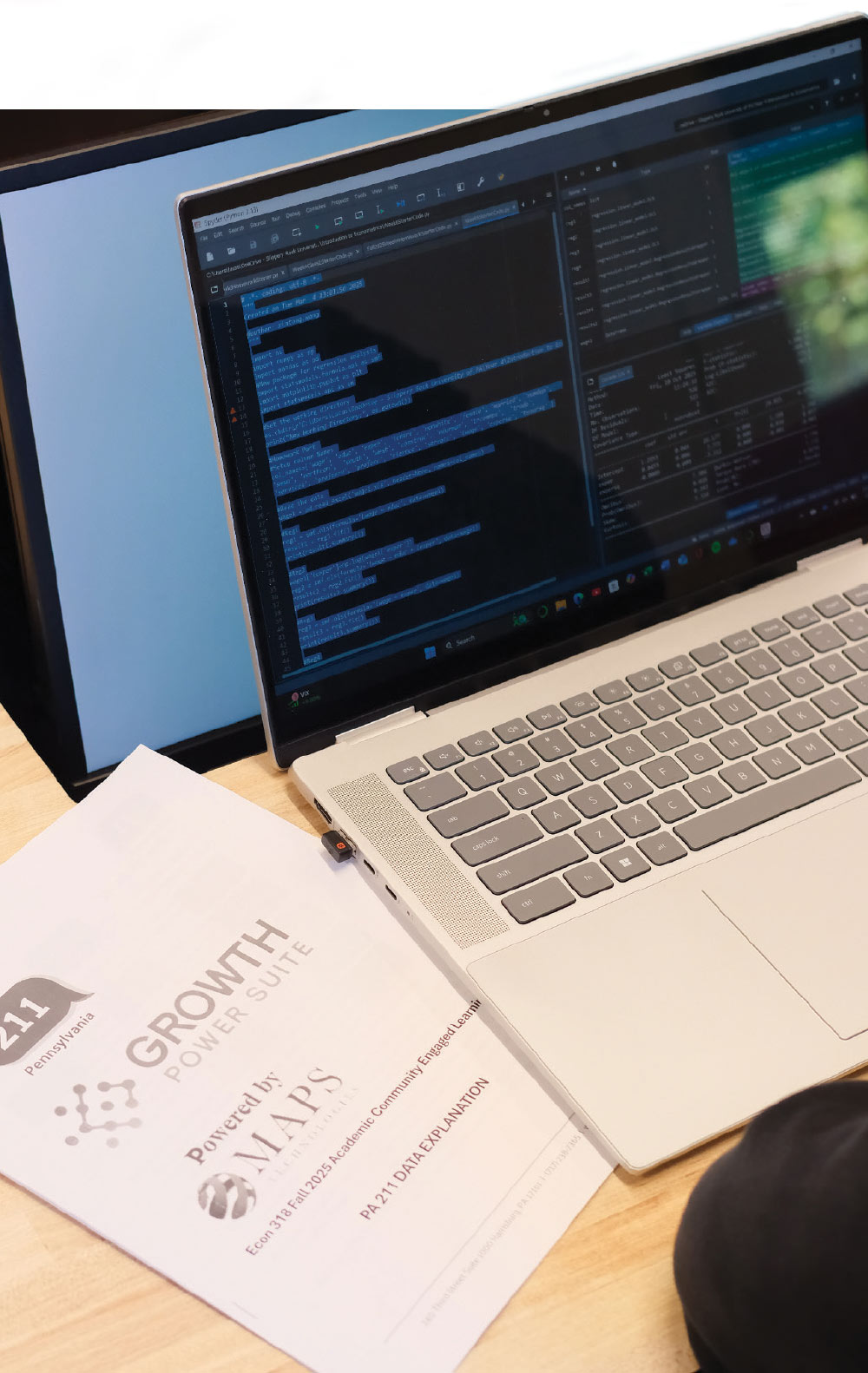
Each organization provided datasets and research questions for SRU students to solve throughout the semester. Students then used their recently learned econometric techniques and Python computer programming to explore trends, build regression models that predict how one thing changes based on another and presented their findings through data visualization to match the structure of professional consulting services.
in financial advising.
“It wasn’t just another group project that is forgotten about after it’s finished; it made a real impact and it was something I could put on my résumé or talk about in an interview,” Moorhead said. “I had no coding experience going in, but we built a full regression model. It was challenging, but very rewarding.”
Analyzing real needs through PA 211
The econometrics class partnered with PA 211 Northwest for the 2025 fall semester, Pennsylvania’s 24/7 referral service connecting residents in need of food, housing, utilities and other critical services. PA 211 Northwest serves thousands of residents across several counties in Pennsylvania, including counties neighboring Butler such as Clarion and Venango. The resource center historically serves as the primary lifeline for people in Pennsylvania navigating emergency needs.
Although the organization is rich in data archives, PA 211 Northwest has limited in-house analytic capacity. This is where Wang’s econometrics students stepped in. Through data analysis, the SRU class is helping PA 211 Northwest and its partner agencies allocate resources more effectively to people across northwestern Pennsylvania.
“This project focuses on populations typically under the poverty line with needs like food and shelter,” Wang said. “By identifying patterns and unmet needs, PA 211 can better serve communities and help shape policy through the insights we find.”
With similar strategies to those used last spring, students are cleaning and merging datasets, specifying and interpreting regression models and communicating their findings to nontechnical audiences via data visualization. Students are also analyzing caller data – including demographics such as age, gender, race and ethnicity and ZIP code – service requests, referrals and final service outcomes. Analyzing the data sets will then allow the SRU group to identify patterns of unmet needs and map them geographically.
Strengthening community partnerships
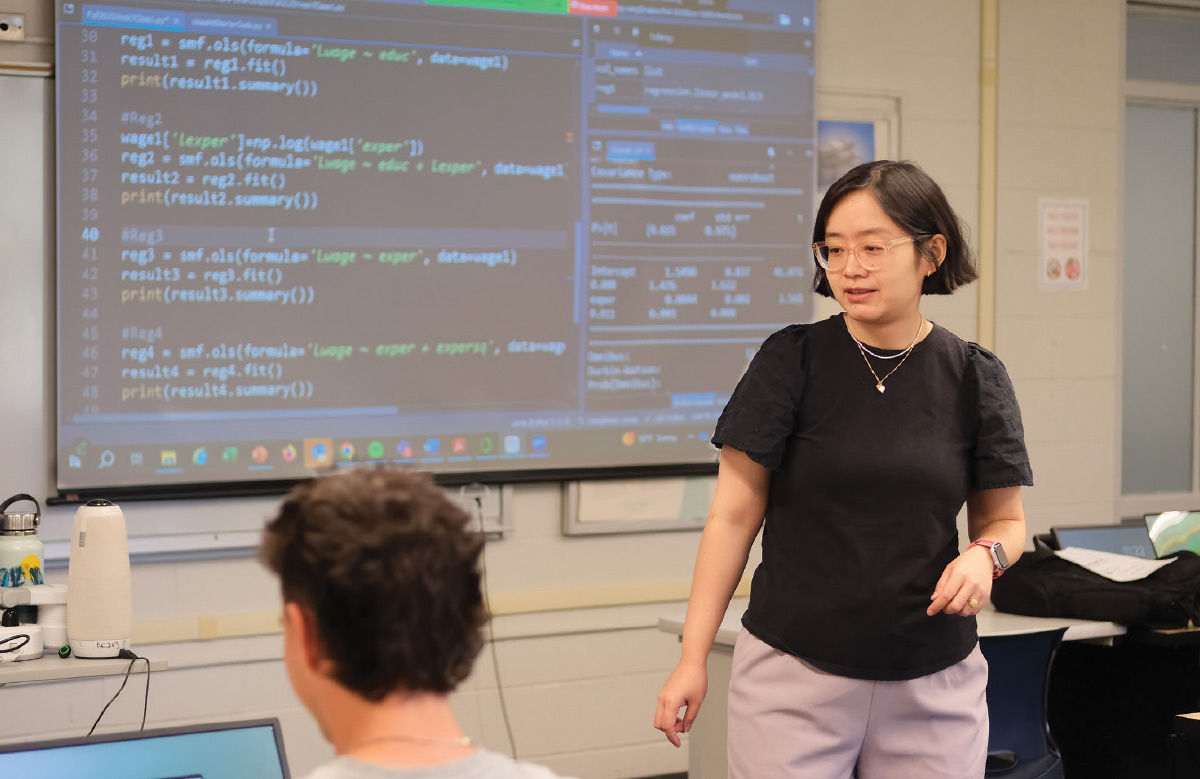
The partnership with MAPS also showcases SRU’s experiential learning mission, forging sustainable partnerships between academic experts and community partners. Wang believes this is just the beginning of how she can advance SRU’s continued initiative for regional collaboration and impact.
“Bringing western Pennsylvania’s needs into our curriculum means what students learn is directly applicable in the real world,” Wang said. “It allows students to see how their work now, and in the future, can impact their communities and surroundings.”
As Wang continues to evolve her classroom partnership with MAPS and local nonprofits, the project reflects a model of turning academic expertise into meaningful action. Wang is not only providing an interactive learning experience by embedding real-world scenarios into SRU classrooms, but is reshaping how students see the impact of their work on real people and communities.